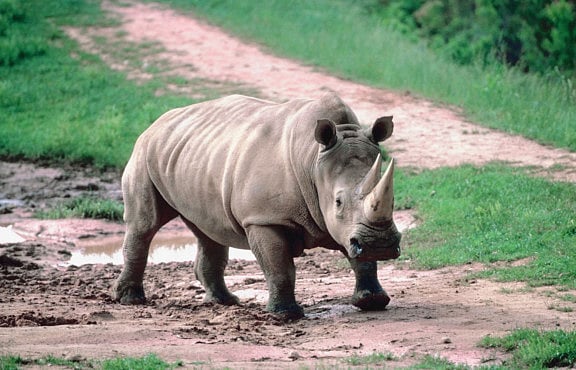
Traffic, the wildlife trade monitoring network, estimates that animal trafficking is worth $8 billion (Dh29.38 billion) to $9 billion (Dh33 billion) per year globally. Also, in a recent governmental conference held in London discussing the illegal trade, it was claimed that there has been a 5,000 per cent rise in rhinoceros horn poaching between 2007 to 2012. It is now apparently more valuable on the black market than diamonds or cocaine.
While poaching is undoubtedly harmful to the environment, there are those of the opinion that it is also akin to terrorism. You may well want to argue the ins and outs of this but the unfortunate fact is that the two are inextricably linked.
Utilising night vision, helicopters and high-powered sniper rifles, modern poachers are in reality waging a war on the ecosystem, with the highest bidder calling the shots.
Some people justify their actions, claiming they had no choice but to poach, or else they would die hungry. There have also been disquieting reports of the link between the illegal ivory trade and terrorist groups like Al Shabaab.
They are not alone, however, with the higher-ups seeming to go along with this ‘necessary evil’. Take the case of Borneo, whereby some government-sanctioned palm oil companies have laid waste to and are currently decimating the orangutan population and habitat. They are promoting extinction and destruction of their heritage to prevent their coffers from dwindling.
Now, if this was an isolated incident, one could argue that the justice system in general is doing its bit to help stop the crisis. But examples abound where some governments, either due to ineptness or possible malicious intent, further exacerbate the problem.
For example, in Tanzania, Operation Tokomeza had to be scrapped this year following reports of brutality against those alleged to be poachers, whether proof was found or not. In Kenya, fewer than four per cent of convicted poachers are actually jailed. A Kenyan conservationist, Richard Leakey, alleged that the Kenyan Wildlife Organisation has been infiltrated by people investing in the poaching business themselves!
In cases such as these, the war on poaching is eerily similar to the war on terror — people dragged from their homes without warning or warrant, communities divided, justifications for past acts, allegations of misuse of force, etc.
Poaching is a threat to our future, and what we leave behind for future generations. Yet is it any wonder that the impetus of stopping these heinous acts has stalled? Is it any wonder that people have come to believe the justice system has failed? It’s no wonder at all.
— Daryl McOirghialla is an Irish journalism graduate based in Dublin, Ireland
Sign up for the Daily Briefing
Get the latest news and updates straight to your inbox
Network Links
GN StoreDownload our app
© Al Nisr Publishing LLC 2026. All rights reserved.