The Conference on Interaction and Confidence Building Measures in Asia (CICA) strengthens its role as a pan-Asian platform for dialogue and practical cooperation
An exclusive interview with Ambassador Kairat Sarybay, Secretary General, CICA
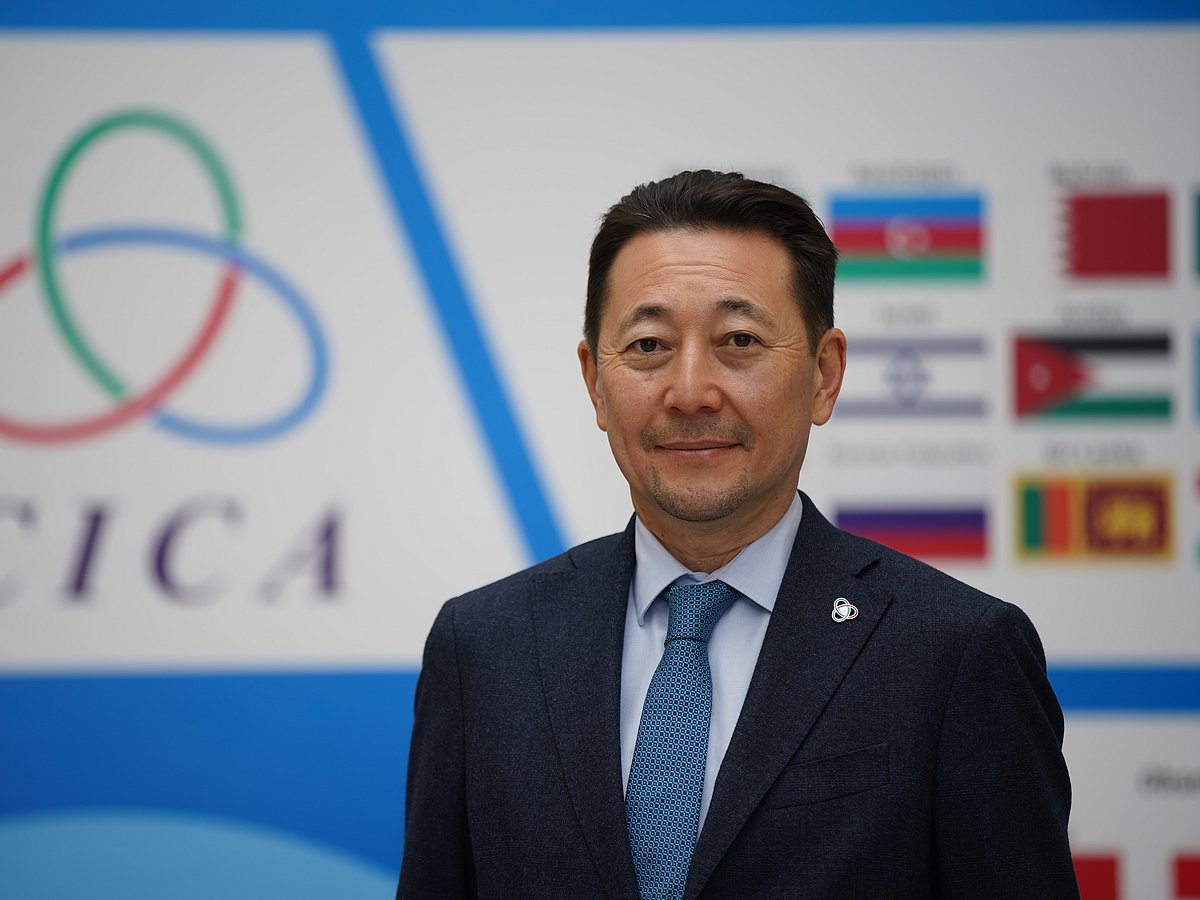
Bringing together Member States that span from the Pacific to the Mediterranean, the Conference on Interaction and Confidence Building Measures in Asia (CICA) is a multilateral intergovernmental forum designed to promote dialogue and cooperation across the world’s largest continent, covering 90 per cent of the territory in Asia and around half of the global population. In this interview, Ambassador Sarybay, a career diplomat who has served in Kazakhstan’s Ministry of Foreign Affairs and as Ambassador to Turkey, Germany and Austria, discusses CICA’s evolving institutional role and its strategy for strengthening regional engagement.
How did Kazakhstan, as the initiating state, shape the formation of CICA?
Kazakhstan initiated CICA drawing upon its geographic position at the heart of Eurasia and its multi-vector foreign policy, as well as its experience with European security architecture. Recognising that dialogue across Asia was limited by the Iron Curtain and weak connectivity among regions – including Central and South Asia – Kazakhstan emphasised connection across all vectors, following independence in the early 1990s.
Kazakhstan’s history also shaped its approach. In the 20th century, Kazakhstan became a multiethnic society through complex historical processes. Over time, this diversity became a source of national richness, supported by local hospitality and tolerance. This ethos informed Kazakhstan’s foreign policy and the original purpose of CICA: to bring Asian countries to the same table to address problems within the “Asian family.” CICA began with 15 members and has expanded to 28.
As CICA’s first Secretary General, how do you define the organisation’s mission?
CICA’s central idea is peaceful coexistence across Asia. CICA was designed as an inclusive, consensus-based platform from the outset. This allows states of different sizes, geography and cultural backgrounds to engage on equal footing and sustain dialogue even in complex circumstances.
CICA is fundamentally a member-driven organisation, shaped by the collective vision of its 28 Member States. This means that priorities, initiatives and outcomes are defined collectively, ensuring ownership and long-term commitment by all participants.
Strategic direction is exercised through the Chairmanship, responsibility currently entrusted to Azerbaijan. As in any multilateral structure, the Chairmanship provides guidance and momentum while reflecting the shared will of the membership.
International economic cooperation depends on confidence, predictability and open channels of dialogue. CICA positions itself as an enabler of economic interaction. It is a space where regions, policies and interests converge, supporting cooperation across a diverse continent.
“A central strength of CICA is its ability to sustain regular, structured and inclusive dialogue across Asia.”Ambassador Kairat Sarybay, Secretary General of the Conference on Interaction and Confidence Building Measures in Asia
What institutional milestones were achieved during the most recent Chairmanship cycle?
Kazakhstan’s Chairmanship marked a decisive phase in CICA’s institutional consolidation. A defining milestone was the allocation of a dedicated and permanent headquarters in Astana, officially inaugurated by President Kassym-Jomart Tokayev in July 2025. This step carries both practical and symbolic significance: it reflects the initiating state’s confidence in the future of Asian cooperation and its commitment to elevating CICA to a new level of institutional maturity.
In addition, the establishment of the CICA Fund introduced an operational dimension to the organisation’s work, enabling project-based initiatives and translating dialogue into tangible cooperation on the ground.
What are CICA’s current key policy goals and priorities?
The decision to establish the position of Secretary General was taken in the broader context of CICA’s transformation, formally launched at the Sixth CICA Summit with the adoption of the Astana Statement on CICA Transformation.
The Road Map for CICA Transformation provides a comprehensive and balanced framework for reform, covering: the development of a legal foundation through the CICA Charter; the modernisation and implementation of confidence building measures; the refinement of procedural and external relations frameworks; the strengthening of the Secretariat as a permanent executive body; and the gradual alignment of administrative, budgetary and human resource practices with international standards.
How has your December visit to Abu Dhabi enhanced engagement between the UAE and CICA?
The consultations in the UAE were part of CICA’s regular diplomatic engagement with its Member States, aimed at revitalising cooperation, updating priorities and identifying new areas for practical interaction. In Abu Dhabi, we focused on how the UAE’s experience and capabilities could be more actively reflected within CICA’s evolving institutional framework.
In this sense, engagement with the UAE is particularly valuable. Its experience in areas such as sustainable development, finance, innovation and institutional capacity building enriches CICA’s dialogue and adds substance to region-wide cooperation, including initiatives with tangible economic and investment relevance.
One of the key objectives of my visit was to engage the UAE to host a side event on the margins of the Water Summit, expected in December 2026. I also visited the Emirates Center for Strategic Studies and Research, a member of the CICA Think Tank Forum, and held promising discussions to expand UAE engagement in Track II diplomacy.
How does CICA facilitate mutually beneficial engagement between Member States such as Kazakhstan and the UAE within Asia’s evolving trade and investment landscape?
A central strength of CICA is its ability to sustain regular, structured and inclusive dialogue across Asia, providing continuity and predictability in regional engagement. Through its diverse membership, CICA brings together corridor economies, energy producers, logistics hubs, financial centres and emerging markets, enabling national strengths to be discussed in a complementary regional context rather than in isolation.
In this setting, partners such as the UAE engage not with a single market, but with a pan-Asian dialogue ecosystem, where investment opportunities are discussed alongside connectivity strategies, financial frameworks and sustainability considerations. Ultimately, by linking Asia-wide dialogue through CICA with Kazakhstan’s connectivity role and the UAE’s investment and financial expertise, the organisation contributes to a more resilient, predictable and confidence-driven economic environment across Asia.
Sign up for the Daily Briefing
Get the latest news and updates straight to your inbox
Network Links
GN StoreDownload our app
© Al Nisr Publishing LLC 2026. All rights reserved.