The Nine Arch Bridge in Ella, Sri Lanka, a must-visit destination. Tourism remains a key driver of the island nation’s economic growth.
GN FOCUS
Sri Lanka's Economic Revival: Global investors eye strategic opportunities
The island nation opens to global investors through reforms and strategic location
Last updated:
3 MIN READ
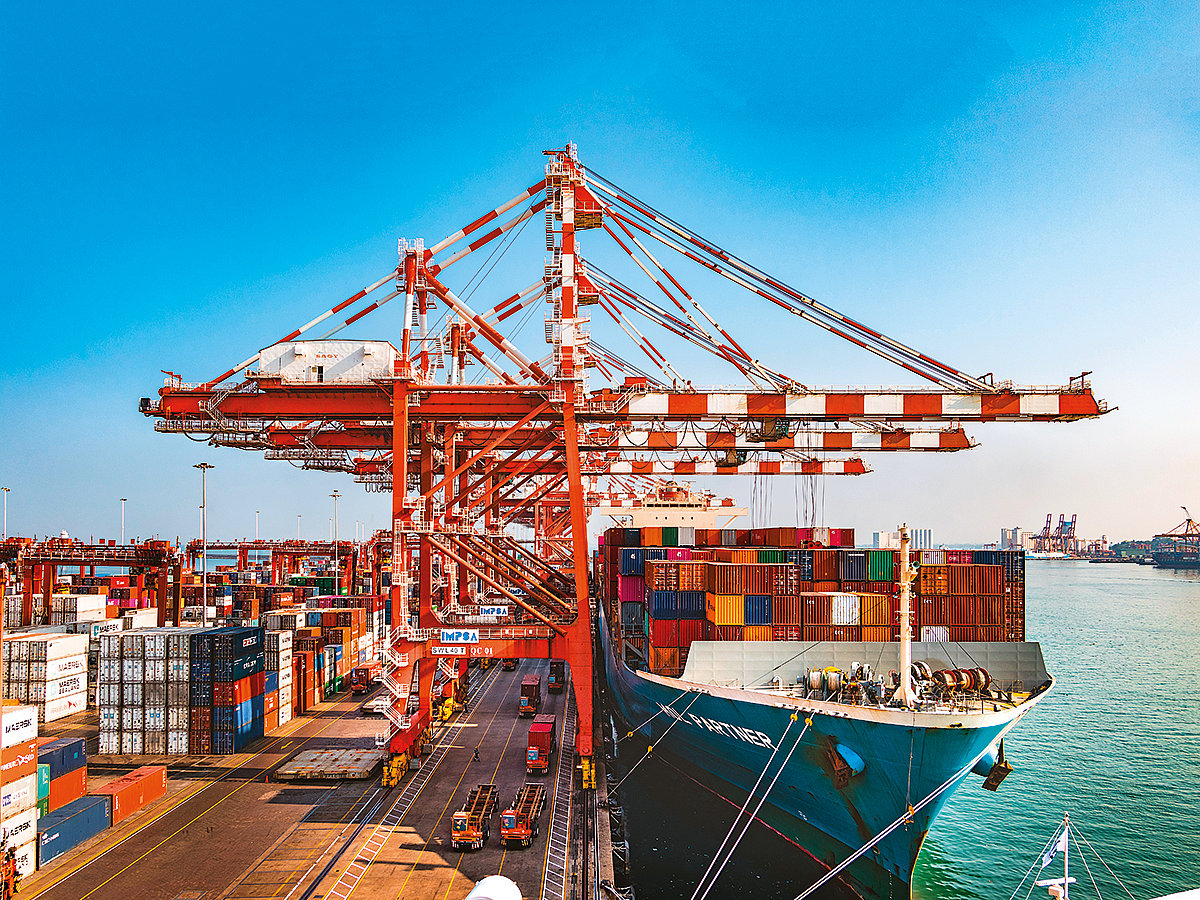
The shipyard and dock of the Port of Colombo. Trade and logistics continue to play critical roles in Sri Lanka’s economic revival
Sri Lanka is moving from crisis recovery to investment positioning, as stabilising macro fundamentals and reform momentum begin to attract global capital — including fresh interest from the UAE and the wider Middle East.
After emerging from its 2022 financial crisis, the island economy is showing signs of a broad-based recovery supported by tourism inflows, remittances and improving fiscal discipline.
International lenders and economists say the shift from crisis management towards investment-led growth is becoming increasingly visible.
Sri Lanka’s central bank expects the economy to remain on track despite damage caused by cyclone Ditwah, with growth forecast at 4-5 per cent this year and inflation stabilising around the bank’s 5 per cent target.
David Sislen, Division Director for Maldives, Nepal and Sri Lanka at the World Bank, says the recovery has been stronger than expected.
“Sri Lanka has made remarkable progress since the crisis. The country has experienced a broad-based economic recovery, supported by consumption and investment, robust remittances and tourism inflows, and significant revenue improvements.”
Sislen notes that inflation has come down to low single digits since the 60-70 per cent levels of late 2022.
“This allowed a sustained easing of monetary policy, resulting in a downward adjustment of lending rates and a sharp pick-up in private sector credit growth,” he says.
Foreign reserves have climbed above $5 billion (Dh18.36 billion), a sharp turnaround from late 2022 levels, according to the World Bank. “This turnaround is better than what we had expected and has been achieved through the implementation of several structural reforms,” Sislen says, pointing to fiscal, financial and state enterprise reforms.
He, however, warns that vulnerabilities remain, adding that deeper reforms are needed to accelerate productivity and private investment.
Middle East opportunity
With Sri Lanka looking to attract foreign investors, Sislen sees significant room for Middle East investment in the country’s next growth phase.
“Increasing foreign direct investment is a key element of Sri Lanka’s development path, and there is ample opportunity for more investment from the Middle East in a range of sectors — from digital to export-oriented manufacturing to agri-business to logistics,” he says.
Sri Lanka’s Deputy Minister of Industry and Entrepreneurship Development Chathuranga Abeysinghe told Gulf News earlier that the government is streamlining investment approvals and incentives to make Sri Lanka a predictable and competitive destination for foreign capital. He highlighted agriculture, tourism, maritime logistics and renewable energy as priority sectors for foreign investors.
The International Finance Corporation’s $166 million investment package to support Sri Lankan businesses is being viewed as a signal of growing confidence in the private sector.
Talal Rafi, an economist and visiting fellow at the Centre for Poverty Analysis, says Sri Lanka is recovering from the economic crisis and has achieved macroeconomic stability. “Sri Lanka has a lot of potential if structural reforms are implemented. Trade reforms that can liberalise trade will be the most crucial.”
From an investor perspective, Rafi says Sri Lanka is recovering well, but risks remain as the recovery is fragile and the country is still prone to external shocks, as its debt level is high and its foreign reserves are still recovering. “But, Sri Lanka has immense potential with its strategic location and human capital being two strengths,” Rafi says, adding that adherence to the IMF programme is a key confidence signal.
“Sri Lankan government following the IMF programme is a strong signal that the country is moving in the right direction. The key macro signals would be credit ratings and gross foreign reserves.”
Rafi sees tourism and Information Technology and Business Process Management (IT-BPM) as the sectors best positioned to anchor a sustainable investment rebound.
“Sri Lanka has already been rated as one of the best tourist destinations in the world and its strength in the IT-BPM sector comes from a talented workforce.”
With IMF-backed reforms, improving macro fundamentals and a Dubai-style investment pitch, Sri Lanka is betting its recovery will increasingly be driven by capital inflows rather than emergency financing.
Sign up for the Daily Briefing
Get the latest news and updates straight to your inbox
Network Links
GN StoreAbout Gulf NewsTerms & ConditionsReach by GNSitemapContact usPrivacy PolicyGN FocusHave your sayWork with usAdvertise with usGulf News epaperPrinting Services
Download our app
© Al Nisr Publishing LLC 2026. All rights reserved.