The $411 billion imperative: Why healthcare investment must follow where the patients are
On publicly funded, privately managed care and why UAE is building a model the world needs
Every year, $411 billion in global productivity vanishes - not to recession, not to conflict, but to preventable and untreated vision loss, according to the Lancet Global Health Commission. That figure exceeds the GDP of entire nations. And it represents only one specialty within a healthcare ecosystem where outbound patient travel drains economies far more broadly.
I write as a practitioner and executive operating at the intersection of clinical delivery and healthcare strategy - leading an academic medical center's expansion into the Gulf. The pattern repeats across emerging markets: governments invest in infrastructure, yet patients still board flights for care they should receive at home.
The outbound hemorrhage
The global outbound medical tourism market stood at $247 billion in 2024, projected to surpass $755 billion by 2034. The GCC medical tourism market alone was valued at $9.6 billion in 2025. When a patient from Abu Dhabi flies abroad for a retinal procedure or cardiac intervention, the cost is not just the procedure - it is the airfare, the lost productivity, the weeks away from work. Multiply that by tens of thousands of patients annually, and the leak becomes one no sovereign strategy should tolerate.
The case for publicly funded, privately managed models
The UAE offers a compelling proof of concept. Healthcare spending represents under 5% of GDP today, projected to reach 5.1% by 2029. The "We the UAE 2031" vision targets a top 15 global ranking in healthcare quality. The model is clear: public funding sets the floor; private management raises the ceiling.
What distinguishes the UAE is the deployment of globally branded academic institutions within a publicly supported framework. Cleveland Clinic Abu Dhabi, Mayo Clinic's advisory partnerships, and now Bascom Palmer Eye Institute - America's eye institute, ranked #1 twenty-four times - are calculated investments in reversing outbound drain by embedding subspecialty care where the population lives. Our under-development Eye Bank - the region's first - will bring locally donated corneal tissue to patients who currently wait months, or travel abroad, for transplantation. That is what closing a specialty gap looks like in practice.
Technology as the equaliser
AI-driven diagnostics compress timelines that once required international travel. The Emirati Genome Programme, with genomic data from over 500,000 citizens, combined with Abu Dhabi's Malaffi health exchange linking over 2,700 facilities, creates a precision medicine infrastructure few nations can match. Over half of glaucoma patients globally remain undiagnosed - a silent epidemic. AI screening at scale prevents the downstream cost the WHO estimates at $411 billion annually.
Reversing the flow
The UAE is already proving the reversal is possible. Dubai welcomed 674,000 medical tourists in 2022, spending $270 million. Wellness tourists spent $5.4 billion in the UAE that same year - more than double 2020's figure.
What must come next
Governments across the GCC must recognise healthcare investment as a growth engine, not a cost center. Specialty gaps - ophthalmology, oncology, complex cardiology - must be systematically closed through subspecialty centers of excellence. Technology investment must be treated as integral to delivery, not adjacent to it.
The $411 billion that vision loss costs the global economy is not inevitable. It is a policy choice. The UAE is making that choice. The question for every other emerging market: will you invest in keeping your patients, or keep paying for their departure?
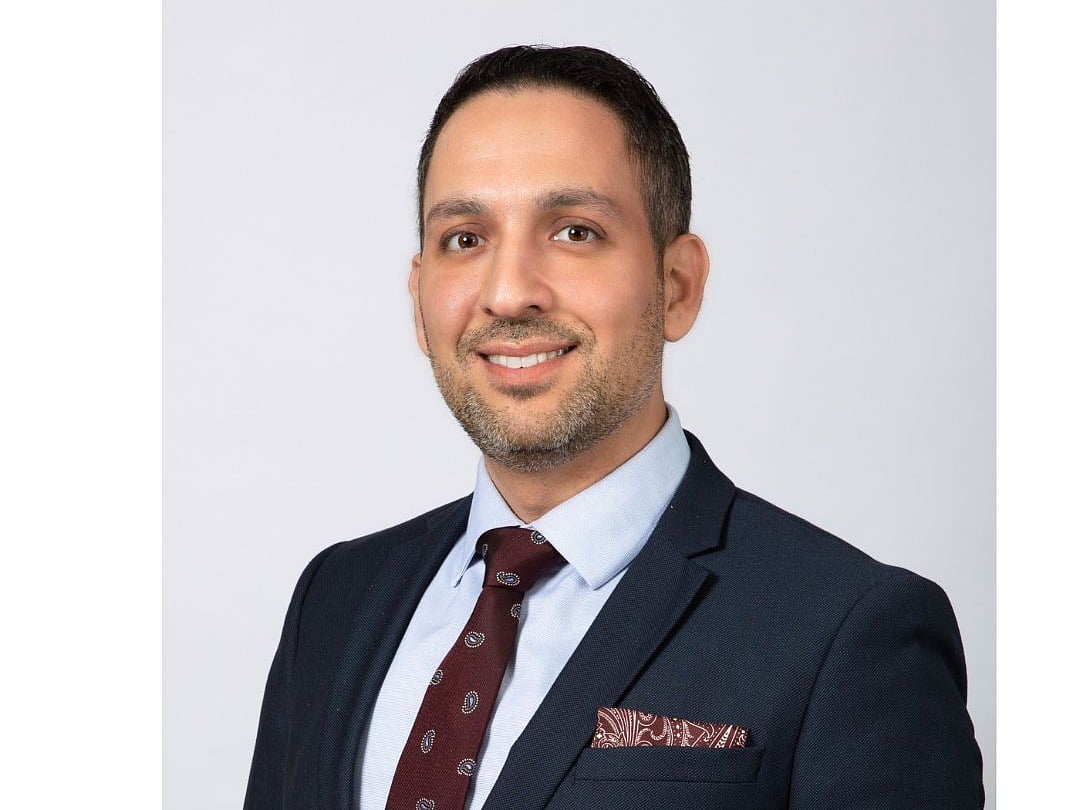
- By Zain Kenderian, MD, MBA, MStJ, CEO, Bascom Palmer Eye Institute, Abu Dhabi
Sign up for the Daily Briefing
Get the latest news and updates straight to your inbox
Network Links
GN StoreDownload our app
© Al Nisr Publishing LLC 2026. All rights reserved.