Liwa Dates Festival celebrates farmers and UAE’s agricultural legacy
Dh8m prizes, innovation and family events anchor Liwa as key farm heritage hub
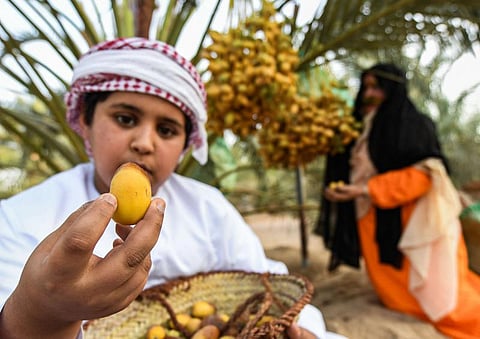
Abu Dhabi: The 22nd Liwa Dates Festival showcased how heritage events can support food security, empower farmers and preserve the UAE’s agricultural heritage. Combining agricultural competitions, heritage activities, family entertainment, educational programmes and sustainability initiatives, this year’s festival featured 23 competitions and 295 prizes worth more than Dh8 million, attracting wide participation from Emirati farmers, date growers and fruit producers.
As the festival concluded, it proved to be much more than a celebration of the annual date harvest. Over the years, it has grown into a national event that brings together heritage, agriculture, tourism and economic activity, while highlighting the palm tree’s importance as a symbol of Emirati identity and a key part of the country’s agricultural future.
Get updated faster and for FREE: Download the Gulf News app now - simply click here.
Sheikh Mansour praises role of Emirati farmers
Sheikh Mansour bin Zayed Al Nahyan, Vice President of the UAE, Deputy Prime Minister and Chairman of the Presidential Court, said the 22nd edition of the festival reflects the UAE’s appreciation for Emirati farmers and pride in locally produced agricultural goods.
He thanked everyone who contributed to the success of the festival, highlighting its role in preserving the legacy of the palm tree, which remains a symbol of generosity and prosperity in the UAE.
Sheikh Mansour said the continued development of the festival reflects the palm tree’s deep connection with Emirati culture and recognises the important role farmers play in supporting food security and protecting the country’s agricultural heritage.
The 22nd edition saw strong participation from farmers and agricultural innovators, highlighting the quality of locally produced crops and the progress made in developing sustainable farming practices in the UAE.
Over 10 days, Liwa City in the Al Dhafra Region welcomed thousands of visitors, farmers, producers and representatives from government and private sector organisations. The event was among the most diverse editions of the festival, reflecting its growth over more than two decades.
23 competitions and 295 prizes
The festival featured a wide range of competitions, including:
11 date competitions (Mazayna contests).
Seven fruit competitions.
Three Model Farm competitions.
Best Date Harvest Basket competition.
“Creativity from the Palm Trunk” competition.
A total of 295 prizes worth more than AED 8 million were awarded, making it one of the UAE’s largest prize programmes dedicated to farmers and agricultural producers. The competitions encouraged farmers to improve quality, adopt better farming methods and increase local production.
Competitions raise farming standards
This year’s date competitions attracted high-quality entries, with judges assessing:
Fruit quality.
Ripeness.
Colour and uniformity.
Size.
Absence of defects.
Compliance with good agricultural practices.
The Model Farm competitions also encouraged participants to improve farm management, reduce water consumption and increase productivity.
Winners recognised in major competitions
The final days of the festival saw winners announced in several key competitions.
Zamli Date Competition
The organising committee announced the winners of the Zamli Date Competition:
First place: Hamad Qumad Rashid Mohammed Al Mansoori.
Second place: Salham Harmous Saeed Al Mazrouei.
Third place: Humaid Mohammed Mubarak Jarwan Al Shamsi.
The competition featured 15 prizes with a total value of AED 397,000, sponsored by Al Foah, a subsidiary of Agthia Group.
Mango competitions
Coinciding with World Mango Day, the festival held two competitions for the best local and mixed-variety mangoes. The contests offered 20 prizes worth AED 234,000, reflecting the festival’s growing focus on supporting a wider range of agricultural products beyond dates.
Agricultural market supports local farmers
Beyond competitions, the festival’s agricultural market gave farmers a platform to sell their products, including:
Fresh dates and date products.
Local honey.
Seasonal fruits.
Vegetables.
Homemade food products.
The market helped promote local produce and connected consumers directly with farmers, supporting economic activity in the Al Dhafra Region.
Heritage market showcases traditional crafts
The Heritage Market attracted visitors with displays of traditional skills, including:
Palm frond weaving.
Al Sadu weaving.
Talli embroidery.
Traditional fish trap (Gargoor) making.
Handmade crafts.
Products made from different parts of the palm tree.
Artisans also conducted live demonstrations, helping preserve traditional skills and pass them on to younger generations.
Family and educational programmes
The festival offered a range of activities for visitors, including:
Children’s workshops.
Heritage competitions.
Traditional performances.
Agricultural lectures.
Environmental workshops.
Family activities.
Educational programmes focused on food security and sustainability.
Government entities also took part by organising awareness campaigns and providing information on public health, food safety, environmental protection and community responsibility.
Supporting farmers and agriculture
The festival continued its support for the agricultural sector by:
Encouraging better-quality production.
Promoting good farming practices.
Improving farm management.
Supporting local crop varieties.
Encouraging agricultural diversification.
The Abu Dhabi Heritage Authority also introduced online registration for competitions through the “Falk Al Namous” application, making participation easier and improving the management of contests.
Boosting tourism and local economy
The Liwa Dates Festival has developed into an important economic and tourism event for the Al Dhafra Region by:
Supporting businesses and productive families.
Increasing demand for locally grown products.
Attracting visitors from across the UAE.
Promoting heritage and agricultural tourism.
The festival also brought together farmers, producers, experts and government entities to share knowledge and highlight modern farming technologies.
More than a dates festival
The 22nd Liwa Dates Festival showed that the event has grown beyond a competition for the best dates. It has become a national platform combining heritage preservation, food security, agricultural development and economic growth, while celebrating the palm tree as a lasting symbol of Emirati identity.
With its diverse activities, strong participation and focus on improving farming standards, the festival continues to strengthen its position as one of the region’s leading agricultural and heritage events. It also highlights that supporting Emirati farmers is essential to building a sustainable food future and preserving the UAE’s heritage for generations to come.