Dr Bhushan Jayade, Consultant Oral and Maxillofacial Surgeon at PRIME Hospital
PRIME Hospital performs complex 12-hour 3D-guided jaw reconstruction
The surgery marked a turning point in the life of a 37-year-old Philippine national
Last updated:
3 MIN READ
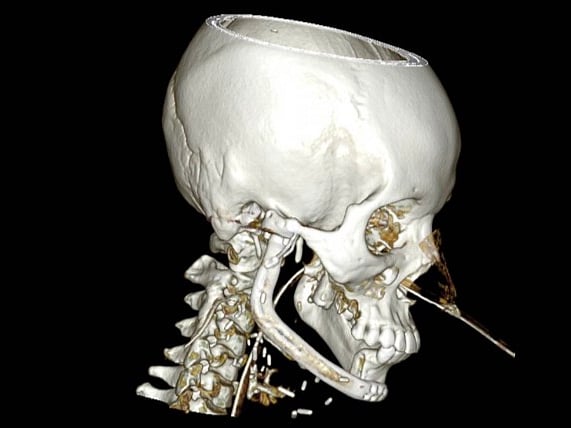
At PRIME Hospital, complex surgery is not only about removing disease. It is about restoring function, confidence and quality of life.
In January 2026, a multidisciplinary surgical team successfully performed a highly complex total right hemi-mandibular resection with temporomandibular joint reconstruction using a patient-specific 3D-printed titanium implant. The 12-hour surgery marked a turning point in the life of a 37-year-old Philippine national who had been living with recurrent jaw tumour disease for more than 15 years.
A long battle with a rare tumour
The patient was first diagnosed in 2009 with ameloblastoma, a rare but locally aggressive tumour affecting the jaw. She underwent surgery in the Philippines. The tumour recurred in 2019 and required further treatment.
After relocating to the UAE for work with her husband, she began experiencing swelling in the right lower jaw in mid-2025. The swelling progressively increased in size. Investigations at two separate facilities confirmed a massive recurrence involving the entire right half of the lower jaw, including complete destruction of the temporomandibular joint.
The case required immediate and highly specialised intervention.
The surgical complexity
According to Dr. Bhushan Jayade, Consultant Oral and Maxillofacial Surgeon at PRIME Hospital:
“This was an extremely demanding case. The tumour had already been operated on twice before. The recurrence involved complete destruction of half of the lower jaw and the jaw joint. Our objective was not only complete tumour removal but also full functional and aesthetic rehabilitation.”
The major clinical challenges included:
• Complete excision of a large, recurrent tumour
• Removal of the entire right mandible including the destroyed mandibular condyle
• Reconstruction of jaw continuity and joint function
• Preservation of facial symmetry
• Restoration of speech and chewing ability
• Soft tissue reconstruction within the oral cavity
Such cases require precision planning, surgical expertise and seamless coordination between multiple specialties.
Digital precision through 3D planning
What distinguished this procedure was the integration of advanced 3D digital planning and patient-specific implant technology.
Using the patient’s CT data, detailed 3D anatomical models were created. Surgeons pre-planned the exact bone resections on these models before entering the operating theatre. Custom cutting guides were manufactured to ensure surgical accuracy.
A patient-specific titanium mandibular plate was designed based on the unaffected side of the jaw to maintain symmetry. The destroyed TM joint was reconstructed using a titanium prosthetic joint to restore harmonious movement and function.
Soft tissue reconstruction was performed using a microvascular free flap technique to restore the inner lining of the oral cavity.
The surgery was performed on 11 January 2026 and lasted 12 hours. The multidisciplinary team included:
• Dr. Bhushan Jayade
• Dr. Shivprakash
• Dr. Neelamma Natikar
Anaesthesia, ICU specialists and dedicated nursing teams played a critical role in ensuring patient safety throughout the procedure and recovery phase.
Recovery and rehabilitation
The patient remained hospitalised for 10 days and made a steady recovery. Post-surgery, she regained:
• Functional jaw movement
• Ability to chew and speak clearly
• Facial symmetry
• Psychological confidence
She is now preparing to resume work, marking a successful reintegration into her personal and professional life.
Advancing reconstructive surgery in the UAE
This case highlights how modern medical science, particularly digital surgical planning and 3D-printed customised implants, is transforming the management of complex head and neck tumours.
Dr. Bhushan adds: “With patient-specific planning and advanced reconstructive techniques, we can now restore both form and function even after extensive tumour removal. The goal is not just survival, but meaningful quality of life.”
Management of such cases requires more than surgical skill. It demands advanced infrastructure, ICU capabilities, multidisciplinary coordination and high-end technology. PRIME Hospital continues to strengthen its position as a referral centre for complex maxillofacial and oncological reconstructive procedures.
By combining digital innovation, surgical precision and personalised care, PRIME Hospital demonstrates how advanced healthcare can restore dignity, function and confidence, even in the most challenging cases.
Sign up for the Daily Briefing
Get the latest news and updates straight to your inbox
Network Links
GN StoreAbout Gulf NewsTerms & ConditionsReach by GNSitemapContact usPrivacy PolicyGN FocusHave your sayWork with usAdvertise with usGulf News epaperPrinting Services
Download our app
© Al Nisr Publishing LLC 2026. All rights reserved.