Building trust in next-generation investment platforms critical for Middle East market growth, says Finvasia and Dealing CEO
Investor behaviour being shaped by an environment of constant information
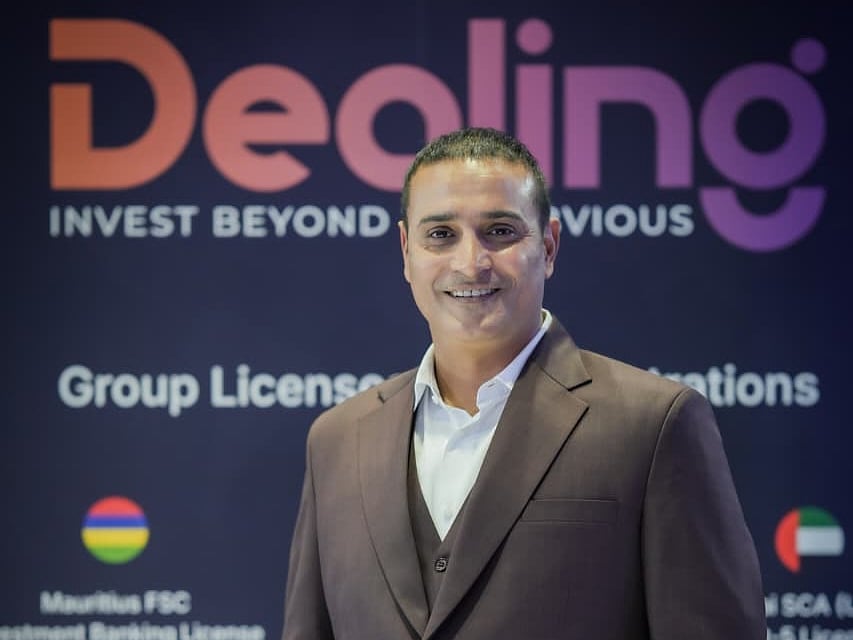
The Middle East’s equity markets are entering a new phase of growth, supported by economic diversification, regulatory progress, and rising global investor interest. However, a large portion of regional wealth still sits outside equity markets, with investors continuing to favour assets like real estate and gold during periods of uncertainty- highlighting an underlying trust gap in equity participation.
Across regional exchanges, 2,601 publicly listed companies serve a population of around 350 million, while the GCC alone has about 750 listed stocks for 61.5 million people, highlighting significant room for deeper market participation.
However, the challenge is not just expanding supply, but enabling participation. This is fundamentally a question of trust. Globally, equity participation remains limited due to fragmented access, complex cross-border regulations, and the absence of unified global investment platforms.
Investor behaviour is being shaped by an environment of constant information — social media signals, short-term triggers, and high-frequency decision-making. Many platforms further reinforce this by encouraging activity over discipline.The outcome is clear as most traders globally lose money in leveraged or derivative trading.
Tajinder Virk, Co-Founder and CEO, Finvasia Group and Dealing, said: “Today’s platforms are largely designed to increase activity, not improve outcomes. The more you trade, the more the system benefits, which creates a misalignment with long-term investor interests. The next phase of market growth will depend on correcting this—by simplifying access, improving transparency, and enabling long-term decision-making.”
He added, “While leveraged trading operates as a zero-sum structure where costs further reduce the probability of success, long-term investing has historically delivered more stable outcomes over extended time horizons. Therefore, the plaform should be focusing on promoting disciplined trading instead of reward based trading.”
Market reactions to sensitive economic, geopolitical, or company-specific information can be swift. In such environments, limited or delayed information can amplify volatility, often leading to short-term decisions that impact long-term outcomes. Compared to developed markets, the Middle East’s equity markets are still evolving in terms of participation depth and maturity. However, with a combined market capitalisation of approximately US$4.3 trillion across 17 exchanges, the region holds significant long-term growth potential.
The region is increasingly positioning itself as a global financial hub, attracting capital, talent, and institutions. A new generation of investors is increasingly looking for simplicity, transparency, and seamless experience for global access. For first-time investors entering the market, trust is often the deciding factor between participation and hesitation.
This momentum is reflected in rising assets under management across the GCC, which reached approximately US$2.2 trillion in 2024, marking a 9 percent year-on-year increase, according to the latest Boston Consulting Group global asset management report.
Trading values across GCC markets reached US$629.3 billion by the end of 2025, with further growth expected as technology-driven platforms continue to drive participation.
“Markets will not grow just by bringing in more users, but by helping them stay invested. Trust will come from platforms that are transparent, well-regulated, and designed around investor outcomesnot engagement metrics,” Virk added.
Challenges such as liquidity fluctuations and broader economic uncertainty continue to impact investor sentiment and hence building trust among investors remains critical. This shifts responsibility back to platforms- not just to enable access, but to build systems that investors can rely on over time. Regulatory clarity and investor protection frameworks also play a key role in reinforcing this trust.
The Middle East’s capital markets have strong long-term potential, investor confidence remains a key factor in driving wider participation. Liquidity swings, global economic pressures, and uncertainty around markets can often make investors cautious, especially those who are new to equity investing or exploring cross-border opportunities.
Building trust among investors becomes essential, and it cannot be built through speed or constant trading alone. It comes from giving investors clear information, transparent pricing, easy-to-understand products, and platforms that genuinely support better decision-making.
Investors are more likely to stay committed to the market when they feel the system is fair, regulated, and designed to protect their long-term interests.
“Stronger trust will not only encourage more people to invest but also help deepen market participation, improve stability, and support the next phase of sustainable growth across the Middle East’s financial markets”, added Virk.
Sign up for the Daily Briefing
Get the latest news and updates straight to your inbox
Network Links
GN StoreDownload our app
© Al Nisr Publishing LLC 2026. All rights reserved.