Shahid is an inspiring human story: Hansal Mehta
The film showing at DIFF depicts discrimination, polarisation and the anger against it
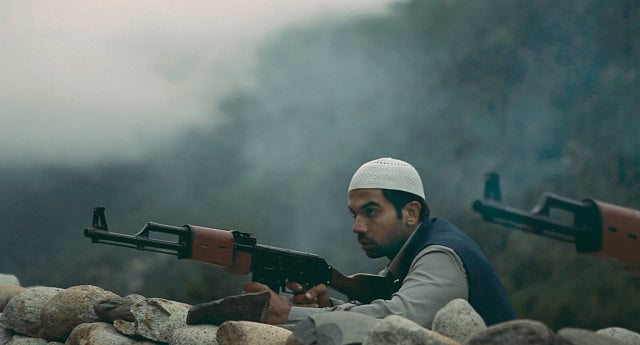
In the light of the recent anniversary of the 26/11 terrorist attacks in Mumbai, the hanging of the main accused after four years and the death of a powerful political leader in the city, Hansal Mehta’s biopic Shahid comes at an opportune time.
Described as an “inspiring” film by the director, Shahid is the story of Shahid Azmi, set against the backdrop of the 1993 Mumbai riots. It is the story of a man who almost became a terrorist before realizing his folly and changing the course of his life. Having received tremendous appreciation during its premiere at Toronto Film Festival, Mehta brought the film to the Dubai International Film Festival for a very “special” reason.
“For me, Dubai is very important because so far it’s been mostly Western audiences and an Indian audience in Mumbai that has seen the film. Dubai has a completely different mix of people. And being a Muslim country I’m really interested in how they’ll respond and react to the story”.
Mehta said he’d made the film for a mainstream cinema audience. But when the film was selected by Toronto, he realised it had the potential to go beyond the conventional film-going audience “because the film resonated so much due to its cause and its issue with international audiences”. He therefore felt it was important to show at various festivals and to a variety of audiences.
“Shahid is an inspiring human story that resonates with anyone in the world. It’s about discrimination, about polarisation. It’s about the world we live in today. It is about a lower middle class Muslim family in Mumbai. And very often we see when one is economically backward with few opportunities, one feels discriminated against. People give expression to their anger in very negative ways and Shahid did it too but then he transformed himself through his intelligence. He went through a tough time and this is a story of his transformation. He studied law, became a champion of women rights”.
Mehta may be from the city but finds it hard to identify with Mumbai.
“I was born and brought up in a city called Bombay and left the city for about three years for Australia in 1994. And when I returned I realised I came back to a different city. It was no longer Bombay, it was Mumbai. The riots had happened. The unique spirit of Bombay that lay in the fact that people lived in harmony – whether they were Hindu Muslim or otherwise – had been hacked, betrayed, angered. We had become polarised. The change of the name has been very symbolic and led to a new divided city.”
Mehta describes the film as his “expression of my disturbance of the way things are” rather than a way of getting back at the political harassment that he suffered when his film Dil Pe Mat Le Yaar released in 2000.
“It’s not just Mumbai, but anywhere in the world. When you are in minority or a marginalised community anywhere you are treated differently. Equality does not have the same meaning for people who are less equal”.
So what does he think of the political set up in India?
“I’m unfortunately not a political commentator. I’m a filmmaker,” said Mehta. “I believe the strength lies in the citizen, that’s what Shahid portrays. The strength to bring about change is in the people not the system. If you are a citizen you have to be responsible and Shahid is one of those responsible citizens – an ordinary man who made such a big difference”
Sign up for the Daily Briefing
Get the latest news and updates straight to your inbox
Network Links
GN StoreDownload our app
© Al Nisr Publishing LLC 2026. All rights reserved.