Legacy of blood: Catalonia bullfighting
A fierce debate rages in Spain as Catalonia becomes its second state to ban bullfighting
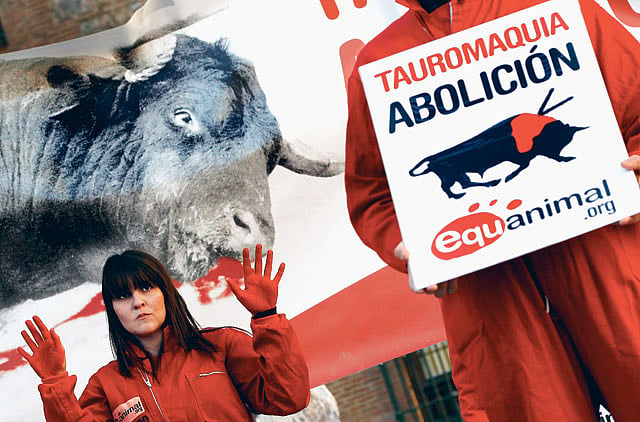
A storm is brewing in Spain as debate rages over whether the nation's emblematic bullfights should continue.
In a historic act of parliament on July 28, the northeastern region of Catalonia became the second Spanish state to ban bullfighting.
The Canary Islands were the first to stop the blood sport, back in 1991. With the countdown under way, the last bullfight will be held in Catalonia and its capital Barcelona in December 2011.
The decision was made democratically by parliamentary vote — with 68, against 55, in favour of the ban — after animal rights activists, from both Spain and abroad, presented more than 180,000 signatures declaring the practice barbaric and calling for its end.
This is not the first time there have been moves to abolish the sport. Through the centuries, Spanish kings, including Philip V, outlawed it and Pope Pius V and Pope Sixto V threatened those who participated in the event with excommunication from the church.
Their desires were overruled by subsequent authorities and the bulls returned to the ring.
International outcry
While some in Catalonia are mourning the imminent loss of what they call "a cultural jewel", the decision was hailed as a step forward by animal rights campaigners worldwide.
Internationally acclaimed writer and comedian Ricky Gervais and top model Pamela Anderson were among those who signed the international petition presented to the Catalan parliament in Barcelona.
"It sickens me to know that people are still paying money to see an animal suffer and die in such a horrific way," Gervais said. "And shame on anyone who thinks that stepping into a ring armed with swords with a frightened and confused animal, which has often already had the tendons in its neck severed so it cannot lift its head, is brave," he added.
The ensuing debate has brought rival factions at loggerheads. Many see the vote as a political statement by a wealthy and powerful Catalonia region to assert how different it is from the rest of Spain, rather than an expression of concern over cruelty to the half-tonne beasts by sword-wielding matadors.
The centre-right Popular Party, which is fervent about the idea of a unified Spain governed from Madrid, said it will fight the ban. "We will press the national parliament to enact a law giving protected status to bullfighting and bar regions from outlawing it," said Alicia Sanchez-Camacho, president of the party's Catalan branch.
Madrid's regional government, which is controlled by the Popular Party, recently listed bullfighting as being of "historic and artistic importance", a move towards reducing the possibility of the sport being banned in the Madrid area.
Victoriano del Rio, a Madrid-area bull breeder whose family has been in the business since the 18th century, called the ban "a pointless act by mediocre politicians seeking attention". He predicted it could backfire because "banning things makes people want them more".
Bullfighting fans claim that the event has cultural importance for Spain and provides an essential source of employment and tourism revenue in these times of economic difficulty. Bullfighter Vicente Barrera, angrily criticised the ban. "Bullfighting is an art and Catalonia is abandoning, for ridiculous political reasons, the tradition and culture that makes Spain so special," he said.
Another matador, José Tomás, who is a regular in the Barcelona bullring, was furious at the decision. "This is the greatest blow to democracy and free expression that we have seen in many years," he said angrily.
While bullfighting has been historically dominated by men, today there are also a number of women, such as Marí Paz Vega, who have proved their worth. She was also disappointed by the move. "Bullfights are part of the history and soul of our country. It is a truly noble event and should not be lost," she said with passion.
Images of bullfighters, or matadors, wearing sequinned costumes called "trajes de luces", or suits of light, are, along with flamenco dancers, one of the strongest symbols of Spain.
But a recent Gallup poll found that 68.8 per cent of Spaniards expressed "no interest" in bullfighting while 20.6 per cent expressed "some interest", with only 10.4 per cent showing "a lot of interest". Today more than half of the aficionados are over 65 years old.
With waning interest, Barcelona has found it difficult to fill its bullrings in recent years and many Catalans openly admit they loathe the sport. "This is part of a strange, dark, foreign, Iberian spirit which seeks to encroach upon the modern, European lifestyle to which we Catalans feel greater allegiance," said contemporary artist Joán Torres.
Most bullfighters come from Spain's poorest villages in the south of the country and live with the hope of attaining stardom, wealth and fame. While technical perfection of the moves in the ring is important, good looks count for much as well.
Heart-throb bullfighters, such as Jesúlin, make as much money from product endorsements and selling exclusives about their private lives to newspapers and magazines as they do when they face the bull.
Bullfighting is traditionally a summer afternoon activity and closely associated with the Spanish village fiestas, local celebrations. Most of the bullrings have an area reserved for a brass band that provides typical Spanish music to liven up the proceedings. In one afternoon, spectators watch three matadors face six bulls.
Matadors are rewarded for their "good work" with the bull's ears and the tail, which are cut off to be carried triumphantly around the ring. The highest honour the bullfighter can receive after a fight is to be carried out of the ring on the shoulders of the crowd.
Full of pomp and ceremony, the action in the ring has caught the imagination of many writers and artists over the years. American author Ernest Hemingway was a regular spectator and was quoted as saying that "to watch a matador in action was to see art in progress".
Many of his books, including Death in the Afternoon, give detailed accounts of bullfighting. The award-winning novel The Sun Also Rises, published in 1926, dedicates about 52 pages to describing the spectacle.
The Spanish artists Francisco de Goya and Pablo Picasso made hundreds of etchings, drawings and paintings inspired by it and both regularly joined the crowds to witness the bloody events in the bullring. Picasso found the bullfight both fascinating and disturbing and thought the bull a beautiful creature venerated before being sacrificed.
While it is easy to be led on by the colour and theatricality of the event, there is a dark and bloody reality behind the showy, sparkling costumes, fancy footwork and lively music. For those opposed to bullfighting, it is nothing less than a barbaric sport where innocent animals are killed slowly and cruelly for public gratification.
In response to the ban, José Ramón Mallén, a representative of Fundacion Equanimal, a Spanish animal rights organisation, jubilantly remarked: "This is a historic day for all those who have worked to promote animal rights in the modern world. It is wrong to enjoy watching an animal getting killed in public."
From the moment the huge, 450-kilogram beasts are released before the cheering crowd, they are doomed. The bull is first tormented by the "picador", a horserider who attacks it with a long, pointed lance, pushing and poking the large neck muscles to weaken and eventually break the ligaments so the animal's head hangs lower, making it easier for the matador to eventually drive in his sword.
This is where the bull will first lose blood and show signs of distress. Today the horses are draped with a thick, woollen blanket and are blindfolded so they cannot see the charging bull. Prior to 1930, the horses wore no protection and were usually disembowelled. Today, even with protection, many of the horses are injured or killed by the bull.
The second stage of the fight sees the bull disoriented by up to six "banderilleros", men wielding sharp, barbed javelins. They drive the pointed "banderillos" deep into the bull's spine, causing trauma, nerve damage and extensive loss of blood. In the final display, the matador enters the ring with the traditional red cape to do the "dance of death".
Historically, red was believed to enrage the bull but it is now known that they are colour-blind. After the bull has been worn down from running and blood loss, the matador drives a short sword into the back of its neck with the aim of killing it. The first strike isn't always fatal and, while the bull lies bleeding on the sand, subsequent blows must be given.
Bullfighting is criticised by animal rights activists around the world, particularly the World Society for the Protection of Animals, referring to it as "a cruel and barbaric blood sport, in which the bull suffers severe stress and a slow, torturous death".
The Spanish bullfighting guide, The Bulletpoint Bullfight, warns that bullfighting is "not for the squeamish", advising spectators to "be prepared for blood". The guide details prolonged and profuse bleeding caused by horse-mounted picadors, the stabbing with barbed darts by banderilleros, followed by the matador's fatal sword thrust.
The guide stresses that these procedures are a normal part of the "noble struggle between man and beast" but that death is rarely instantaneous. The guide further warns those attending bullfights to "be prepared to witness various failed attempts at killing the animal before it falls down dead".
The Catalan ban on bullfighting has caused a wave of controversy in Spain. Some Spaniards argue that it would be more interesting to watch the bullfighter execute a series of moves to avoid the charging bull but without actually killing it.
There were recently large demonstrations by animal welfare groups in San Sebastian, Bilbao and Madrid. Buoyed by their Catalan victory, activists have vowed to continue their fight to help extend the ban across the country. They know, however, that they will face far stiffer opposition in the bullfighting heartlands of southern Andalucía and Madrid.
- Scott Adams is a journalist based in Madrid.
Sign up for the Daily Briefing
Get the latest news and updates straight to your inbox
Network Links
GN StoreDownload our app
© Al Nisr Publishing LLC 2026. All rights reserved.