Six essential strength moves to build muscle and stay strong for life
Simple exercises can train every major muscle group and make each gym session count
Strength training has become one of the biggest fitness priorities of 2026. Across the UAE, more people are lifting weights to build muscle, manage weight and remain active as they grow older. A recent survey by a regional gym operator found strength training leading fitness interests in the UAE and Saudi Arabia, with 46 per cent respondents keen to try it or do more.
The shift goes beyond appearances. Maintaining muscle supports the joints, strengthens bones, improves balance and makes everyday movement easier. It also becomes important with age, when muscle mass and strength begin to decline.
An effective strength routine does not need to include dozens of exercises. A select, well-chosen movements set will do. These six exercises cover the legs, glutes, chest, back, shoulders, arms and core. Beginners, learn the technique with a light weight before increasing resistance.
Goblet squat
The goblet squat trains the thighs, glutes and core while helping beginners learn a strong squatting position. Holding the weight close to the chest encourages an upright posture and makes the movement easier to control.
Stand with your feet around shoulder-width apart and hold one dumbbell vertically against your chest. Keep your chest lifted as you bend your knees and push your hips down. Lower yourself as far as you can while keeping both heels on the floor. Press through your feet to return to standing.
Avoid allowing your knees to collapse inwards or rounding your lower back. If your heels lift, reduce the depth of the squat until your ankle mobility improves.
Try: Three sets of eight to 12 repetitions.
Bulgarian split squat
This single-leg exercise builds the thighs and glutes while also challenging balance and core control. Working one leg at a time can help address differences in strength between the two sides of the body.
Stand a short distance in front of a bench and place the top of one foot on it behind you. Keep most of your weight in the front leg. Bend both knees and lower your body towards the floor. Push through the front foot to rise again.
Start without weights until the position feels steady. You can then hold one dumbbell in each hand. Adjust the distance between your front foot and the bench if you feel excessive pressure in your knee.
Try: Three sets of eight to 10 repetitions on each leg.
Dumbbell chest press
The dumbbell chest press strengthens the chest, shoulders and triceps. Dumbbells allow each arm to work independently, which can reveal and gradually correct differences between the two sides.
Lie on a flat bench with a dumbbell in each hand. Position the weights beside your chest with your elbows slightly below shoulder level. Press the dumbbells upwards until your arms are extended without locking the elbows. Lower them slowly and maintain control throughout the movement.
Keep your feet firmly on the floor and avoid lifting your hips from the bench. The shoulders should remain pulled gently back instead of rolling forwards.
Try: Three sets of eight to 12 repetitions.
Lat pulldown
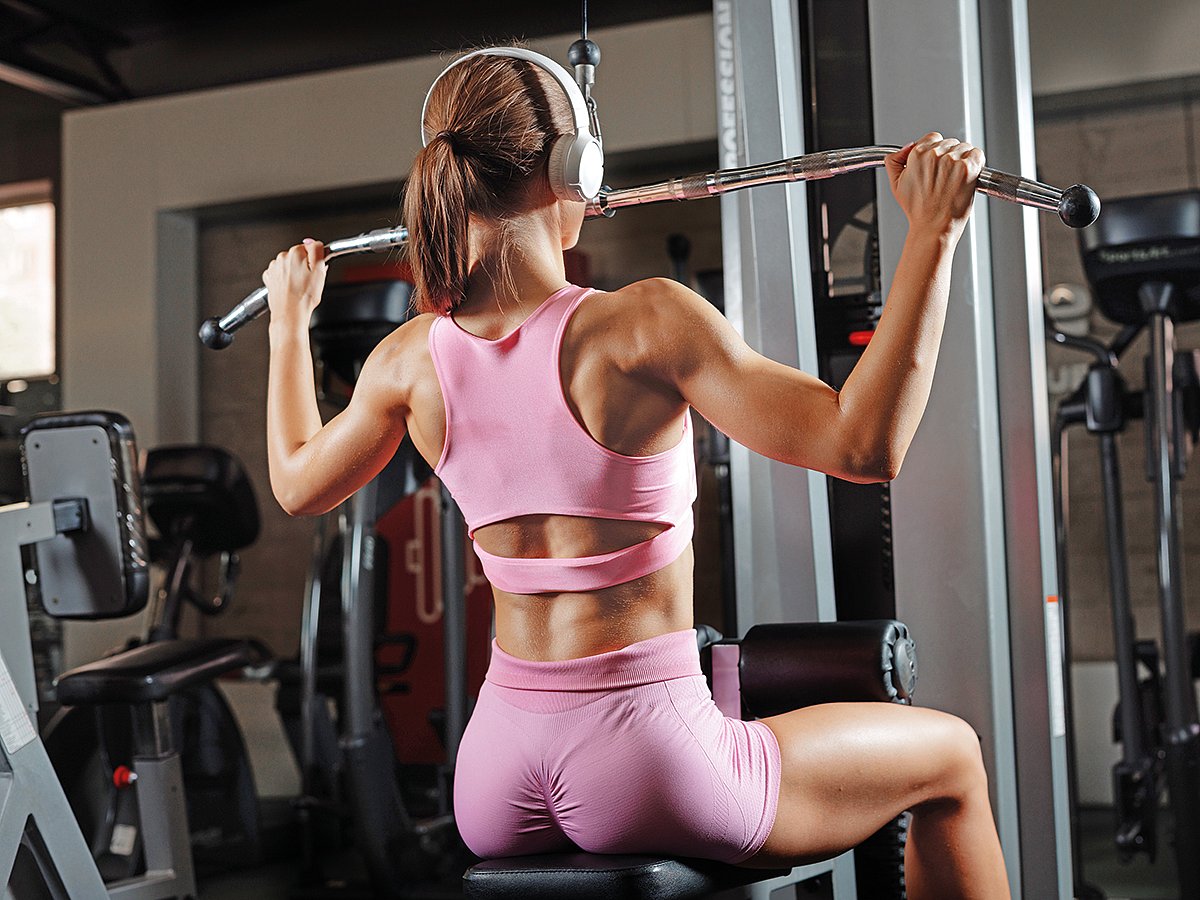
The lat pulldown trains the large muscles of the back as well as the biceps. A strong back supports better posture and balances the pressing movements used for the chest and shoulders.
Sit at the machine and secure your thighs beneath the support pads. Hold the bar slightly wider than shoulder width. Draw your shoulders down, then pull the bar towards the upper part of your chest. Slowly allow the arms to extend again.
Keep your body steady and avoid using momentum to pull the weight down. The bar should travel in front of your face. Pulling it behind the neck places the shoulders in an uncomfortable position and is unnecessary.
Try: Three sets of eight to 12 repetitions.
Seated dumbbell shoulder press
Strong shoulders support many everyday actions, from lifting luggage into an overhead compartment to placing objects on a high shelf. The seated dumbbell press works the shoulders and triceps while the bench provides support for the back.
Sit against an upright bench with one dumbbell in each hand. Begin with the weights at shoulder height and your palms facing forwards or slightly inwards. Press the dumbbells overhead, then lower them slowly to the starting position.
Keep your ribs down and avoid arching your lower back. If maintaining this position feels difficult, choose lighter dumbbells or use a shoulder-press machine.
Try: Three sets of eight to 10 repetitions.
Seated cable row
The seated cable row strengthens the middle and upper back, rear shoulders and arms. It can also help counter the rounded posture that develops after long periods spent working at a desk.
Sit at the cable machine with your feet supported and hold the handle with both hands. Begin with your arms extended and your torso upright. Pull the handle towards your lower ribs while drawing your shoulder blades together. Extend your arms slowly without allowing the weight to pull your body forwards.
Keep your shoulders relaxed and avoid leaning far backwards to move a heavier load. The movement should come mainly from the arms and back.
Try: Three sets of eight to 12 repetitions.
Make the exercises work
Perform the six exercises twice a week, allowing at least one day of recovery between sessions. Beginners can start with two sets of each movement and progress to three as their strength improves. Choose a weight that makes the final two repetitions challenging while still allowing you to maintain good form. Once you can comfortably complete the highest number of repetitions, increase the weight slightly. This gradual increase, known as progressive overload, gives the muscles a reason to grow stronger.
Sign up for the Daily Briefing
Get the latest news and updates straight to your inbox
Network Links
GN StoreDownload our app
© Al Nisr Publishing LLC 2026. All rights reserved.