Safinah Danish Elahi’s new novel explores the complexities of adult friendships
UAE-based The Dreamwork Collective publish the Pakistani author’s book
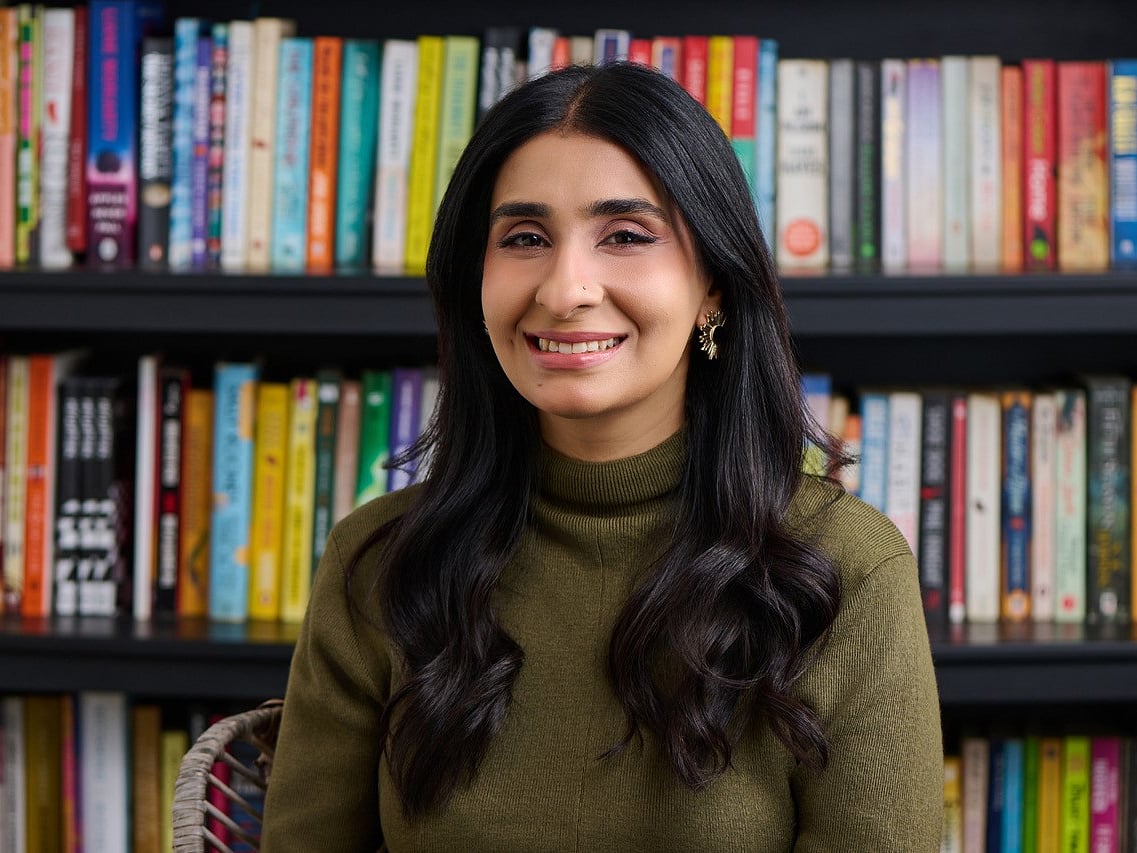
Set across continents, Chasing Shadows in Borrowed Light is a powerful story confronting loyalty, guilt, and the paradox of adult friendships. The third novel by acclaimed Pakistani author Safinah Danish Elahi is published in the UAE by The Dreamwork Collective.
Penning poetry and fiction alongside her professional practice in law, Elahi explains her approach to writing and her motivation for tackling traditionally taboo topics.
Tell us about your book, its intended audience, and the message you would like the book to convey.
This book is a story of friendships and how they change as we grow older. Four friends attend high school together and think they will be in each other’s lives forever. A tragic accident separates them, and as they disperse, they try to figure out their lives in different countries until a cry for help from one of them brings them back together.
The message I’m trying to convey is empathy and understanding for someone suffering, as well as for those who are unable to help. It is a journey of many realisations, and I hope the readers’ takeaway will be awareness and compassion. Men and women between the ages of 20 and 40 would appreciate this novel, as its themes of friendship and identity are universal and not confined to a South Asian audience.
Your book tackles some sensitive topics; why did you choose to address these issues, and was there any self-censorship?
I’ve read many books on friendships and many on mental health, but none together; I felt that perhaps friendships can heal people, or maybe they don’t. I wanted to explore this, and I had some realisations myself while writing this story. It’s been a cathartic process.
I usually self-censor, but unpredictably so, I didn’t this time. Since it’s also my third novel, I was braver than I have been in my other books. I was tentative about the ending, but my editor encouraged me to go with what feels right rather than overthinking what should be the end of my story.
Is fiction writing a good platform to tackle cultural taboos?
I truly believe it is. I think it doesn’t need to be preachy, but it can make the reader stop and take notice. It can make them feel and absorb the contents of a story much more than perhaps a lecture would - when we read stories, something in us becomes alive, as if you know in your core that at a particular time or place you would understand the characters’ motivations - why they would choose to do something good or bad. And some writing forces you to evaluate that. I hope my writing evokes that understanding in my readers.
Tell us about your writing process. Is there a writing routine? And where do your ideas come from: imagination or lived experiences?
Some of it is lived experience, and some of it is imagination. It's usually a mix of both for most writers. I don’t have a particular process apart from knowing that I want to write about something. Before I start writing, the seed of that idea keeps circling my mind until I pen it down, and I feel restless if I am unable to do that. Sometimes I write half a book and don’t see it coming to an interesting end, and I stop midway and discard it. I’ve done that twice already. But other times, I push myself to envision an ending and then change it a few times. Mostly, I struggle with the style I’m going for - past, present, one-person narrative, two or even more, and first-person voice, epistolary or from a third-person perspective. Once I’ve made that decision, I let the story take me where it wants.
Your book is being published both in Pakistan and the UAE - why did you choose a publisher in the UAE?
I already have a good readership in Pakistan. Having previously published in the UK, I am new to the UAE market. I feel the UAE is a diverse audience, and while my novel doesn’t need to have a South Asian audience, it helps that the UAE has a large one. I think being supported by the Emirates Literature Foundation is also a massive positive for me; they support the arts and literature to a larger extent than any organisation in Pakistan. My publisher, The Dreamwork Collective, has taken care of the book in every possible way. I couldn’t have trusted anyone else with this.
This is your third novel – how do you think you have evolved as a writer, and what's next for you?
I try to push myself a little more each time I write. I self-censor less - I’ve stopped being so tough on myself. I do think my writing has improved with each book I’ve written, but I refuse to believe it’s my best so far. This one is definitely better than the previous one, but you know what, the next one will be even better (inshallah).
Next for me is lots of things - writing is a part-time gig for me. I’ve already begun writing something, but I don’t know yet whether it’s a short story, a novella, or a full-blown novel. I’m also an athlete and a padel club owner, so expansion is happening on that front. But the fun part is that I may be combining all of the above into my next work. Hopefully, both padel tennis enthusiasts and my readers will have something to look forward to!
Chasing Shadows in Borrowed Light is available now at The Dreamwork Collective. The book launch is taking place in collaboration with the Emirates Literature Foundation on Sunday, 19th April 2026. Register here to attend.
Sign up for the Daily Briefing
Get the latest news and updates straight to your inbox
Network Links
GN StoreDownload our app
© Al Nisr Publishing LLC 2026. All rights reserved.