Who is your favourite literary character?
Calvin and Hobbes, Perry Mason or Heathcliff?
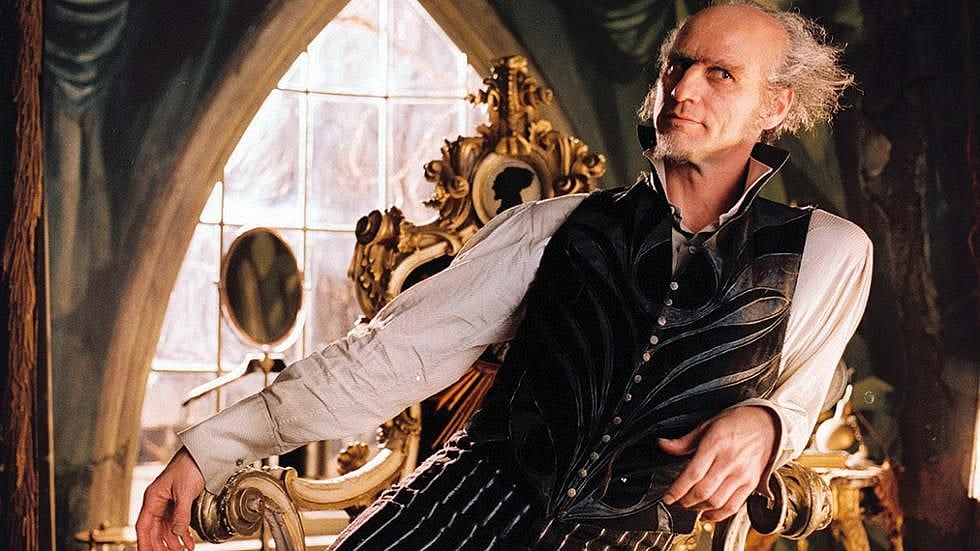
It has to be Count Olaf. Who cannot love the menacing touch of Count Olaf, the genius “show off” from the Series of Unfortunate Events books. The charming count is not just “a” character but a man of a thousand faces. In one scene you are introduced to a one-footed ship’s captain with a rustic twang (‘Arrrq...’) and the next moment he is a warm middle-aged lady that any child would adore. If you think you have figured him out, think again, for he is the count – he is the count – he is the count – who else has such robust good looks in such a large amount? He is handsome and he is talented and loves your bank account. – Rashna Pardiwala Mehta
My best-loved literary character(s), without a doubt, would be Calvin and Hobbes. Who doesn’t love the comical capers of Calvin, a precocious, vexatious and venturesome six-year-old boy, and Hobbes, his sardonic stuffed tiger. Over the years of seeing their strip in tabloid! and now reading our entire collection of Bill Watterson’s creation, I have developed a profound sense of fondness for the two. They never fail to plaster a grin on my face and after reading the comic strip, usually my entire family ends up laughing and discussing their antics. –Sarah Ronad
Harry Potter. There are a lot of great things we can find in him – bravery, courage, leadership, friendship, and most of all, how he accepts challenges. – Faheem Farooq
My favourite literary character is undoubtedly, Perry Mason, the lawyer in Erle Stanley Gardner’s books. There is never a dull moment in any of his courtroom cases, which are often solved outside the courtroom rather than inside, by Mason taking the initiative to go to the crime scenes himself to recreate the scene and get clues.
His rapid-action mind is always whirring with action, be it morning, noon or night. In the courtroom, the barrage of questions at his ‘victim’, the prosecution’s witnesses, leaves me wondering whether any such personalities exist in real life.
His usual opponent, Hamilton Burger (or one of his assistants), usually gets to eat humble pie, however strong their case may be; the number of times their objections are sustained by the judge accepting Mason’s ‘objection – incompetent, irrelevant, immaterial’, is uncountable.
And, there’s his assistant, the lovely secretary Della Street, and the private detective he usually hires, Paul Drake.
These are highly recommended novels, even though they were written ages ago, and set against the backdrop of Los Angeles. – Amit Loiwal
Which story-loving kid doesn’t like the Famous Five series written by Enid Blyton? My favourite character from these wonderful stories is Julian. He is the eldest of the kids, and the wisest. He is a real hero to the other kids and they look to him for advice and reassurance whenever they run into trouble. Julian’s character is a wonderful blend of composure and a taste for adventure, which makes him a role model for the readers alike. – Jayanth Ramganesh
I am willing to bet money that I speak for all female readers who have read Wuthering Heights in their teens when I admit that the character of Heathcliff aroused some kind of unhealthy obsession. Sigh – growing up, this ultimate literary bad boy really had my heart. The angst and torment of the love between him and Catherine that drives him to crazed (yet calculated) vengeance made me overlook all of his obvious flaws. Instead, I spent a considerable amount of my youth fantasizing about this dark, brooding and mysterious entity, with his love like a passionate wildfire threatening to burn everything in its path. To me, Heathcliff and everything about him was what dreams were made of.
I am also willing to bet money that I speak for all female readers who have reread Wuthering Heights as adults when I admit that I have seriously questioned the sanity of my teenage self for falling so hopelessly in love with such a heinous creature. He is mean, violent and spiteful (to put it mildly), he ruins the lives of almost all who are exposed to him, and there is not a single character (other than Catherine) who has anything nice to say about him. His love, with all its wildness and passion, is in reality a solid reason to get a court-ordered restraining order.
Having said that, the raw appeal of Heathcliff still somehow inexplicably remains in every rereading of the novel; and once again, I am willing to bet money that I speak for all female readers of the novel when I admit this. I do not know what it is. I do not understand how a character so twisted can evoke such strong positive emotion. It is beyond me why even fairly well-adjusted, sane adults with no past emotional trauma feel this way. There is no point questioning it, we just have to embrace it and hand it to Emily Bronte for creating this wonderfully perverse archetype of a tortured romantic hero that one cannot help but love to hate. – Mehvash Peerbhoy
Elizabeth Bennett from the classic Pride and Prejudice by Jane Austen is my all-time favourite character.
She is an inspiring woman who is well-read and intelligent but born in a middle-class family in a period when class differences ruled. Although the second-born, Elizabeth takes on the responsibility of settling her sisters. She is a confidante of her father – almost like a son. On the exterior a strong woman but a sensitive and romantic soul on the inside.
In the end she finds love in the form of the aristocratic Mr Darcy, after all the misconceptions they have about each other in the beginning are cleared.
The character of Elizabeth Bennet is of an ideal woman, sister and daughter who is desirable in any time period. – Bindu K. Nair
I would consider the universally loved cartoon duo Calvin and Hobbes as my favourite literary characters. The mischievous six year old Calvin and his imaginary stuffed tiger Hobbes regale us with extremely insightful albeit humorous vignettes from the point of view of a child. The cartoon strips actually makes us pause and contemplate the deeper meaning of various things in life, ranging from morality and friendship to humankind’s need to destroy their environment – and everything in between.
The twosome are joined by a range of delightful characters including a sardonic father, a loving mother, a frustrated baby-sitter and a know-it-all school friend. The creator of the strip, Bill Watterson, decided to put art over financial success and refused to dilute the character’s moral popularity by licensing or franchising them. Two decades after discovering them, I still spend a couple of minutes every day chuckling at their antics thanks to Gulf News’ daily syndication of their adventures [found in the tabloid! section]. – Dr Vamsi Chaitanya Varma
One of the most controversial plays in the Victorian era, The Doll’s House, features my favourite literary character: Nora Helmer. A dehumanized character who has no sense of self, the only way she is identified in her society is by her social role as a mother and wife. From a naive young lady in the exposition to a character who enjoys earning money like a man, she decides to leave her family behind in hopes of identifying herself and in pursuit of her independence. I like the feminist character in Nora despite being a victim of the stereotypes of that time period. Her courage to step out on her own is really empowering. – Ann Albin
Bridget Jones, from Helen Fielding’s series. The realistic portrayal of a normal woman is so accurate and is not dressed with colours and rainbows; rather showing how it is actually is makes her my favourite. She has plenty of weaknesses, which she tries to overcome, and despite the bad decisions she has made, nothing stops her from trying; rather she tries to be a better self every day. – Ayesha Khan
Aelin Ashryver Galathynius from the Throne of Glass series by Sarah J Maas. She is a character full of spunk, sass and a swagger that cannot be brought down by anything. Her hilarious one-liners are full of wit and they never fail to bring a smile to my face. She is a courageous 19-year-old, ready to face all hurdles that life throws her way. While she is a strong female character, she also has her dark side and being an assassin sometimes brings her shadier side out.
As she figures herself out through the course of seven books she realizes that her bad parts are as much a part of her as her good parts. She is very relatable as she is not only an epitome of beauty, courage, love and strength but has to face her own battles like the rest of us. However, the fact that she has become a good person despite her problems serves as an inspiration for me as well as other readers to become more like her and embrace our dark as well as good parts and face all problems life throws our way with a smile on our face – making her my favourite character. – Rebecca Reji
Maggie Tulliver from George Elliot’s Mill on the Floss stands out for many reasons. I had read this book as a young girl. I could derive many parallels to my own life from Maggie’s childhood. The book depicts the strong bond of love, affection and a shared history that exists between siblings. The love that Maggie shares with her elder brother, Tom, forms the backdrop of the book. Maggie is a young, impulsive and spirited girl who is very close to her brother. She gets into many an escapade in her life and once, in a fit of rebellion, insists that her brother cuts off her long hair. She is so enraged that she is in no way bothered by the peculiar picture she will now present with her unevenly cut hair.
The book beautifully depicts the evolution that any relationship has to go through in the journey of life. Change is the only constant, and inevitably even the closest of relationships never remain the same, but evolve and modify themselves overtime. This essential truth forms the crux of this classic. – Vinita Mohan
Anne Shirley from Anne of Green Gables, written by L. M. Montgomery. Her overabundant imagination is used to cope with troubling times and makes her uncommonly gifted at oration and story-telling. Honesty and openness are also Anne’s strongest traits - those qualities warmed her up to her foster parents, the Cuthberts, and it allowed them to trust her completely, as they knew she was never malicious. She has a deep appreciation of beauty of all forms, especially in nature, and is a born philosopher, inspiring young and old alike with her wit and words.
Of course, Anne’s not perfect – her love of beauty means that she is sometimes a little vain, sometimes prioritizing looks before intelligence and character; her imagination tends to lead her astray – daydreaming during chores being the main source of her foster mother Marilla’s frustrations; her temper is a capricious creature, quick to ignite and hard to get over due to her stubbornness, which has put her at odds with several of the characters. But these traits make her human and memorable. – Arya Vikas
Professor Robert Langdon is a fictional character created by Dan Brown for his Robert Langdon book series. He is a symbologist and a philanthropist.
I like him because of the way he understands complicated codes and interprets them by sneaking into places that no one had ever gone into. The suspense as he makes his discoveries is absolutely fabulous.
I recommend this book series to everyone, as once you open one of the books, you wouldn’t feel like closing it until you have completed it. – Mohammad Abdul Wakeel Zaid
Sign up for the Daily Briefing
Get the latest news and updates straight to your inbox
Network Links
GN StoreDownload our app
© Al Nisr Publishing LLC 2026. All rights reserved.