Maria Conceição found her greatest purpose beyond the mountains
She climbed the world's highest peaks to create brighter futures for vulnerable children
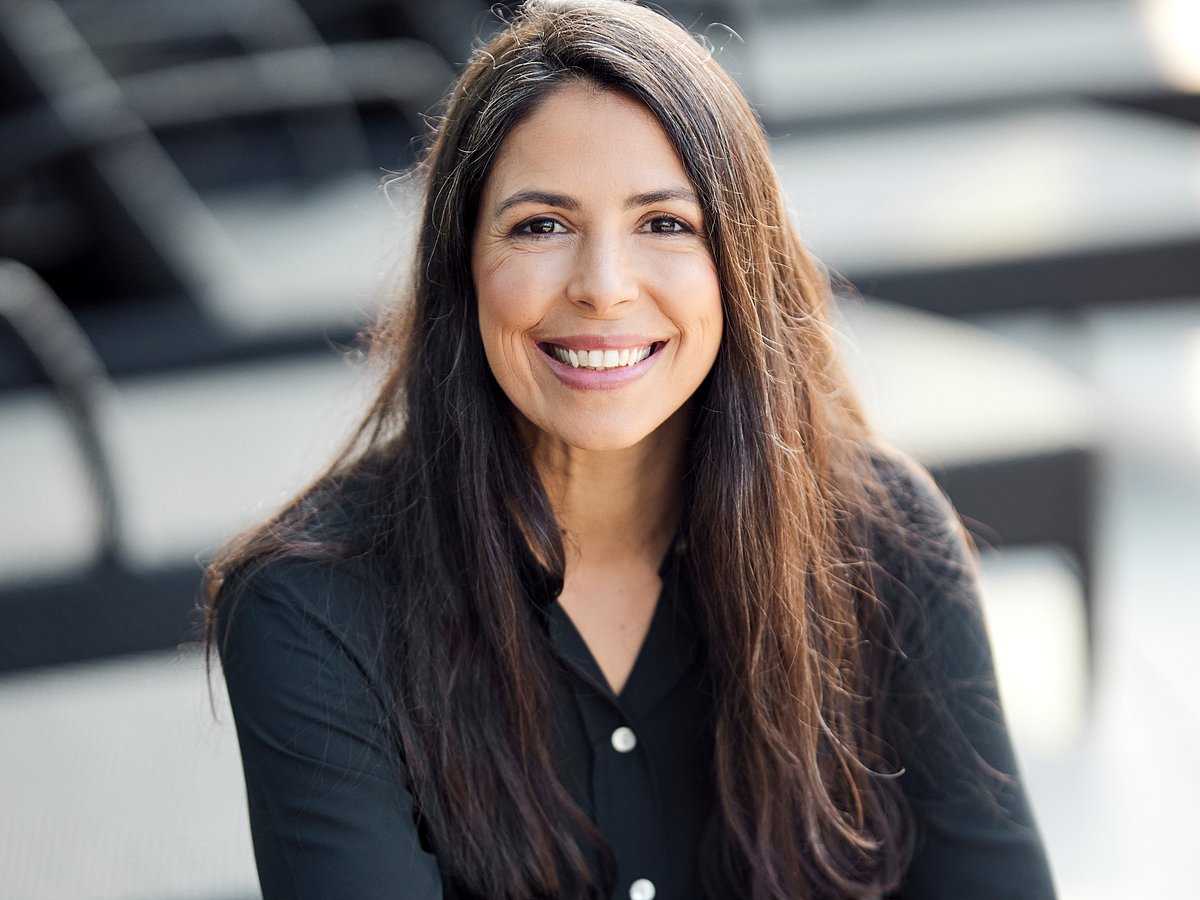
I meet Maria Conceição in Dubai to talk about Everest, K2 and the extraordinary life she has built. There is a moment during our conversation when she mentions her latest book and, almost without warning, everything else begins to make sense.
The manuscript is finished. The chapters on K2 have been written. The photographs have been chosen. Years of preparation and one of the greatest achievements of her life have already been committed to paper. Yet the book cannot go to print because one chapter is still missing. “I can’t write the ending yet,” she says with a smile. “The last chapter is when all my children have gone to university.” She is not talking about her own children.
Around her, on a warm evening in Dubai, sit young men and women whose lives began in the slums of Dhaka and now stretch towards universities in Portugal, Scotland, Malaysia and Australia. One has become the first graduate in the history of her family. Another is studying Business Administration at Heriot-Watt University on a full scholarship after internships with Chanel and Grant Thornton. A teenager is preparing to leave for Scotland. They interrupt one another, tease Maria about football and call her “Mom” with an ease that makes the word feel entirely natural.
Only later does it become clear that this room, more than Everest or K2, explains who Maria Conceição really is. The achievements are remarkable. She is the first Portuguese woman to climb both Everest and K2, the first Portuguese national to complete the Explorer’s Grand Slam, an endurance athlete, motivational speaker, author and founder of the Maria Cristina Foundation. Yet those accomplishments explain what she has done, not why she has done them. “I think people believe the mountains are the achievement,” she says. “For me, they’re simply a bridge.”
A summit becomes a speaking engagement. A speech becomes a corporate partnership. A partnership becomes a scholarship. A scholarship becomes another young life transformed. In Maria’s world, mountains are never the destination. They are simply another route to opportunity.
That philosophy began long before Bangladesh entered her life. When asked whether the hardships of her childhood shaped the determination people see today, Maria gently resists the idea that suffering creates compassion. “I don’t want people to think they need a childhood like mine to become a humanitarian,” she says. “We’re human beings. There are certain things we simply shouldn’t ignore. Sometimes you’re the only lifeline another person, or even an animal, has.”
Then she quietly shifts the focus away from herself. “What my childhood gave me wasn’t hardship. It gave me Cristina.”
Cristina was an Angolan refugee who had fled war after losing her husband. She couldn’t read or write, yet she raised seven children while opening her home to a little girl who wasn’t her own. Maria’s birth mother had escaped an abusive marriage and left for Lisbon hoping to find work, intending to return for her daughter. She never did. “For me, Cristina was simply my mother,” Maria says. “I didn’t even realise she wasn’t my biological mother until I started school.”
Nearly five decades ago, a Black refugee raising a white child invited constant scrutiny. Social workers repeatedly tried to remove Maria and place her in institutional care. Kristina refused every time. “I remember watching her fight for me,” Maria says. “She never gave up.”
Cristina died when Maria was nine, but the lesson she left behind never did. “If you begin something, you finish it properly.”
That belief still shapes every decision Maria makes. It explains why she refuses to stop supporting students once they finish school. Her commitment ends only when they graduate, find work and become financially independent.
Twenty-one years ago, while working as an Emirates flight attendant, Maria found herself on a 24-hour layover in Dhaka. She met children living in the city’s slums and promised their parents she would help them escape poverty. At first she returned every month carrying food, clothes and medicine. Then she realised she was solving the wrong problem. “I’d go back to Dubai feeling good because I’d delivered food or medicine,” she says. “But nothing in their lives had actually changed.”
She realised that the answer couldn’t be charity, it had to be education. That promise became the Maria Cristina Foundation, and more than two decades later its impact is sitting around the table. “If Mom hadn’t recognised our potential,” Biplob Ray, 23, one of the youngsters, says quietly, “none of us would be here today.”
Google changed everything
For several years, the Foundation grew steadily. What began as a promise evolved into a campus with classrooms, healthcare facilities and vocational training for mothers, giving hundreds of children an opportunity their families had never imagined possible. Then the global financial crisis changed everything. “Almost overnight, we lost our sponsors and investors,” Maria says.
By 2013, the debts had become impossible to ignore and the school was forced to close. Losing the buildings wasn’t what haunted her most. It was the thought of what would happen to the children she had promised to protect. Without education, many girls faced the prospect of child marriage and the same cycle of poverty they had been born into. “I was desperate,” she admits. “I wasn’t thinking about climbing mountains. I was thinking about how to keep these children in school.”
The answer arrived from an unlikely place. “I went on Google,” she says, laughing at the memory. “I typed, ‘What’s the quickest way to raise money?’”
Among the suggestions was one she had never considered: become an athlete with enough visibility to attract sponsors. Most people would have dismissed the idea. Maria closed her laptop and started training. “I never became an athlete because I wanted medals,” she says. “I became an athlete because I needed to keep the children in school.”
Looking back, it is remarkable how many lives changed because of that one decision. Everest led to speaking engagements. Those talks introduced her to business leaders, philanthropists and educators. One invitation, after an expedition, took her to a GEMS Education graduation ceremony where she shared her story. Among those listening was Dino Varkey. By the end of it, five children from the Foundation had received full scholarships covering their education, uniforms and transport. One of them would later complete both a university degree and a master’s in Australia before joining the Australian Government.
Without the mountain, there would have been no speech. Without the speech, there would have been no scholarship. It is a chain reaction Maria has repeated throughout her life. Every achievement is valuable only if it creates another opportunity for someone else. Ask her which accomplishment means the most and, surprisingly, neither Everest nor K2 makes the list. “My greatest achievement is seeing a child from one of the poorest communities in Bangladesh graduate from university,” she says. “When I started, I had no money. I wasn’t running a recognised institution. I didn’t have influential people backing me. People thought I was dreaming.”
Today, those dreams are introducing themselves around the table. Shima Akter, 24, has become the first university graduate in the history of her family and community, while Biplob is studying Business Administration at Heriot-Watt University on a full scholarship. Surjo Moni, 15, has already secured a place at a university in Scotland, becoming the youngest student in the Foundation to receive a university placement, and Jannatul Ferdousi, 16, will leave for Malaysia later this year after completing Grade 10. Mim Jahan, 20, and Farzana Islam Kona, 21, are preparing for the next stage of their education. At the other end of the journey sits seven-year-old Mst Joynov, still in Grade 1, while Hasina Akter, 35, a mother of two daughters, is continuing her own education as she volunteers with the Foundation.
“Mom always tells us that even the word ‘impossible’ says ‘I’m possible,’” Shima says with a smile. “Whenever life becomes difficult, she reminds us that it doesn’t mean we’re failing. It usually means we’re getting closer.”
Maria listens quietly before shaking her head. “I thought I was going to unlock their potential,” she says. “Instead, they unlocked mine.”
It is perhaps the most revealing sentence she speaks all evening. Without these children, she believes she would never have discovered she could climb mountains, write books, stand on stages or break Guinness World Records. She set out to change their future and, somewhere along the way, they changed the scale of her own.
Just as the Foundation was beginning to recover from the financial crisis, another setback arrived. Covid brought speaking engagements to a halt, sponsors disappeared and fundraising events vanished almost overnight. “So we adapted again,” she says.
She began writing books, which companies including Louis Vuitton and Chanel bought as gifts for employees and clients, creating another source of funding for the Foundation. Now she is preparing to launch a pet-care business built on the same principle: every new venture exists to keep another deserving child in class. For Maria, every reinvention has been a way to keep the Foundation moving forward.
Compassion, for Maria, has never stopped with people. The students also rescue abandoned and injured cats, taking them to veterinary clinics even when money is tight. “If you see something, don’t talk about the problem, talk about the solution,” she says. “Don’t think someone else will come. You are that someone.”
Ironically, she has already written books about Everest and K2. The only story she refuses to finish is the one that matters most. The next one, she says, will only be complete when every one of her children has reached university.
The last ascent
For years, Maria believed there would come a day when her work would finally be finished. The children would graduate, find jobs and build independent lives. She imagined closing the chapter that had begun on a humid afternoon in Dhaka more than two decades earlier, perhaps stepping back to spend more time with her partner and start a family of her own. “I thought I was nearly there,” she says. “So many of the children had finished university and started their careers. For the first time, I thought maybe now I can think about having my own family.”
Life had other plans. After years of unexplained exhaustion and countless medical appointments, Maria discovered she had entered menopause far earlier than expected. There was sadness, she admits, because the future she and her partner had imagined quietly slipped away.
Then she looks around the room. “When I look at them, I realise I’ve already lived motherhood,” she says. “I’ve worried when they were sick, celebrated birthdays and graduations, comforted them after disappointments and watched them leave home for university. Some people define motherhood by biology. I don’t. For me, motherhood is showing up every single day for someone else’s future.”
Across the table, Shima smiles. “My mother gave me life,” she says. “Mom gave me opportunities.”
It is one of those rare moments that needs no interpretation. If Maria’s life has followed any pattern, it is that every ending quietly becomes the beginning of something she never expected. When she climbed K2 in 2024, she believed she was closing one of the biggest chapters of her life. Instead, the expedition handed her another mission.
A high-altitude worker on the climb was killed, leaving behind a wife and four children. Meeting his family forced Maria to confront another reality hidden behind the world’s highest peaks. Many of the Sherpas and high-altitude workers who guide climbers take extraordinary risks because they have few other ways to support their families. “I went to K2 thinking I was finishing one mission,” she says. “Instead, another one found me.”
She is now developing a project to support those communities in Nepal. Even setbacks become lessons. After knee surgery, doctors told her she would never climb another major mountain. She ignored the diagnosis and asked a different question. “’Don’t tell me what I can’t do,’” she recalls. “’Tell me what I can do.’”
She climbed again and she always does. As our conversation draws to a close, Maria reaches for one final metaphor. This time it isn’t mountaineering. It’s football. “The match isn’t over because you’re losing,” she says. “It’s over when the referee blows the final whistle.”
Every person, she believes, has an Everest to climb. For some it is a mountain. For others it is illness, debt, grief or starting over. The summit is different, but the lesson is the same — keep climbing.
Perhaps, that is why Maria’s greatest story is yet to summit. Everest, K2 and the Explorer’s Grand Slam are chapters she has already lived. The one she is still waiting to write belongs to the students whose journeys continue to unfold. She believed in them long before they believed in themselves.
“I’ve always believed that if you truly love someone,” she says, “your job isn’t to make them dependent on you. Your job is to prepare them so that one day they no longer need you.”
Her last chapter remains unwritten, but that’s because Maria is waiting, for every one of her children to write theirs.
Sign up for the Daily Briefing
Get the latest news and updates straight to your inbox
Network Links
GN StoreDownload our app
© Al Nisr Publishing LLC 2026. All rights reserved.