Ahmad Haffar: The voice behind the brands
Also the composer behind the sonic signatures of some of the world’s biggest brands
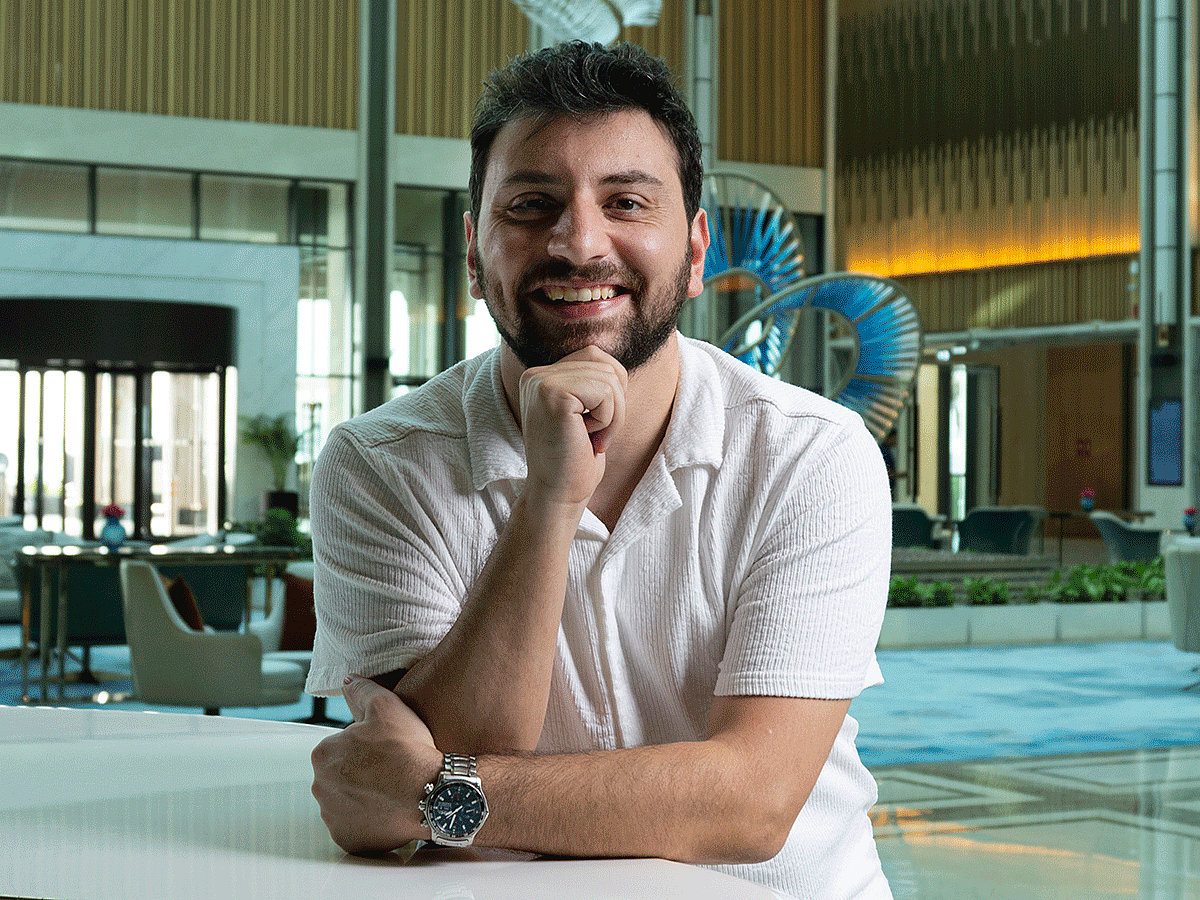
The sun has barely risen over Dubai when Ahmad Haffar steps away from a cover shoot at Taj Exotica Resort & Spa. Just after 6.30am, he has already spent the morning moving between cameras and hotel corridors. As we walk through the lobby towards a quieter corner, he glances at the speakers overhead, smiles and says, almost casually, “That’s my music.”
Guests wheel suitcases across the marble floor. Others settle into sofas with their first coffee of the day. Nobody stops to listen, yet everyone is hearing the same melody, one Haffar composed as part of Taj Hotels’ global sonic branding ecosystem. It plays across nearly 110 Taj properties worldwide, accompanying arrivals, departures and countless moments in between.
Until that morning, I had never considered that a brand could have a sound as distinctive as its logo.
Haffar has spent the past decade building sonic branding into one of the Middle East’s fastest-growing creative specialisations. His portfolio now includes more than 138 sonic identities across hospitality, banking, retail, telecommunications and government, earning him more than 17 regional awards and three international honours.
Ironically, the achievement that made him famous is no longer the one he is most eager to discuss. For many people in the UAE, Haffar is simply The Voice of Dubai. His voice welcomes travellers at Dubai International Airport, introduces performances at Dubai Opera and Coca-Cola Arena, accompanies passengers on the Palm Monorail and features across numerous Dubai Government entities. Since the end of 2023, it has been used exclusively for Dubai Government projects.
He is proud of the title, but insists it has always existed alongside another career. “Music has always been at the centre of everything I do,” he says. “Composing for brands is also part of being the Voice of Dubai because I’ve helped shape the city’s soundscape.”
That fascination with sound began long before anyone recognised his voice. The youngest of four children, Haffar grew up in a close-knit family where music was part of everyday life. His father loved French songs about love, friendship and community, and although Haffar understood the lyrics, what fascinated him most was the idea of creating music himself.
“My earliest memories are of my father playing music around the house,” he says. “I wanted to play guitar so he could sing along. He always insisted he didn’t like his own voice, but it was something we enjoyed together. I wanted to create original music.”
His family encouraged the hobby, even if few imagined it would become a career. School never held the same appeal. “When I started playing, I discovered a deeper part of myself,” he says. “Making music made me feel more connected to who I was as a person. It was a magical feeling then, and it still is today.”
Working with Lebanese artists opened his first professional doors, but it was a performance before an audience of around 3,000 people that convinced him music could become more than a passion. “I wasn’t performing someone else’s music,” he recalls. “I had written the guitar and piano arrangements for one of the songs. Standing there, I realised maybe I could actually do this professionally.”
Inspired by McDonald’s famous I’m Lovin’ It campaign, Haffar became fascinated by the idea that music could become as recognisable as a logo. At 19, he began composing for brands, years before sonic branding entered mainstream marketing conversations in the region. “I didn’t fully understand what I was building,” he says. “I just knew it had the potential to make an impact.”
One of his earliest successes came with Barakat Juice, whose melody remains instantly recognisable across the UAE. “A lot of the positivity in that music came directly from my childhood,” he says. “Everything comes back to those stories and those memories.”
Advertising jingles gradually gave way to orchestral compositions, film scores and complete sonic ecosystems that accompany people through airports, hotels, shopping centres and public spaces, usually without them ever realising who created them.
That anonymity has never troubled Haffar because the music was never meant to promote its composer. Its purpose is to become inseparable from the brand until people can no longer imagine one without the other.
The language of sound
If logos give brands a face, Haffar believes sound gives them a personality. Most people instinctively understand the power of a visual identity. Music, he argues, deserves the same recognition. Ask someone to picture Apple, Nike or McDonald’s and an image immediately comes to mind. Ask them to remember a melody and they often realise they have been carrying it around for years without consciously noticing it.
“The brain processes sound faster than visuals,” he explains. “A logo needs your attention. Sound reaches you even when you’re looking somewhere else.”
For Haffar, that is where sonic branding begins. It has little to do with writing a memorable tune and everything to do with creating a musical identity that stays consistent wherever people encounter a brand, whether through advertising, an app, a customer service line or the background music playing in a hotel lobby.
“The biggest misconception is that it’s just a jingle,” he says. “A jingle belongs to one campaign. Sonic branding belongs to the brand.”
Before writing a single note, he spends weeks understanding a company’s history, culture and ambitions, looking beyond products and services to identify the emotions it wants customers to associate with its name. “You have to understand the company’s DNA before you compose anything,” he says. “Otherwise you’re writing music you like instead of music the brand needs.”
His work with Taj Hotels illustrates that philosophy. Whether guests are checking into a Taj hotel in Dubai, Mumbai, London or New York, the same sonic identity becomes a constant companion, creating a familiar emotional thread from one property to the next.
Listening to his composition drift through the Taj lobby after our photoshoot, I suddenly understood why Haffar speaks less about music than about experience. Nobody paused to admire the melody, yet it became part of the morning, accompanying conversations, arrivals and departures without asking for attention. That, he believes, is exactly what successful sonic branding should do.
If Taj demonstrated how sound could elevate a luxury hospitality experience, Gulfa Water presented a very different challenge. Creating a sonic identity for bottled water meant giving an everyday product a recognisable emotional signature. Haffar says he began with what the brand represented rather than what it sold. “Because it’s a mineral water brand, I wanted the music to reflect goodness, health and well-being,” he says.
Those qualities shaped the composition and naturally led to the campaign’s line, It’s Worth It, reinforcing the idea that Gulfa should become part of people’s daily wellness journey. He credits the company’s leadership with recognising that sound could distinguish the brand in a crowded market, making Gulfa what he believes is the first bottled water brand in the UAE to develop a complete sonic branding ecosystem.
Growing the vision
When Haffar began speaking to companies about sonic branding, few understood why sound deserved the same strategic attention as a logo or visual identity. “People understood the value of branding,” he says. “They just didn’t realise sound was part of it.”
Every successful project became another opportunity to prove that music could strengthen recognition and emotional connection. As clients experienced the results, the conversation changed. Today, many approach him already convinced of its value. The discussion is no longer why they need sonic branding, but how it should reflect who they are.
His work now spans hospitality, aviation, banking, retail and government, yet every project still starts with a simple question. “What should people feel?”
The answer becomes the foundation of every composition. “You can’t compose before you understand the emotion,” he says. “Music is the final expression of the strategy, not the strategy itself.”
The philosophy has taken his work well beyond the UAE, although Dubai remains the city most closely associated with his career. His voice welcomes travellers at Dubai International Airport while his compositions accompany experiences across hotels, government entities, entertainment venues and global brands across the world.
For someone recognised by millions as The Voice of Dubai, Haffar has built a career creating work that is rarely meant to draw attention to its creator. Recognition, he believes, belongs to the brand, and success comes when people remember how a place made them feel before they start to think about the music playing in the background.
What comes next
Success has given Haffar something he didn’t have when he was starting out; the opportunity to help others navigate an industry that barely existed when he entered it.
“When I began, there wasn’t really a roadmap,” he says. “A lot of what I learnt came through trial and error.”
That experience led to the launch of On The Field Creative Academy, which has trained 83 students from across the Middle East, Europe and North America, including Emirati, Saudi, Qatari, Kuwaiti, Indian, Lebanese, Syrian, British, Irish, American, French and Spanish participants. The youngest student was nine years old. The oldest, 67.
Watching that community continue to grow, he says, has become one of the most rewarding parts of his career. “You can be incredibly talented,” he says, “but if you don’t know how to present your work or understand the person sitting across the table, talent alone won’t build a career.”
While many creatives fear artificial intelligence will replace composers, Haffar sees it as another tool, capable of accelerating parts of the creative process but incapable of replacing lived experience, instinct and emotional intelligence. “AI can generate music,” he says. “It can’t understand why a particular melody makes someone feel something because of a memory from childhood or a personal experience. Creativity still begins with people.”
That philosophy extends to MindLoop, his AI-powered platform designed to help brands and creators develop sonic identities more efficiently while keeping creative decisions firmly in human hands. It complements the wider work of MindLoop Studios, which today partners with more than 150 clients and agencies and draws on a network of over 600 voice artists across 40 to 50 languages and dialects. “It’s about collaboration,” he says. “AI should help creatives do better work, not replace them.”
His ambitions extend beyond business. Through Imagine, a social initiative close to his heart, Haffar has spent years using music and storytelling to encourage young people to explore creative careers and recognise the opportunities they can create for themselves and others.
As our conversation comes to an end, I find myself thinking back to the quiet moment in the Taj lobby where it all began. Guests continue to arrive and leave while Haffar’s composition drifts almost unnoticed through the hotel. It doesn’t ask for attention because it was never designed to. Its purpose is to become part of the experience, which, in many ways, also captures the essence of Haffar’s career.
Millions know the voice that welcomes them to Dubai, but his most enduring work is the music that quietly accompanies their journey long after they have forgotten where they first heard it. n
Music has always been at the centre of everything I do. Composing for brands is also part of being the Voice of Dubai because I’ve helped shape the city’s soundscape."
AI can generate music. It can’t understand why a particular melody makes someone feel something. Creativity still begins with people.”
Sign up for the Daily Briefing
Get the latest news and updates straight to your inbox
Network Links
GN StoreDownload our app
© Al Nisr Publishing LLC 2026. All rights reserved.