Idol matters
Ratings may be down, but the battle for American Idol is as fierce as the battle on stage
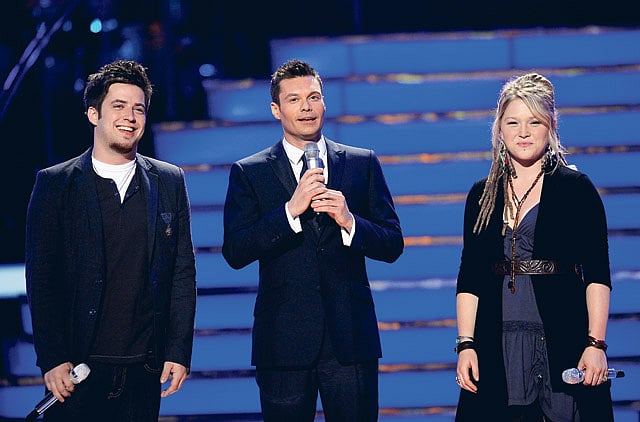
The contest on American Idol is playing second fiddle to the contest for American Idol.
In recent weeks a fan club of investors has been circling CKX Inc, the company behind the Fox hit and No 1 show on television. Among the suitors are Idol's creator, Simon Fuller, and Hollywood dealmaker Allen Shapiro.
Shapiro is partnered with One Equity Partners, the private equity arm of JPMorgan Chase & Co Fuller, former owner of Idol producer 19 Entertainment, is aligned with former Barclays Capital banker Roger Jenkins. People close to the parties said that the Fuller group has offered $600 million (Dh2.2 billion), while the Shapiro team bid $550 million.
Hovering in the background is CKX's founder and former chief executive, Robert F.X. Sillerman, who holds more than 20 per cent of the company's stock and resigned in May to consider making his own offer.
What exactly the bidders see in CKX, a small-cap company whose principal asset is a TV show that has probably peaked in popularity, remains something of a mystery.
Wall Street seems to believe this contest is not going to produce any clear winners. CKX's stock, currently trading in the $5-a-share range, is off almost 20 per cent since the end of March, when the company disclosed it was in talks with potential buyers. It's a case of show-me-the-financing, analysts say.
"Nobody has shown up with the dough yet to get the deal done," said Mark Argento with Craig-Hallum Capital Group, one of the few firms to follow the stock.
CKX was founded in 2005 by Sillerman, who made a fortune building radio and live entertainment empires that he subsequently sold for billions.
Mike Ferrel, a former CKX president who left the company in 2008 only to return as chief executive after Sillerman left, declined to comment other than to say that "the day-to-day business is not affected by all the speculation about a sale".
The challenge for any buyer in determining the value of CKX and Idol is untangling the complex web of relationships among the various parties with a stake in the franchise: CKX, 19 Entertainment, the Fox network and Fremantle Media, another producer of the show.
"It's hard with all these egos to figure out what those assets are worth to whom," said Alan Brochstein, an analyst with AB Analytical Services.
The first step in weighing Idol's worth is to determine the value of the Fox contract.
According to people with knowledge of the network's arrangement, Fox pays three licence fees and multiple sets of bonuses for the rights to broadcast the show.
The first is a flat fee of $1 million to $1.5 million an hour that Fox pays CKX and Fremantle for each of the first 37 episodes. The fee escalates sharply for each additional episode the network orders, which occurs frequently (last season, for example, Fox ordered an additional 19 hours). Idol is usually one hour, but given the contestant structure of the show, two-hour episodes are not out of the ordinary.
Additional bonuses
Fox also pays what is described in CKX's filings with the Securities and Exchange Commission as a "contractual licence fee" above the per-hour fee that is split between CKX and Fremantle. Last season that supplemental fee totalled $35.5 million. And it pays additional bonuses on top of that based on the show's ratings.
Fox retains Idol's advertising revenue, which has topped $800 million annually for the last few years, according to Kantar Media, an industry research firm.
The relationship between CKX and co-producer Fremantle is also complex. While the two companies are equal partners in the US version of the Idol show, CKX owns two-thirds of the Idol "brand", which includes licensing, merchandising and touring revenue. Sony Music is also part of the Idol empire, releasing recorded music by Idol performers.
As lucrative as it all sounds, a red flag for buyers is Fox's most-favoured-nation deal for the show. CKX is prevented from shopping Idol to a rival network willing to pay a higher license fee for the show, unless Fox decides it no longer wants the show.
Indeed, there are already flashing yellow lights that Idol is past its prime. Although still a huge hit for Fox, last season the show's ratings fell 9 per cent to 24.3 million viewers, according to Nielsen.
And when American Idol returns to the air in January, its biggest draw — Simon Cowell — will be gone.
Cowell left after nine seasons to launch his own musical talent show, The X Factor, which is to debut in autumn 2011 and widely seen as a challenge to American Idol.
"What I see in my mind is a series of question marks," said Brent Poer, a senior vice president at the advertising firm MediaVest.
Fox's contract for Idol expires in 2012. Even though Cowell's exit and his emergence as a rival with The X Factor could mean a ratings and revenue hit to Idol, Fox will probably sign a new deal for at least a couple of seasons, people familiar with the situation said.
One plus to Cowell's leaving is that Fox's cost for the show will drop, since he was pulling down about $35 million a season.
"The economics still work even if the ratings get cut in half," Argento said.
That may be true for Fox, but it remains to be seen if the economics will be as favourable for any buyers of CKX.
Sign up for the Daily Briefing
Get the latest news and updates straight to your inbox
Network Links
GN StoreDownload our app
© Al Nisr Publishing LLC 2026. All rights reserved.