Salman Khan case: Court finds discrepancies
Justice A. R. Joshi finds holes in the way actor’s blood was tested in hit-and-run case
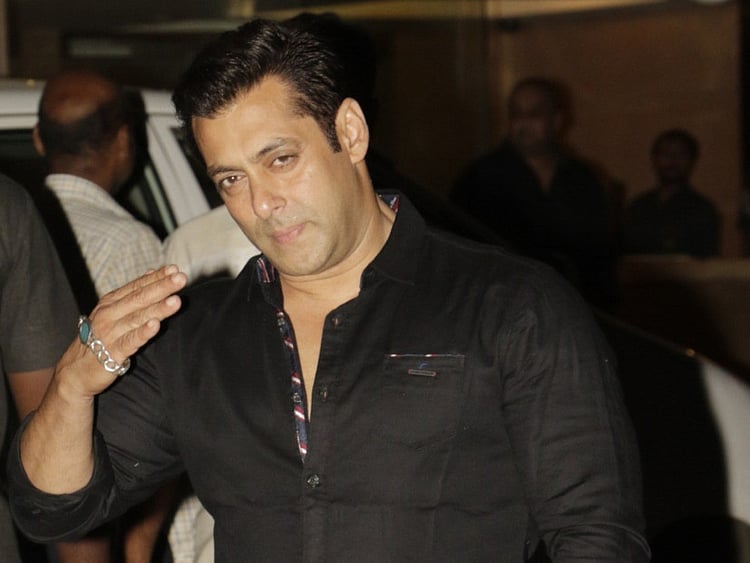
The Bombay High Court on Tuesday cited several gaps pertaining to the tests used to check alcohol levels in blood samples from Bollywood actor Salman Khan in the hit-and-run accident on September 28, 2002.
Khan was said to be driving a car that ran over homeless people sleeping near a bakery in Mumbai, killing one person and injuring three others.
Justice A. R. Joshi, giving his judgement in the appeal filed by Khan against his conviction and five-year sentence, mentioned a series of discrepancies starting with the extraction of the actor’s blood samples to its transfer, preservation and testing.
A prosecution witness, medical officer Shashikant J. Pawar of Sir J.J. Hospital, carried out a clinical examination of Khan and found him smelling of alcohol. Later, he drew blood samples and put 3ml in two vials, but what reached the analyst was 4ml of blood in one vial.
“[Pawar] gave one sealed envelope containing two forms — form A and form B — and two vials to the police station. Sharad Bapu Borade, a police constable, took the two envelopes to the receiving clerk Dattatraya K. Bhalshankar, at forensics sciences lab, who has not been examined by the court. [Bhalshankar] says one police constable gave him the blood samples — this is a missing link in the biological evidence,” Joshi said.
He added that the samples should have been placed under proper custody to prevent internal fermentation, which would render the final results useless.
Joshi further said that evidence given by a parking attendant, Kalpesh Verma, from JW Marriott Hotel in Juhu, does not imply that Khan drove the car.
Verma handed over the car to the actor when he came out of the hotel, but “the witness was silent on the condition of [Khan]” at that time.
The parking attendant also saw Khan sitting in the driver’s seat with the A/C on and later closed the door after receiving a tip, proceeded to keep it in a common box and on returning saw the car being driven away.
Joshi also analysed evidence from a waiter at the Rain Bar, Malay Bag, a manager Rizwan Ali Rakhangi, and bills from the establishment.
“The trial court had not analysed whether these bills can be accepted to prove the drunkenness of the appellant-accused,” Joshi said.
During his examination by chief public prosecutor Sandeep Shinde, Bag said that Khan had a “white-coloured glass” in his hand, but while being cross-examined by defence counsel Amit Desai, Bag said it was a “clear liquid.”
“[Bag] said that he is a regular visitor to the bar, but the defence counsel has said everyone who visits the bar does not necessarily consume alcohol,” Joshi said, adding that “there is no concrete evidence before the court from the two witnesses that [Salman Khan] had consumed alcohol there.”
Sign up for the Daily Briefing
Get the latest news and updates straight to your inbox
Network Links
GN StoreDownload our app
© Al Nisr Publishing LLC 2026. All rights reserved.