Gulf News' book chronicles UAE's rich history
Building a Nation documents the leaders, people and places that have shaped the UAE
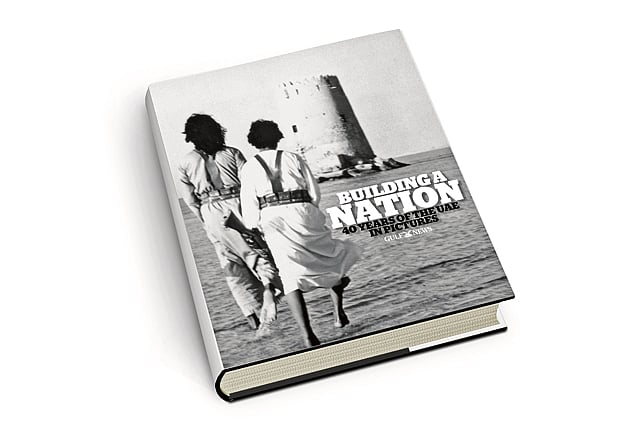
Building a Nation is a unique collection of 750 historical pictures chronicling the extraordinary story of the UAE. One of the book's editors, Najla Al Rostamani, said, "We needed to illustrate the whole story of the country, not just the obvious icons." Her comment was supported by fellow editor, Francis Matthew, who said, "We wanted to find unpublished images which were new to most people in the UAE, and we looked in archives both in the country and worldwide."
The book is both accessible enough for newcomers in the UAE to appreciate the emirates and informed enough for long-term residents to value the history and context.
Leaders
The leaders of the UAE's seven emirates have been in close and continuous contact for decades. The images in Building a Nation show the present-day leaders attending formative meetings of the UAE with their fathers. They have been part of an ongoing leadership process through which the vision of the founding fathers has inspired its people to take on new challenges as the decades pass. The book tells the story of how the rulers of the separate emirates gathered in the late 1960s to establish how to form an independent federation; how emirates like Bahrain and Qatar did not join the UAE and how the leaders of the seven emirates of the UAE worked hard to find the right balance between a centralised federal authority and devolved authority. The current magnificent state of the United Arab Emirates shows how successful they were in this task.
People
The core of the national identity of UAE citizens is an awareness of their unique heritage and history, which developed around the emirates’ mountains, deserts and the sea. The tribal relationships and the importance of ties between families have contributed to the national identity. The growth of education, which started before the federation in 1971 and greatly expanded after, also lies at the core of this identity.
Traditional sports and activities are a major part of Emirati life and culture. Some traditional pastimes include: rowing large boats (dhows) crewed by hundreds of people; camel racing; hunting with hawks, ; and music and poetry, which are key partsof Emirati oral culture. As the UAE moves towards a global culture of the 21st Century, these vital traditions form an essential part of the country’s history and self-awareness.
Camel racing
Traditionally, camel racing was held only to celebrate weddings or special festivals but today it is a mainstream sport. Over the years, the sport has gained more structure and prominence with special racetracks and scheduled races. In 2005, after the UAE imposed a ban on employing child camel jockeys, the country pioneered the use of light weight robots as camel jockeys. The move was received positively by human rights groups worldwide.
Source: GN Archives
Water sports
Boat races are one of the traditional water sports enjoyed in the UAE. In the past, wooden dhows were longer in size than they are today, with almost 100 oarsmen rowing the boat towards the finish line as spectators cheered. The modern-day sport has had technical improvements and continues to entertain UAE nationals from youth to seasoned sailors. The UAE government supports many boat racing events around the country. The races are held from October to April.
Source: GN Archives
Falconry
Falconry is an ancient Arab tradition that is still at the forefront of cultural activities. In 2002, Shaikh Zayed Bin Sultan Al Nahyan said, “Falconry is an important and indispensable sport as it teaches patience, perseverance and valour, and is therefore useful physically and psychologically. It is also a social sport, which strengthens the sense of comradeship among people during their journey and also promotes the spirit of community and unity.”
Source: GN Archives
The oud
The oud is considered ‘the king of instruments’ in the region and is said to be the oldest string instrument in the Middle East. In local culture, its music is compared to the soul of the Arab people, tied to their identity. The Abu Dhabi Authority for Culture and Heritage (ADACH) set up Bait Al Oud, an institute that focuses on fostering oud playing using traditional techniques and highlighting the significance of the instrument.
Source: GN Archives
Places
The best illustrations of how far the UAE has come in 40 years are these startling pictures of what the country looked like before infrastructure development really started. When the UAE was formed in 1971, there were no high-rise buildings, the roads and ports were still very rudimentary, and the airports all had single runways with very simple terminals. Today’s dramatic development and large-scale buildings are a testament to the success of the country’s vision.
“In the 1970s, the heart of Dubai was Deira. Maktoum Street, leading out to the new Dubai airport went past the Clock Tower roundabout, which was a major landmark but at the same time at the edge of the city. To the left of this picture is the new Maktoum Bridge crossing over to the road leading out to Abu Dhabi.”
- Najla Al Rostamani, editor
“In 1810, Shaikh Shakhbut Bin Dhiyab Al Nahyan moved the main centre of the Nahyans from the Liwa Oasis to Abu Dhabi, and started building a much bigger Fort which was expanded over the next century. By the early 1900s, Al Hosn Fort was recognisable as the one we see today.”
- Francis Matthew, editor
Sign up for the Daily Briefing
Get the latest news and updates straight to your inbox
Network Links
GN StoreDownload our app
© Al Nisr Publishing LLC 2026. All rights reserved.