Dubai property market to find 'nice balance' as 2027 supply wave hits, says Emaar's Alabbar
Emaar founder predicts market balance in 2027 as new supply arrives, rules out discounts
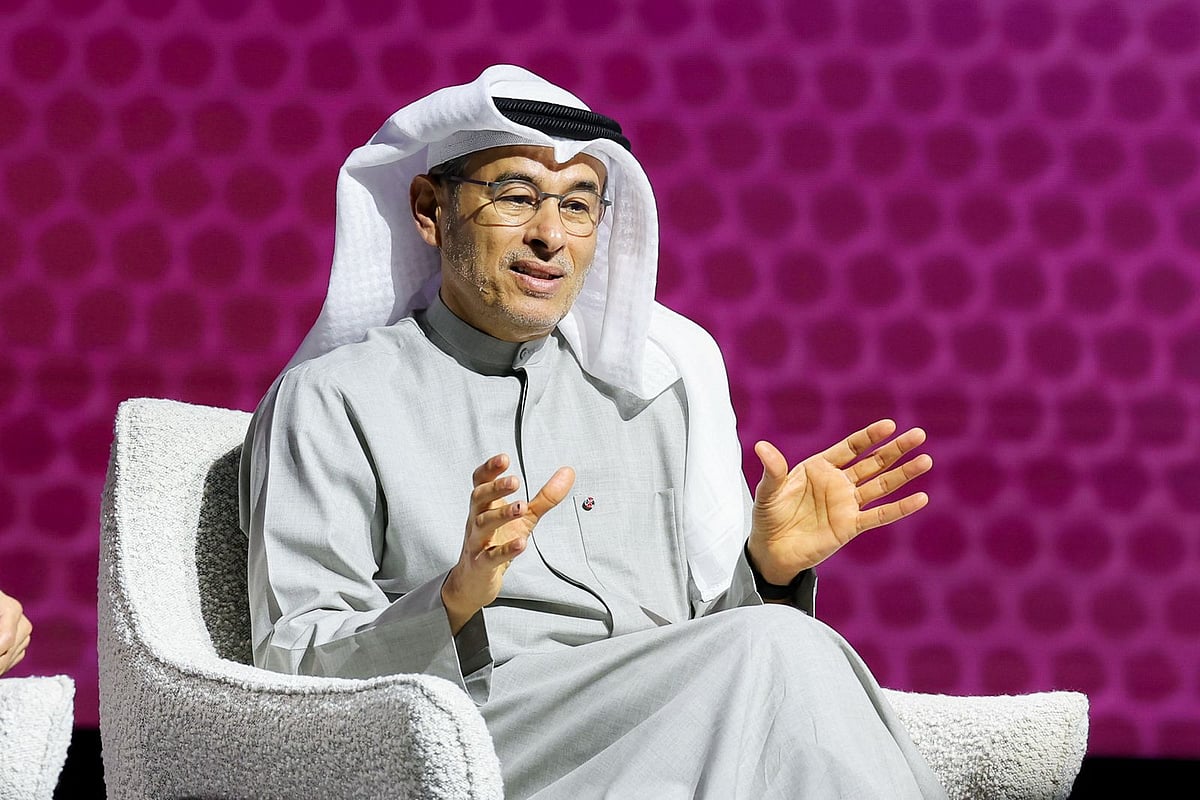
Dubai: Dubai property prices could see a more balanced market in 2027 as a wave of new housing supply comes through, Mohamed Alabbar, founder of Emaar Properties, said, while stressing that his company is resisting discounts despite some developers offering price cuts ranging from 20 to 50 per cent.
Asked about his outlook for Dubai property prices after a post-war prediction five months ago that values could fall 15 per cent, Alabbar said: “I’m thinking ready for 2027? A lot of supply come in, so it people will get nice balances.”
He did predict a 5-10 per cent adjustment in prices on account of the "extraordinary situation", referring to the ongoing US-Iran war.
However, a comments point to supply becoming a key factor in determining the direction of Dubai’s property market as developers continue to bring new homes to the market. Alabbar did admit that real estate sales volumes were down along with the hotel and tourism stories.
"But then again, we had years of crazy profit, crazy margins. We can wait a little bit. (You have) been saving under the pillow for a rainy day. That's absolutely fine," said the Emirati entreprenuer.
The UAE billionaire was speaking at the AIM Congress, formerly the Annual Investment Meeting, a leading global investment platform and summit held annually in the UAE. It brings together government officials, policymakers, global investors, business innovators, and academics.
No discounts
Alabbar said Emaar was taking a different approach from developers that have begun offering significant discounts.
“Right now, we have developers who are giving 50 per cent discount, 20 per cent discount. We give no discount,” he said.
“Our policy is: good product, don’t give discount. Good cash flow, a lot of cash.”
The comments underline Emaar’s focus on maintaining pricing discipline and financial strength rather than using discounts to stimulate sales.
The UAE real estate market has officially transitioned into a highly selective, rebalancing phase following years of explosive post-pandemic growth. While transaction volumes and macro fundamentals remain robust, the industry is adjusting to localised price corrections, rising supply, and a shift toward an end-user market.
Affordability matters
Alabbar also stressed that housing affordability remains important to Dubai’s long-term growth, saying property prices should remain at an appropriate level whether people are renting or buying.
Despite the uncertainty created by the regional conflict, Alabbar said the current environment should not automatically be viewed as a crisis for businesses with strong balance sheets.
Asked why Emaar was continuing to invest in Dubai, including announcing its biggest project during the conflict, details of which were not revealed, he pointed to the city’s policies and the data supporting the market.
“It’s many, many reasons. Number one, we all know going back that crisis has two years in the literature. We need to be critical in the data,” he said.
He also cited the UAE’s policies and said: “This country, this city, the policies we compare to global policies. This is what we want.”
Sales resilience
Alabbar said Emaar’s large development pipeline had provided the company with a useful stream of data during the conflict. The company has 90,000 homes under production in about 18 countries.
He said the group had close to 50,000 units under construction in the UAE and has continued production despite the disruption.
Before the war, Alabbar said Emaar was seeing about 700 cancellations a month, while selling around 2,500 units a month. During the war, cancellations rose to about 1,100 a month, before falling to around 550 after the ceasefire. “Don’t worry about cancellation. That’s just how we do things,” he said.
He said the company had also been surprised by the resilience of customer payments, interpreting this as evidence of confidence in Dubai, the government and Emaar.
“Our customers really trust this land. They trust the government here. They really trust what we do,” he said.
Crisis creates opportunities
For international investors watching the Gulf and waiting for geopolitical uncertainty to ease, Alabbar's message was to start looking at opportunities now — provided they have strong finances.
“This is the time that you should look at opportunities if you don’t have a lot of debt, if you reserve cash,” he said. “This is the time to look at the region as a whole.”
Alabbar said his own approach to periods of uncertainty was centred on maintaining sufficient capital, keeping debt low and having the right people in place.
“I don’t look at it as a crisis. I think it’s a testimony with the cash position that we have, with the low debt that we have,” he said.
AI reshapes property
Alabbar also said artificial intelligence was rapidly changing the way his businesses operate, describing the pace of change as “scary”.
He said AI was already helping his teams complete tasks dramatically faster, including master plans and feasibility studies.
“We do master plans in four hours. We used to do master plans in nine months. We do feasibility in like four minutes. We used to do feasibility in three months,” he said.
Alabbar said employees who actively use AI were likely to have a stronger future with the company, comparing the technology to the adoption of email.
“Everybody should be involved, everybody should learn it, everybody should use it,” he said. “As long as you are on top of all the AI initiatives, use them in everything you do.”
He added that AI was making the business “much more efficient” and allowing it to “move so much faster”.
Sign up for the Daily Briefing
Get the latest news and updates straight to your inbox
Network Links
GN StoreDownload our app
© Al Nisr Publishing LLC 2026. All rights reserved.