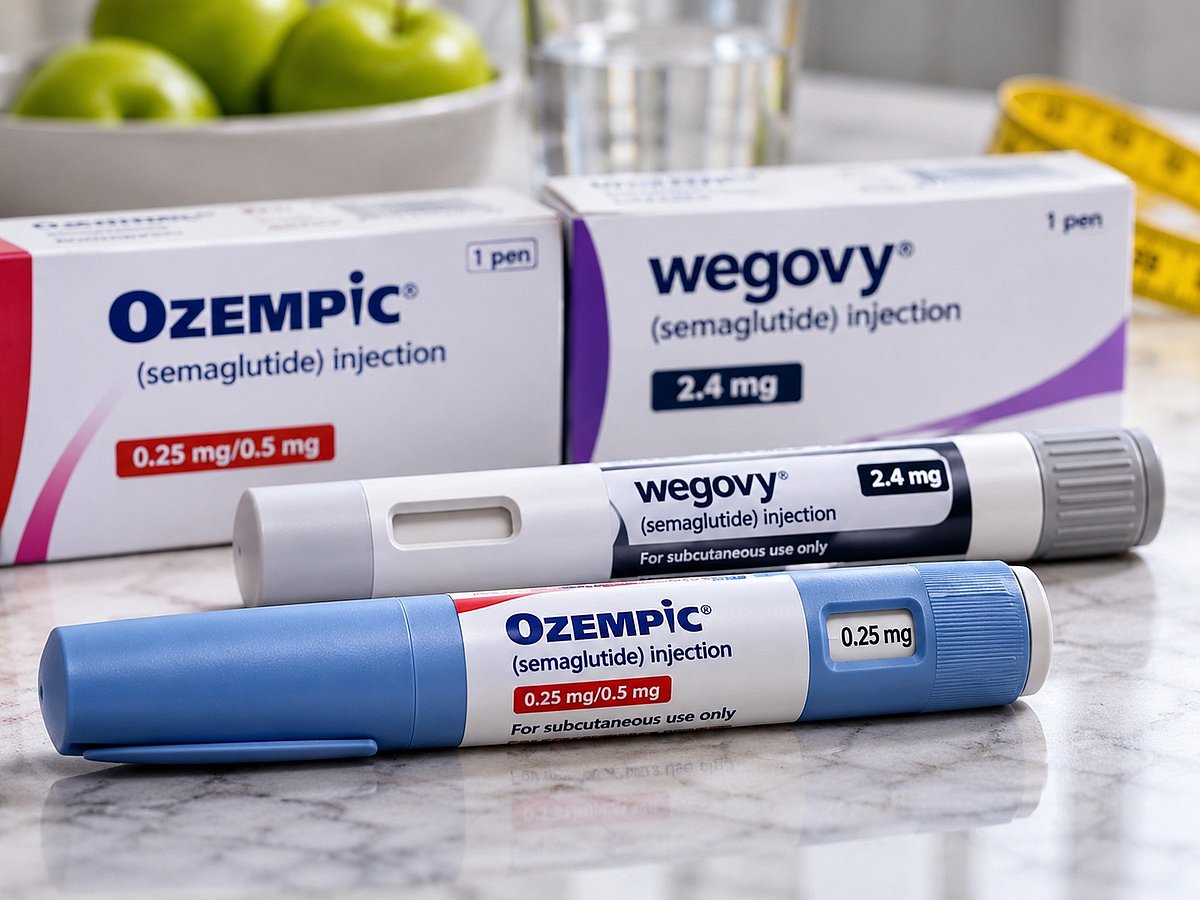
Dubai: Millions of people worldwide taking medicines such as Ozempic and Wegovy for diabetes or weight loss are being alerted to a rare but potentially serious eye condition that can cause sudden, sometimes permanent, vision loss.
The US Food and Drug Administration (FDA) has ordered a new safety warning for a class of medicines known as GLP-1 receptor agonists, following a review of clinical trials and reports of vision-related complications.
The warning concerns non-arteritic anterior ischaemic optic neuropathy (NAION), a condition that develops when blood flow to the optic nerve is reduced. The optic nerve carries visual information from the eye to the brain, and damage can lead to sudden loss of vision.
For patients using these medicines, the key question is how common the condition is, what symptoms to watch for and whether the warning means they should reconsider their treatment.
Get updated faster and for FREE: Download the Gulf News app now - simply click here.
Affected medicines
The medicines identified in the report include Novo Nordisk's Ozempic and Wegovy, which contain semaglutide, and Eli Lilly's Mounjaro and Zepbound, which contain tirzepatide.
These drugs are used to manage type 2 diabetes or obesity, depending on the product and its approved indications. They work through hormone-related pathways that help regulate blood sugar, appetite and food intake.
The FDA's reported action concerns the wider GLP-1 medicine category, rather than a single brand. The regulatory development is particularly relevant to people who use these treatments over extended periods.
How serious is the risk?
The condition is rare, according to the figures cited in the FDA's review.
An examination of more than 125 clinical trials found approximately six cases of NAION for every 100,000 patients who used a GLP-1 medicine for at least a year.
Among patients receiving a placebo or other glucose-lowering treatments, the reported rate was fewer than four cases per 100,000 people.
That translates into a small difference in absolute numbers. It also means the vast majority of patients in the reviewed trials did not experience the condition.
The figures identify a potential safety concern, but they do not establish that the medicines directly caused every reported case of NAION.
Symptoms to watch for
One of the most important details in the FDA's warning is that NAION can develop without pain. Patients may notice a sudden change in vision, sometimes when they wake up in the morning.
Symptoms identified by the regulator include blurred vision, blind spots, tunnel vision, distorted colours and reduced sharpness of sight. The condition typically affects one eye.
The FDA advises patients experiencing these symptoms to contact a healthcare professional immediately. Doctors are advised to arrange a prompt assessment by an ophthalmologist if NAION is suspected.
Stop taking Ozempic or Wegovy?
The FDA has not recommended that everyone taking GLP-1 medicines stop treatment. Instead, it is requiring manufacturers to update their safety information so patients and doctors can make informed decisions.
Patients who develop NAION should discuss whether to continue treatment with their doctor. The FDA advises healthcare professionals to consider discontinuing the medicine if NAION develops, unless the treatment benefits clearly outweigh the risks.
The warning also matters because some patients taking these medicines already have conditions associated with NAION. The FDA identifies diabetes, high blood pressure, smoking, sleep apnoea, anaemia and kidney disease among potential risk factors.
What prompted the FDA's decision?
The investigation began after a study published in July 2024 raised concerns about a possible association between semaglutide and NAION.
The FDA subsequently examined clinical trial results, observational studies, animal research and reports submitted through its adverse-event monitoring system.
Its analysis covered 126 randomised clinical trials involving 134,253 patients. Researchers identified 15 probable NAION cases, including 10 among GLP-1 users and five among patients receiving a placebo.
The regulator calculated incidence rates of 6.4 cases per 100,000 person-years among GLP-1 users, compared with 3.8 cases in the comparison group.
The FDA also conducted a separate real-world study involving patients with type 2 diabetes. That analysis found a statistically significant increase in NAION risk when GLP-1 medicines were compared with one category of diabetes treatments, but not when compared with another.
The agency said its animal research did not identify a mechanism explaining how GLP-1 medicines might increase the risk.
What do the drugmakers say?
Novo Nordisk, which manufactures Ozempic and Wegovy, maintains that the available evidence does not establish a cause-and-effect relationship between GLP-1 medicines and NAION.
The company said it remains confident in the benefit-risk profile of its medicines.
Eli Lilly, which makes Mounjaro and Zepbound, said the FDA's communication applies to the wider GLP-1 medicine category and does not identify findings specific to its products. The company said it was evaluating the regulatory update.
For people currently receiving treatment, the FDA's message is therefore one of awareness rather than a blanket recommendation to discontinue medication. The reported complication remains rare, but sudden changes in eyesight require immediate medical attention.
The new US labelling requirement does not itself establish a change to prescribing rules in the UAE. It does give patients taking these medicines another safety issue to discuss with their treating doctors.

Sign up for the Daily Briefing
Get the latest news and updates straight to your inbox
Network Links
GN StoreDownload our app
© Al Nisr Publishing LLC 2026. All rights reserved.