Syria unveils new banknotes, drops zeros and portraits in bid to restore trust in pound
Syria removes zeros and Assad portraits from currency in landmark economic reform
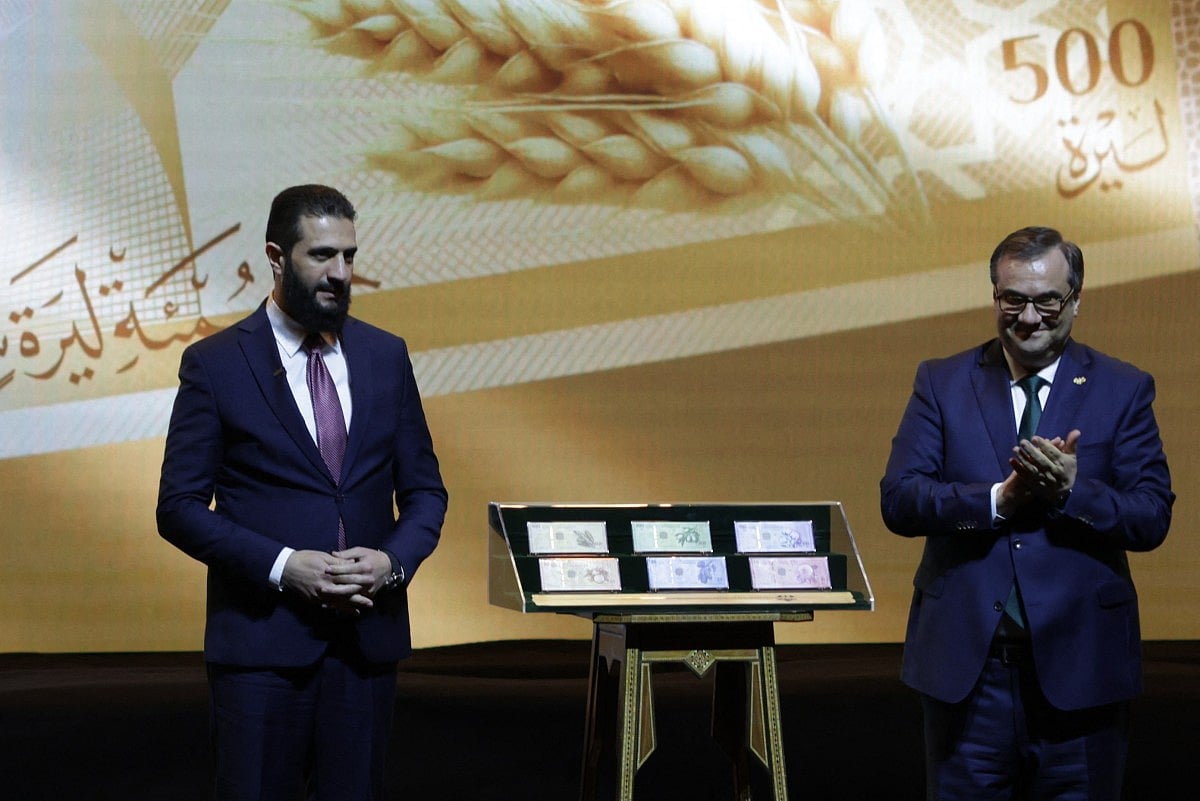
Dubai: Syria has unveiled a series of redesigned banknotes as part of a sweeping monetary reform aimed at stabilising the national currency and restoring confidence in the economy after years of turmoil. The new Syrian pound removes two zeros from the old denomination and abandons portraits of former leaders, a symbolic and practical move reflecting the country’s effort to mark a new chapter.
President Ahmad al-Sharaa and First Lady Latifa al-Droubi presided over the launch ceremony on Monday at Damascus’s Conference Palace, joined by senior government officials and private-sector representatives. The new notes, featuring agricultural symbols such as roses, wheat, olives and oranges, will begin circulating on January 1, 2026, alongside the old currency for a 90-day transition period.
“The new currency design is an expression of the new national identity and a move away from the veneration of individuals,” Sharaa said, describing the redesign as “the end of a previous, unlamented phase and the beginning of a new one that the Syrian people aspire to.”
From redenomination to policy reform
The redenomination will convert every 100 old pounds into one new pound, effectively simplifying transactions without changing underlying values. The move, long anticipated as a technical measure to address severe inflation, comes alongside a broader plan to reinforce monetary stability and strengthen the Central Bank of Syria’s credibility.
Central Bank Governor Abdul Qader Husariya said the step was part of a comprehensive institutional strategy to restore confidence and achieve sustainable growth. “The launch of the new currency is not a formal measure, but a pivotal milestone within a comprehensive strategy based on solid institutional foundations,” he told reporters.
He said the plan rests on five pillars: monetary and price stability, a balanced foreign exchange market, sound financial institutions, secure digital transformation, and international financial integration supported by sustainable financial inclusion.
National identity replaces old symbolism
The most visible change in the new banknotes is the removal of portraits depicting members of the Assad family. Previous bills featured images of Hafez al-Assad and Bashar al-Assad, who ruled Syria for more than five decades. The redesign replaces those images with national motifs that evoke unity and Syria’s agricultural heritage.
“People come and go,” Sharaa said during the unveiling. “But our shared history and the reality of this nation must endure.”
He added that the fresh designs are meant to reflect pride and renewal rather than personal glorification, serving as a symbolic gesture of national cohesion following a difficult transition period.
Restoring faith in the Syrian pound
The redenomination comes as Syria’s currency continues to struggle. The pound, which traded near 50 to the US dollar before the 2011 conflict, now hovers around 11,000 per dollar. The loss of purchasing power has forced residents to carry bundles of cash for daily transactions, eroding confidence in the local currency and shifting commerce toward foreign currencies.
President Sharaa said the aim of the reform is not to artificially boost the pound’s value but to simplify transactions and promote financial stability. “Removing two zeros does not fix the economy,” he said. “Real improvement will come from increasing production, reducing unemployment, and reinforcing our banking sector, the veins of the economy.”
He urged citizens not to panic or rush to exchange old banknotes, warning that speculative demand could harm the exchange rate. “Our policy is financial discipline, with no room for inflation,” added Governor Husariya, emphasizing that currency exchanges will be free of fees or commissions.
A fresh start after decades of crisis
The unveiling marks the most significant financial reform since Bashar al-Assad’s ouster in December 2024, which ended Baath Party rule after six decades. Since then, the transitional administration, established under President Sharaa in early 2025, has focused on rebuilding institutions and re-establishing ties with regional and international partners.
In broadcast coverage, state television showed a laser display at the Central Bank headquarters, highlighting the security features of the new banknotes, which officials said were printed by leading international firms to prevent counterfeiting.

Sign up for the Daily Briefing
Get the latest news and updates straight to your inbox
Network Links
GN StoreDownload our app
© Al Nisr Publishing LLC 2026. All rights reserved.