Mansoor Rahma Alfalasi, Group Chief Executive Officer of Dubai Taxi Company, said the company was preparing to capture recovering passenger demand while prioritising debt reduction and operational efficiencies. "We make sure that we are ready to capture any kind of demand in the market," he told Gulf News.
Dubai Taxi: How DTC is tackling fuel costs, debt as demand recovers ahead of winter peak
DTC expects demand to improve, but fuel costs and National Taxi debt remain key challenges
Last updated:
8 MIN READ
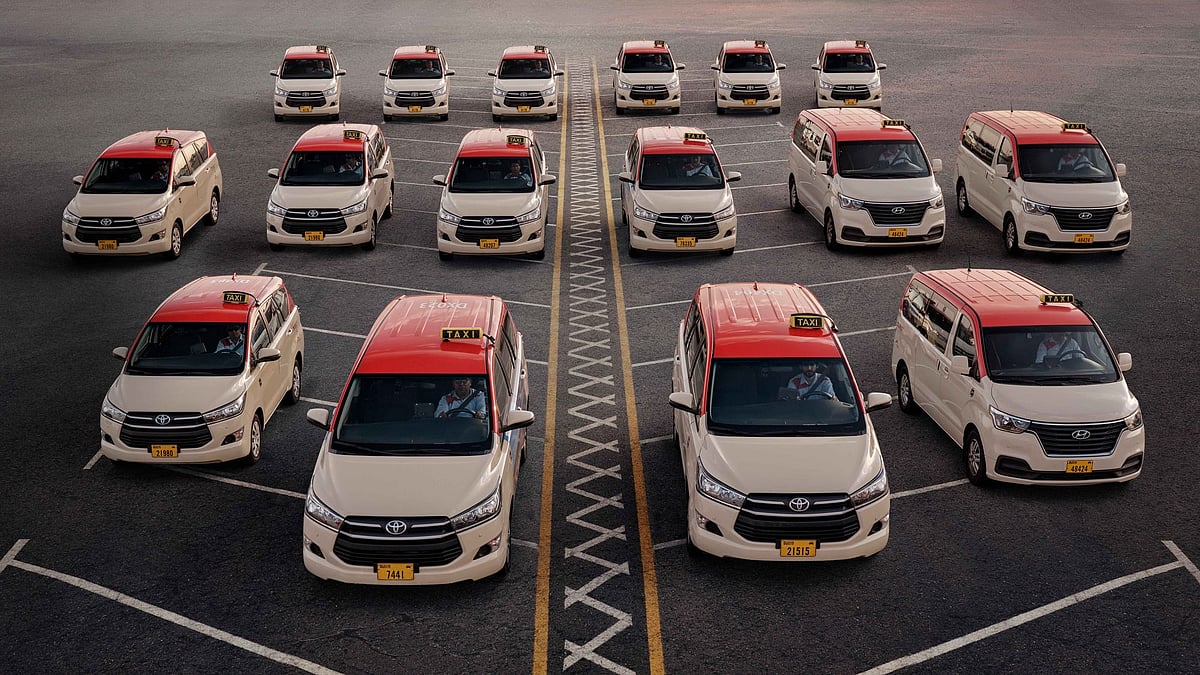
Dubai Taxi Company is expanding its operational fleet following the acquisition of National Taxi, with the combined fleet reaching 15,388 vehicles at the end of September 2026.
Dubai Taxi
But higher fuel costs, acquisition-related borrowing and weaker underlying margins remain challenges for the transport operator.
The company's third-quarter results show a business recovering from a difficult period, with an improvement in revenue.
Dubai Taxi Company (DTC) reported third-quarter revenue of Dh735.5 million, up 25.7 per cent year on year, following the consolidation of National Taxi, which it acquired in July. However, net profit fell 25.3 per cent to Dh57.1 million, while EBITDA margin narrowed to 22.6 per cent from 25.9 per cent a year earlier.
The contrast highlights the challenge facing the company: expanding its fleet and market share while managing the additional costs of operating a larger business.
"We don't see any kind of concern. Although the conflict is still not over, the good news is that a clear recovery and operating momentum are really visible to us," Mansoor Rahma Alfalasi, Group Chief Executive Officer of Dubai Taxi Company (DTC), told Gulf News.
The CEO said the company was now focused on translating the recovery in passenger activity into stronger cash generation, while integrating National Taxi and managing the additional costs of a larger business.
Demand recovery
DTC's standalone taxi and limousine trip volumes improved through the third quarter, with the year-on-year decline narrowing from 7.8 per cent in July to 6.2 per cent in August and 1.9 per cent in September.
That represents a significant improvement from April, when the decline in trips exceeded 30 per cent, Alfalasi said. "The gap between the number of trips that was falling in April, at more than 30 per cent, has narrowed down now to almost 2 per cent. So, this is really proof that things are getting better," he said.
The company's figures also show signs of a recovery in airport-related business. DTC recorded 1.07 million airport trips in the third quarter, up 40 per cent from the second quarter, reflecting improving passenger traffic at Dubai's airports.
The December travel period could provide another boost, particularly as international airlines restore services and tourism-related activity improves. But management has stopped short of putting a date on a full recovery.
"We cannot expect a full recovery very soon," Alfalasi said, adding that the company's priority was to ensure it had enough drivers and vehicles on the road to capture demand when it returned.
The CEO said the impact on DTC had been less pronounced than in some other sectors, particularly tourism. Nevertheless, the company's taxi and limousine business continued to experience softer airport- and tourism-related demand during the quarter.
"From our side, our main intention is to make sure that the supply side is ready 100 per cent. No excuses from our side, especially when it comes to drivers, cars and the placement of cars," he said.
Alfalasi said DTC was making sure enough drivers and vehicles were available on the road, particularly during peak hours, to accommodate improving demand.
"On the other side, it is out of our hands to estimate or say when a full recovery will happen. But we make sure that we are ready to capture any kind of demand in the market," he said.
Fuel costs
Higher fuel prices have added another layer of pressure to operating costs. "For sure, it affected us," Alfalasi said, referring to the impact of higher fuel prices on the company's operating costs.
Under the existing system, the RTA reviews fuel-related fare adjustments every two months rather than monthly. This can leave operators exposed when fuel prices rise sharply between tariff reviews.
He said the RTA was considering moving to monthly adjustments to the fuel-related tariff, which could help operators bridge the gap between changing fuel prices and the fares they are permitted to charge.
"Sometimes the fuel changes by 40 per cent upwards. So, changing the fuel prices on a monthly basis will help us bridge this gap," he said. DTC is also looking at ways to manage its exposure internally rather than relying entirely on fare adjustments.
These include increasing the proportion of electric vehicles in its fleet, improving driver deployment and encouraging greater use of e-hailing platforms.
Alfalasi said the company was focusing on generating more revenue kilometres — the distance travelled while carrying paying passengers — rather than dead kilometres, when vehicles circulate without generating revenue.
"We are focusing more on generating revenue kilometres instead of dead kilometres and just roaming the city," he said.
Fuel-price hedging is another option under consideration, although Alfalasi did not provide a timeline or details of any potential arrangement.
The company has already been expanding its electric fleet. At the end of September, DTC and National Taxi operated 846 fully electric vehicles across their taxi and limousine fleets.
DTC also commissioned a 24-point ultra-fast electric vehicle charging hub during the quarter, the first phase of a planned network of more than 200 charging points.
Alfalasi said the company had taken a different approach to developing the infrastructure by partnering with DEWA, which will build the charging stations while DTC provides the ultra-fast chargers and secures charging rates for its vehicles.
"To invest in this infrastructure, we need to inject more money and capital expenditure. However, we made a smart move by partnering with DEWA," he said.
The arrangement is expected to give DTC drivers access to a dedicated charging network across Dubai without the company having to fund the entire infrastructure investment itself.
Dubai Taxi Company is focusing on improving fleet utilisation and reducing unproductive kilometres as it prepares for higher passenger demand during Dubai's peak winter travel season.
Debt reduction
The National Taxi acquisition has expanded DTC's scale but pushed net debt to Dh2 billion at the end of September, equivalent to 3.8 times last-twelve-month EBITDA. Cash and liquid investments stood at Dh425.6 million.
National Taxi contributed Dh168 million in third-quarter revenue, but group net profit fell despite the increase in scale.
Alfalasi said the acquisition offered a shortcut to the scale DTC was targeting, but acknowledged the financing costs involved.
"There is a cost for any kind of acquisition, especially considering the margins that we have in Dubai Taxi," he said.
DTC is now looking to start deleveraging next year, with Alfalasi saying the priority was to convert the expanded business into stronger cash generation and profitability.
"The only thing that we can do right now is to work more on deleveraging the debt or the loan that we have," he said.
Integration savings
DTC had completed around 30 per cent of National Taxi's integration by the end of September, ahead of its initial expectations, generating Dh3.9 million in synergies during the quarter.
Alfalasi expects the full integration by the end of next year to deliver savings of more than Dh30 million.
The combined operational fleet reached 15,388 vehicles by September, with 450 of the 600 newly acquired Dubai taxi plates already operational. The challenge now is to turn that additional capacity into stronger revenue and profitability.
Dubai Taxi Company is expanding its partnership with ride-hailing platform Bolt, which recorded 2.3 million trips in the third quarter, up 52% year on year, as the company looks to tap into growing demand and expand its digital mobility services.
Bolt to expand to Abu Dhabi
DTC is also looking beyond its traditional taxi business to expand its digital distribution network. Its partnership with Bolt delivered 2.3 million trips during the third quarter, up 52 per cent year on year.
Alfalasi described the partnership as a longer-term opportunity, with further growth expected next year.
"Bolt is a long-term story. However, we are expecting good results by next year and to see the positive side of this relationship, especially by tapping into Abu Dhabi very soon when it comes to the taxi side," he said.
DTC already operates limousine services in Abu Dhabi and is exploring opportunities to expand its taxi operations there, alongside potential opportunities in other Emirates.
The company recently added 1,607 Arabia Taxi vehicles to the Bolt network, expanding the supply available through the platform.
Beyond ride-hailing, DTC is testing additional services through its application, including car rentals, currently available to a limited group of customers, and a delivery service called The Box.
Alfalasi said the company was looking to build a broader range of services through its digital platform rather than relying solely on taxi bookings. The strategy also draws on Dubai's expanding population, business activity and urban development, which management sees as longer-term drivers of mobility demand.
Beyond taxis
DTC's diversification has helped provide some resilience during periods when passenger transport demand weakens.
The delivery bike segment recorded third-quarter revenue of Dh32.1 million, an increase of 75.2 per cent year on year, supported by fleet expansion and demand from the UAE's on-demand delivery market.
The business works with aggregators including Careem, Talabat, Noon and Keeta. The bus segment generated Dh29.6 million in revenue, broadly unchanged from a year earlier, supported by recurring contracts. DTC also renewed its Dubai school bus agreement with the Ministry of Education for another five years, Alfalasi said.
The CEO said these businesses helped maintain cash generation when taxi activity was weaker.
"We have moved from a legacy or traditional taxi operator into more of an integrated mobility platform. It is not just about diversifying our services or the type of business that we do," he said. DTC now operates across five verticals: taxis, limousines, buses, delivery bikes and its digital platform activities.
"During the conflict, obviously the taxi business went down. However, on the bus side, we kept generating cash from that vertical, and the delivery bikes did the same," he said.
The delivery business, in particular, is expected to remain a growth area next year as the company seeks to expand its relationships with digital platforms. Alfalasi said the investment in delivery bikes was beginning to pay off, supported by the expansion of e-commerce activity in Dubai.
"The e-commerce business here in Dubai is really booming, and this is how we benefit from it through our aggregators," he said.
Autonomous taxis
DTC is continuing to explore autonomous taxis with technology partner Apollo Go, in coordination with the RTA.
The service remains in the pilot and testing phase, with operations currently restricted to a limited zone. The company has not yet provided a target number of autonomous vehicles for 2027 or a timeline for a wider rollout.
"We are still piloting the project with our technology partner, according to the RTA plan. We are still in the exploration phase right now, and we are doing all kinds of testing," Alfalasi said. He said DTC was prepared to scale up the service once the testing and regulatory requirements were completed.
Initial customer feedback has been encouraging. "According to the initial data, it is good as a start," he said.
He added that the immediate priority was ensuring the service was safe and useful for customers before expanding operations to additional areas. "Still, it is too early to judge, but of course the numbers will start picking up very soon," he said.
Future outlook
Looking ahead, DTC is counting on improving aviation activity, population growth and urban development to support mobility demand across Dubai and the wider UAE.
But the company's immediate priorities remain completing the National Taxi integration, capturing further synergies, improving fleet utilisation and managing debt.
Alfalasi said the recovery in international flights was providing some encouragement, particularly as more airlines resumed services to Dubai. "The main focus is to complete the synergies and integration between Dubai Taxi and National Taxi, and also benefit from the demand that is now starting to grow again in Dubai, as well as international flights that are resuming," he said.
The company is also keeping the door open to further acquisitions and regional expansion next year, although Alfalasi said any potential deal would have to demonstrate clear value for the business. "Starting from next year, there will be good opportunities that we need to explore, especially any kind of expansion or new acquisitions. But again, this will be subject to the value these opportunities can add for us," he said.
Network Links
GN StoreAbout Gulf NewsTerms & ConditionsReach by GNSitemapContact usPrivacy PolicyGN FocusHave your sayWork with usAdvertise with usGulf News epaperPrinting Services
Download our app
© Al Nisr Publishing LLC 2026. All rights reserved.