LG Energy Solution has also reportedly chosen L&F Co. as the primary supplier of cathode materials for Tesla batteries, in a shift driven by ultra-high nickel cathode materials.
Tesla, LG Energy confirm $4.3-billion battery production project in the US
Partnership for Michigan battery production confirmed, focus on energy storage, not EVs
Last updated:
3 MIN READ
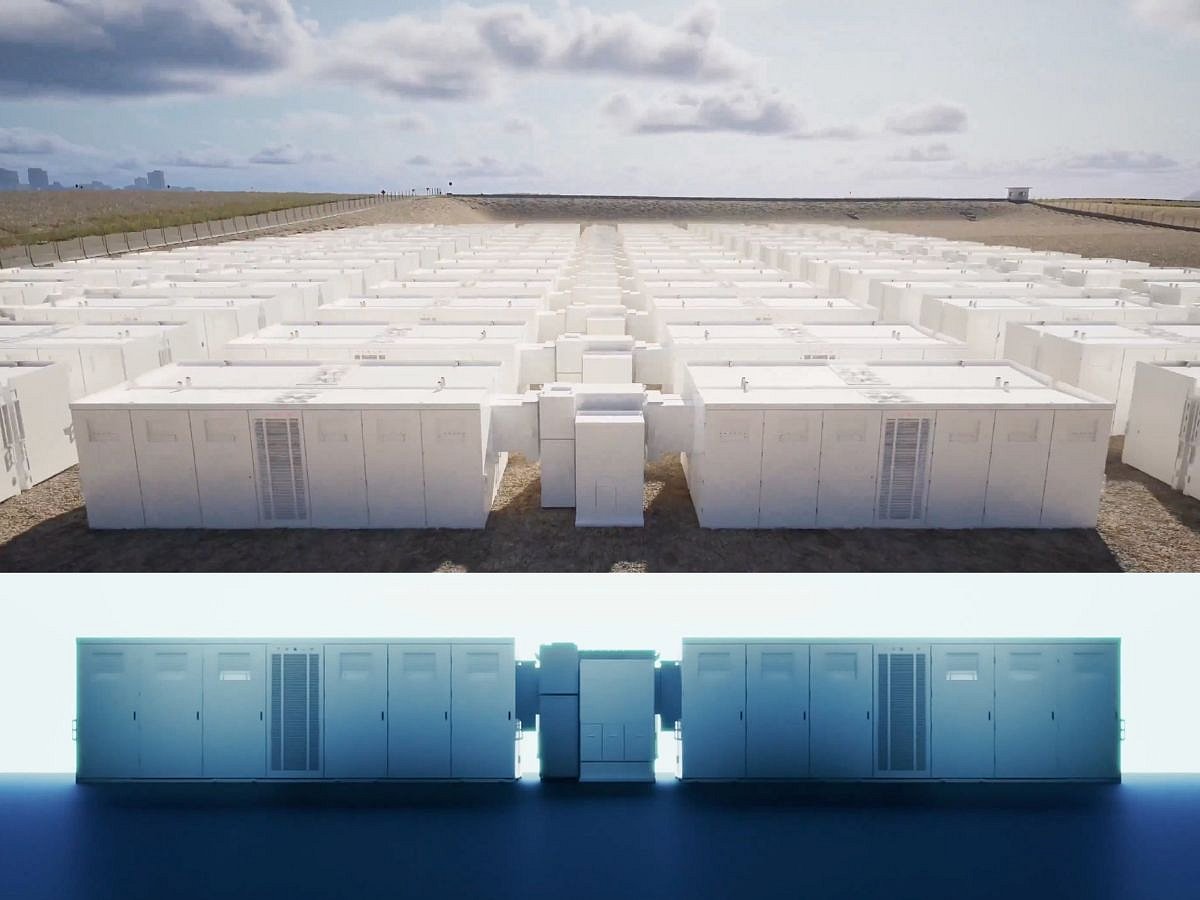
Tesla Megapacks (above) and Megablocks are utility-scale battery energy storage systems used to stabilise power grids, store renewable energy (solar/wind), prevent blackouts, and provide high-capacity power to data centres or commercial sites. Megablocks (20 MWh+) offer a pre-engineered, modular, plug-and-play solution, designed for 25-year lifespans and 91% efficiency, enabling faster, lower-cost deployment for large projects.
Tesla
Tesla and LG Energy Solution (LGES, a subsidiary of LG Chem) recently confirmed a major partnership for US battery production — focusing on energy storage rather than vehicle batteries.
The US Department of the Interior announced this as part of the Indo-Pacific Energy Security Summit results in March 2026.
Lithium Iron Phosphate (LFP) is reportedly favoured by LG Energy Solution (LG Chem's battery arm) and Tesla for this specific US joint project primarily due to its cost efficiency, safety, and durability suited for stationary energy storage like "Megapacks".
Repurposing
The project repurposes LGES's Lansing, Michigan facility — formerly "Ultium Cells 3", a GM joint venture that LGES fully acquired in May 2025 — for LFP battery manufacturing.
It involves a $4.3 billion investment to convert part of the 50 GWh/year plant to produce prismatic LFP cells specifically for Tesla's Megapack 3 systems assembled in Houston, Texas.
A deal runs from August 2027 to July 2030, with options for extension up to seven years and volume increases.
Battery tech: LFP
The batteries use the LFP chemistry in a prismatic (rectangular) format, ideal for stationary energy storage due to lower cost, safety, and longevity compared to nickel-based cells.
Unlike Tesla's in-house 4680 cylindrical cells (focused on EVs with dry electrode tech), these leverage existing Ultium equipment from suppliers like CIS and Hirano Tecseed for electrodes.
LFP offers ~180 Wh/kg energy density, prioritising cycle life over the higher density (~250 Wh/kg) of NCM/NCA cells used elsewhere by Tesla.
Ultra high-nickel batteries
At the same time, LG Energy Solution has reportedly chosen L&F Co. as the primary supplier of cathode materials for Tesla batteries, in a shift driven by ultra-high nickel cathode materials.
Compared to LFP, ultra-high nickel technology aims to significantly increase energy density for applications, such as batteries for Tesla’s premium electric vehicles and humanoid robots (Optimus).
Supply chain implications
Equipment for LFP lines is already ordered, with mass production slated for the second half of 2027—deliveries start August 2027.
The Lansing site was nearly complete from its GM era, accelerating the shift.
This bolsters Tesla's North American supply chain, reducing reliance on Chinese suppliers like CATL (previously dominant for Megapack LFP) amid U.S. tariffs and trade tensions.
LGES gains a US LFP edge over Korean rivals Samsung SDI and SK On, proving domestic viability and pressuring others to scale local production. It could lower energy storage costs long-term, enhance grid resilience for utilities/AI data centers, and intensify U.S.-Asia battery rivalry by enabling tariff-free, scalable supply.
Here's why FLP is the favourite chemistry of LG Chem and Tesla in their battery:
Cost advantages
LFP uses abundant, inexpensive iron and phosphate instead of costly nickel and cobalt, cutting production costs to around $98/kWh versus $112-120/kWh for NMC/NCA. This aligns with Tesla's supply chain security goals and LGES's push for competitive edges in mass markets, avoiding cobalt's ethical and price volatility issues.
Safety benefits
LFP's strong Fe-PO bonds provide superior thermal stability, with thermal runaway at 270°C compared to 150-210°C for nickel-based chemistries, minimizing fire risk—crucial for grid-scale deployments. LGES highlights its chemical stability for wide applications, while Tesla uses it to enable safer, denser pack designs.
Durability and cycle life
These batteries endure over 10,000 cycles with minimal degradation, ideal for daily charging in energy storage unlike EVs where range density matters more. Tesla shifted Megapack to LFP to avoid straining nickel supply for vehicles, and LGES leverages its expertise for long-lifespan, low-maintenance performance.
Fit for energy storage
For Megapacks, LFP's 180-220 Wh/kg density suffices for stationary use, prioritising total cost of ownership over weight, unlike higher-density NMC for long-range EVs.
This Michigan project exploits existing battery tech for quick ramp-up.
In July, LGES announced the signing of the $4.3-billion contract to supply LFP batteries globally from August 2027 to July 2030, without naming the customer.
Major LGES clients include Tesla, General Motors and Hyundai. At that time, it was announced that contract may extend up to 7 years with increased supply based on talks.
Sign up for the Daily Briefing
Get the latest news and updates straight to your inbox
Network Links
GN StoreAbout Gulf NewsTerms & ConditionsReach by GNSitemapContact usPrivacy PolicyGN FocusHave your sayWork with usAdvertise with usGulf News epaperPrinting Services
Download our app
© Al Nisr Publishing LLC 2026. All rights reserved.