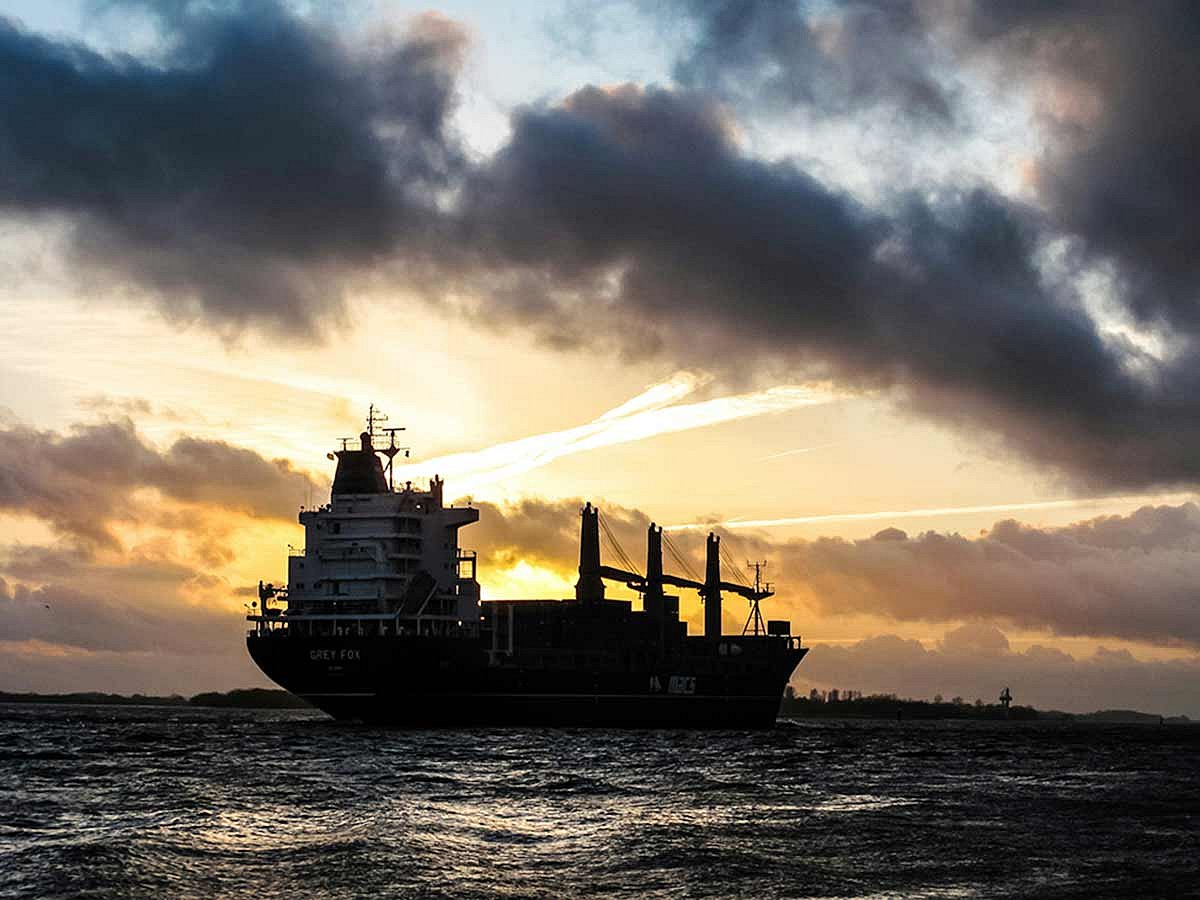
Dubai: Oil prices climbed at the start of the week while global equities and bonds came under pressure, after the US confirmed plans to impose a blockade around Iranian ports, raising concerns over energy supply and market stability.
Brent crude rose around 7% to just under $102 a barrel, reflecting fears that tighter controls around the Strait of Hormuz could disrupt flows through one of the world’s most critical energy corridors. The move came after weekend talks failed to produce a breakthrough, leaving tensions elevated.
Get updated faster and for FREE: Download the Gulf News app now - simply click here.
Markets reacted quickly. Asian equities declined, US futures pointed lower and European markets prepared for a weaker open. The dollar strengthened against major currencies, continuing its run as the preferred haven during the conflict.
Energy fears drive early moves
The proposed blockade is expected to target vessels linked to Iranian trade, with US authorities stating that maritime traffic to and from Iranian ports will be restricted. At the same time, navigation through the broader strait is expected to remain open for other routes.
Iran has rejected the move, saying it will not allow the blockade to proceed.
The immediate concern for markets is supply. The Strait of Hormuz remains a key passage for global oil and gas, and any disruption risks tightening an already sensitive energy balance.
Higher oil prices have also revived inflation concerns, pushing bond yields higher and weighing on rate expectations. Japan’s 10-year yield rose to levels last seen in the late 1990s, while US Treasuries declined.
Markets hold some optimism
Despite the escalation, market moves remain measured when compared with previous shocks, suggesting investors are not yet pricing in a prolonged disruption.
Recent weeks had seen equities recover strongly and oil prices ease, driven by expectations that negotiations could stabilise the situation. The latest developments have reversed part of that trend, though sentiment has not fully turned.
Norbert Rücker, Head of Economics and Next Generation Research at Julius Baer, said the conflict has entered a more uncertain phase.
“With the negotiations stuck if not abandoned and the ceasefire at risk, the high noon phase of the Iran war seems to be going into extension.”
He noted that markets are still watching for clear signs of deeper disruption.
“Serious infrastructure damage, not curtailed trade, is needed for the conflict to lastingly unsettle the global economy, which has not yet happened.”
Supply disruption remains contained
Energy markets have so far avoided the type of disruption that would trigger a sustained shock, with infrastructure largely intact and alternative supply routes helping to ease pressure.
Production and exports have been affected, though not to a level that materially alters global supply conditions. Storage levels on land have also held up better than expected in most regions.
Rücker pointed to the ability of global supply chains to adjust.
“Among the crisis’ various surprises are the successful defence of infrastructure amidst the attacks, and the swiftness and scale of the ramp-up of alternative energy export routes.”
That adjustment has provided time for markets to rebalance, even as shipping patterns in the region continue to evolve.
Blockade changes the dynamics
The US move introduces a new layer to the conflict, with the aim of redirecting shipping flows and limiting Iranian control over transit routes.
“With its announced blockade, the United States aims to shift the Strait of Hormuz trade from Iranian territorial waters into Omani territorial waters in order to re-establish the freedom of trade,” Rücker said.
The shift is expected to affect shipping behaviour in the near term, with some operators likely to reduce exposure until there is greater clarity.
“The coming days likely bring an intensification of the supply disruption after weeks of easing,” he added.
At the same time, he described the blockade as part of a broader negotiating phase, where actions on the ground are closely tied to diplomatic positioning.
- With inputs from Bloomberg.

Sign up for the Daily Briefing
Get the latest news and updates straight to your inbox
Network Links
GN StoreDownload our app
© Al Nisr Publishing LLC 2026. All rights reserved.