Brent tops $79: Oil prices edge higher as markets weigh US-Iran talks, Hormuz reopening
Cautious gains as markets weigh fragile ceasefire against key oil chokepoint risks
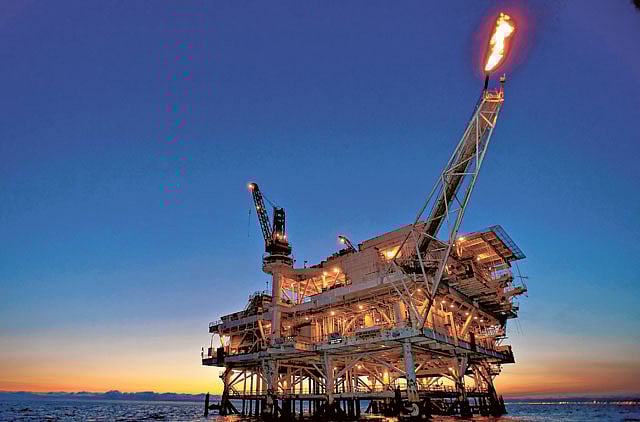
Oil prices edged higher in early Asian trading Wednesday, August 5, as markets balanced hopes for a US-Iran agreement against lingering uncertainty over the future of shipping through the Strait of Hormuz.
As of 10:58 am Tokyo time on Wednesday, OilPrice.com data showed WTI crude at $75.88 a barrel, up 11 cents, or 0.15%, while Brent crude was at $79.61, up 27 cents, or 0.34%.
The modest gains followed a sharp selloff earlier in the week after President Donald Trump said he had halted plans for further attacks on Iran and that the two sides were working on the "perimeters" of a deal that could reopen the strategic waterway.
Get it: Fast, verified news for FREE ... download the Gulf News app — simply click here
The market's latest moves suggest traders are not yet convinced that the geopolitical risk has disappeared.
Why oil plunged earlier
Oil prices fell sharply Monday after Trump called off a planned attack on Iran and signaled renewed efforts toward a deal.
Brent dropped about 7% to a three-week low, while WTI also suffered a steep decline.
The selloff reflected a rapid unwinding of the war-risk premium that had been built into crude prices during months of conflict.
Brent had been trading well above current levels as investors feared prolonged disruption to Middle Eastern production and shipping.
The prospect of a diplomatic breakthrough changes that calculation.
If the Strait of Hormuz can be reopened safely and consistently, more crude and refined products could return to international markets, easing one of the biggest supply risks facing traders.
But Hormuz remains the key wildcard
The Strait of Hormuz is one of the world's most important energy chokepoints, and uncertainty over its reopening is preventing oil prices from collapsing completely.
A deal announced on paper would not necessarily mean an immediate return to normal shipping.
Tankers need assurances about security, navigation and insurance before operators are likely to resume regular voyages through the waterway.
That is why traders remain sensitive to every development involving Washington, Tehran and the Gulf.
Recent market coverage has emphasized that oil prices could remain highly volatile as traders assess whether diplomatic progress translates into an actual normalization of flows.
OPEC+ adds another layer
The oil market is also watching OPEC+ supply policy.
The group approved a modest production increase of about 188,000 barrels per day on Sunday, a move intended to support market stability.
That additional supply could put downward pressure on prices if Middle Eastern exports recover at the same time.
But if Hormuz remains constrained, the increase is unlikely to fully offset disrupted regional supplies.
Why WTI and Brent matter
WTI is the main U.S. crude benchmark, while Brent is the principal global benchmark.
Brent's slight premium over WTI reflects the fact that international markets remain more directly exposed to developments in the Middle East.
At current levels, both benchmarks are far below the wartime peaks reached earlier this year.
That represents a dramatic reversal from the panic scenario that briefly pushed crude toward triple-digit prices.
What happens next?
The oil market is now effectively trading two opposing scenarios.
Bullish for oil:
US-Iran negotiations collapse;
fighting resumes;
Hormuz remains closed or restricted;
tanker traffic remains disrupted;
Middle Eastern production remains offline.
Bearish for oil:
Washington and Tehran reach a durable agreement;
Hormuz reopens;
tanker traffic normalises;
disrupted production returns;
OPEC+ continues adding supply.
For now, Wednesday's modest gains suggest traders are taking a cautious approach rather than betting heavily on either outcome.
The market's message: The biggest oil-price story is no longer simply whether the Iran war continues; it is whether diplomacy can turn a fragile ceasefire into a fully functioning Strait of Hormuz.
Crude prices are expected to remain highly sensitive to every headline from Washington and Tehran.
Network Links
GN StoreDownload our app
© Al Nisr Publishing LLC 2026. All rights reserved.