Dubai Investments Park: Powering Dubai’s southern corridor
This 23-million-square-metre city within a city is geared for Dubai's next phase of growth
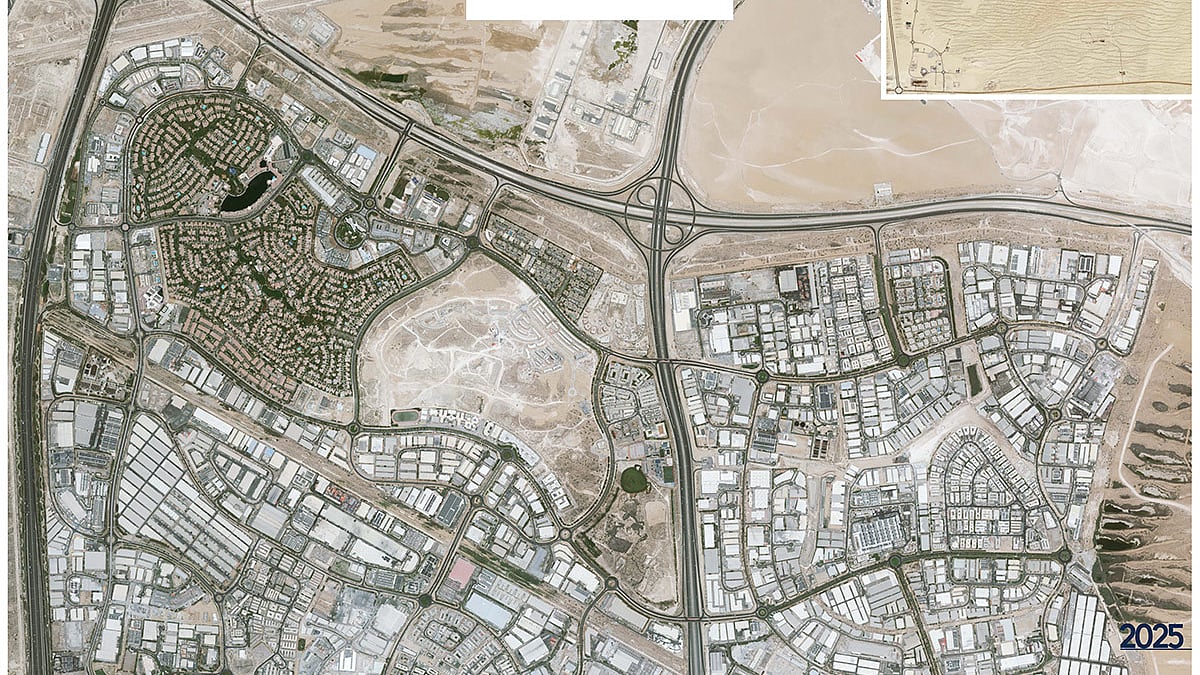
Dubai’s growth is moving south.
Over the past decade, investment in Dubai has increasingly shifted southwards, shaped by Expo City Dubai, logistics corridors and the expansion of Al Maktoum International Airport.
But long before that momentum gathered pace, one district was already in place.
Dubai Investments Park, or DIP, which is often referred to as a city within a city, spans 23 million square metres in the south of the emirate serving four critical segments: logistics, industrial, commercial and residential. It sits close to Jebel Ali Port, upcoming Al Maktoum International Airport and major highways. Today, as development accelerates around it, DIP has become a fixed point in Dubai’s next phase of growth.
Dubai Investments Park was conceived in 1999, when much of Dubai’s southern area was still undeveloped. Over the past 25 years, it has grown into a large mixed-use district that combines industry, logistics, commercial and residential communities within a single master plan.
“Nothing here happened overnight,” says Omar AlMesmar, General Manager of Dubai Investments Park. “This was built step by step, with a long-term view of what Dubai would need.”
With about 1,000 tenants, ranging from global multinationals to regional firms and small businesses, across the district, there are approximately 5,000 active sub-tenants, reflecting the scale of commercial activity taking place.
DIP is also home to a large residential population. More than 150,000 people live within the district in apartments, villas and staff accommodation. Supporting that community requires infrastructure closer to a municipality than a conventional business park.
Today, DIP includes over 103 kilometres of internal roads, extensive utility networks and a wide range of community facilities, including schools, medical clinics, parks, retail centres and a dedicated metro station connecting the area directly into Dubai’s public transport system.
“This was always about more than industrial plots,” AlMesmar says. “If people are going to work here for decades, they need places to live, learn, shop and access healthcare.”
The park has averaged near full occupancy over the past five years and reached about 99.9 per cent occupancy in 2025. This consistency reflects the structure of the model and the level of commitment from tenants that have invested heavily within the district over the years.
In total, tenants have invested about Dh42 billion into facilities at Dubai Investments Park. That investment includes factories, warehouses, offices, residential buildings and supporting infrastructure. It has also created a tenant base that is broad and diversified, with no single company accounting for a large share of rental income.
“That diversity is intentional,” AlMesmar says. “It insulates the park from concentration risk, and it reflects the real economy.”
A model built around stability
Dubai Investments Park operates differently from a traditional real estate developer or a property investment vehicle.
Dubai Investments Park does not build or sell property. Instead, it leases land on long-term contracts, typically for 30 years or more, and provides essential infrastructure and services. Tenants finance and build their own facilities and operate them for the duration of their leases.
“We don’t develop anything above ground – in other words we don’t develop buildings,” AlMesmar says. “We develop and maintain the ground and the infrastructure. Our tenants take it from there.”
Because tenants invest their own capital into buildings, Dubai Investments Park’s capital spending remains relatively low and the result is an infrastructure-like business as opposed to a property development business.
“In many ways, we operate like a service provider,” explains AlMesmar. “Our responsibility is to keep a very large and complex community running smoothly, every day.”
This approach has underpinned DIP’s evolution from undeveloped land into one of Dubai’s largest mixed-use districts.
Supporting Dubai’s economic priorities
From the outset, Dubai Investments Park was designed to support economic diversification. Its industrial and logistics zones host hundreds of factories and warehouses that serve supply chains across the UAE and the wider region.
This role aligns closely with Dubai’s Economic Agenda D33, which aims to double the size of the emirate’s economy by 2033 through growth in industry, logistics and private sector investment.
“DIP has grown alongside Dubai’s economic priorities,” AlMesmar says. “Manufacturing, logistics and commerce all need long-term, well-run infrastructure. That is what we provide.”
By offering infrastructure-ready land and long-term stability, DIP has helped manufacturers and logistics operators establish a base in Dubai and the integrated nature of the district also supports quality of life. Many employees live close to their workplaces and residential areas sit alongside schools, healthcare facilities, retail and open spaces.
The outlook
Dubai Investments Park enters its next phase from a position of strength.
As development gathers pace across Dubai’s southern corridor, DIP’s location is at the centre of that expansion. With infrastructure already established, the park is positioned to support rising industrial and logistics activity in the years ahead.
“Our role is to ensure the district remains ready,” AlMesmar adds. “As the south of Dubai develops further, and commercial activity increases that readiness becomes even more important.”
Growth is expected to come from within the existing platform. As long-term leases mature, renewals are being aligned with prevailing market benchmarks, supporting steady organic growth.
Strong demand for space continues to underpin occupancy and sub-leasing activity, while tenants are upgrading and repositioning facilities towards higher value uses.
“Our focus remains consistent,” AlMesmar says. “Maintain the platform, support our tenants and ensure DIP is ready for the next stage of Dubai’s growth.”
Sign up for the Daily Briefing
Get the latest news and updates straight to your inbox
Network Links
GN StoreDownload our app
© Al Nisr Publishing LLC 2026. All rights reserved.