Why stablecoins are moving into the mainstream worldwide, in the UAE
Global adoption accelerates as regulated dirham-backed AE Coin enters everyday payments
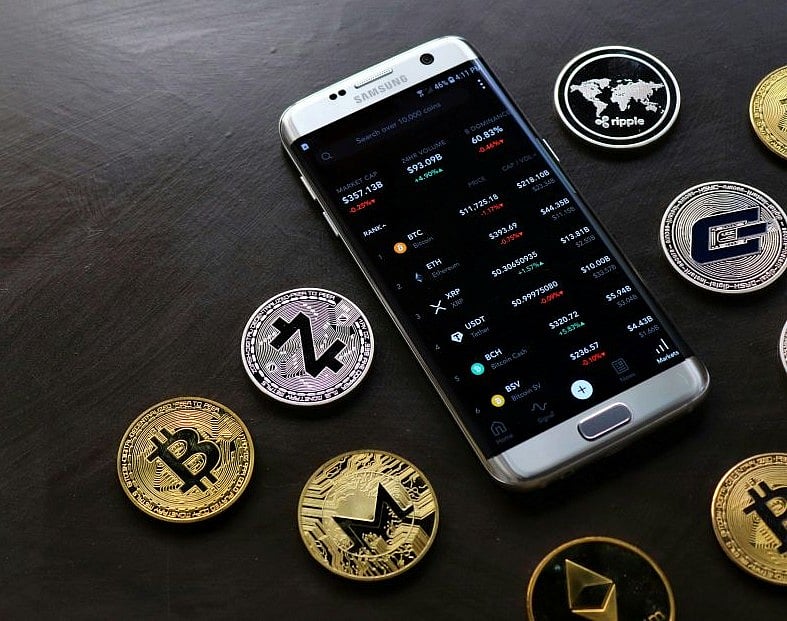
Dubai: Stablecoins, a once-niche corner of the cryptocurrency market, are moving rapidly into mainstream finance, backed by banks, payment networks, and governments.
For UAE residents, the shift is no longer theoretical. With the country licensing its own dirham-backed stablecoin and global institutions building payment systems around the technology, stablecoins are emerging as a new layer of digital money designed for daily use.
Stablecoins are digital tokens designed to maintain a fixed value, typically pegged one-to-one to traditional currencies such as the US dollar or the UAE dirham. Unlike cryptocurrencies such as Bitcoin, whose prices fluctuate constantly, stablecoins are structured to hold steady, making them suitable for payments, transfers, and settlements.
Think of a stablecoin as digital cash that moves on blockchain rails. Its value does not change, but it can be transferred almost instantly, at any time, without relying on conventional banking hours.
Fast-growing market
The stablecoin sector just recorded its biggest year on record.
Global stablecoin market value grew 49% in 2025, rising from about $205 billion in January to roughly $306 billion by late November, according to data from crypto analytics platform DeFi Llama.
That growth is being driven by regulatory clarity and institutional adoption. Over the past year, the United States introduced its first federal framework for stablecoins, Europe rolled out its Markets in Crypto-Assets regulation, and major financial firms began deploying stablecoin infrastructure.
Visa and Mastercard have both announced plans to support stablecoin settlements. Stripe has launched stablecoin issuing and transfer tools across more than 100 countries. PayPal expanded the reach of its stablecoin as supply passed $1 billion. Circle, the issuer of USDC, listed on the New York Stock Exchange, underscoring how far the sector has moved into traditional finance.
Visa’s global markets president said he expects strong growth in emerging markets, where stablecoins can offer faster access to digital dollars and alternative payment rails. Executives at fintech firm Plaid have predicted that many of the next generation of digital banks will be built around stablecoins.
How stablecoins work
Most stablecoins maintain their fixed price through a reserve system.
For every digital coin issued, the operator places an equivalent amount of real currency into regulated accounts. If one stablecoin represents one dollar or one dirham, the issuer is expected to hold that same amount in cash or cash-equivalent assets.
Users can convert traditional money into stablecoins, transfer them across blockchain networks, and redeem them back into cash. When a coin is redeemed, it is destroyed and removed from circulation.
Because holders know the token can always be exchanged for the underlying currency, the market price remains stable.
Stablecoins are widely used to move money quickly, reduce the cost of cross-border transfers, and provide a low-volatility alternative inside digital finance markets.
Stablecoins, Bitcoin, Banks
The differences between stablecoins, traditional bank transfers and cryptocurrencies come down to stability, speed and oversight.
Bitcoin and similar cryptocurrencies are largely treated as investments. Their prices fluctuate sharply, and transactions can take between minutes and an hour to fully settle.
Bank transfers are highly stable and regulated, but often slower. Local transfers can take hours. International payments can take days. Many systems do not operate outside business hours.
Stablecoins aim to combine stability with constant availability. They are pegged to fiat currencies, operate on blockchains around the clock, and can settle in seconds. That makes them suited to retail payments, remittances, payroll, and digital commerce.
UAE’s own stablecoin arrives
The UAE has moved early to regulate this space.
AE Coin became the country’s first fully licensed dirham-backed stablecoin after securing final approval from the Central Bank of the UAE in December 2024. Each AE Coin is backed one-to-one by UAE dirhams held in regulated local banks and subject to ongoing audits.
The stablecoin is designed specifically for the domestic economy. Unlike global stablecoins tied to the US dollar, AE Coin mirrors the value of the dirham.
Users access AE Coin through the AEC Wallet, powered by Al Maryah Community Bank. Registration is linked to UAE Pass, and funds are converted directly from local bank accounts.
Payments run on blockchain smart contracts, which automate transfers and make transactions final and tamper-resistant.
Under UAE regulations, only dirham-backed stablecoins are authorised for everyday payments. Other cryptocurrencies remain largely restricted to trading platforms.
That regulatory framework positions AE Coin as a bridge between traditional banking and blockchain-based finance.
Why this matters for residents
For consumers, stablecoins promise a different way money behaves:
Transfers can settle in seconds rather than days.
Payments can function 24 hours a day.
Remittances can avoid layers of intermediaries.
Digital services can be automated.
That has implications across daily life — from faster bill payments and online shopping to lower-cost international transfers and new forms of app-based financial services.
For businesses, stablecoins open the door to instant settlement, programmable payments, and reduced cross-border friction.
For banks and governments, they offer infrastructure that can support digital trade, financial inclusion, and next-generation payment systems under regulatory oversight.
Global shift, locally applied
Stablecoins are increasingly being positioned not as speculative assets but as financial plumbing.
They are being tested for payroll, merchant payments, treasury management, and international settlement. Payment networks are building systems to connect them with existing card and banking infrastructure.
As more institutions move into the space, stablecoins are becoming a functional layer between traditional money and blockchain networks.
For the UAE, the development of a regulated, dirham-backed stablecoin places the country inside that global transition.
For residents, it means digital money is no longer only something that lives on trading apps. It is moving into wallets, shops, payment systems and public services.
The shift suggests that the next phase of digital finance in the UAE may not revolve around volatile tokens, but around stable, regulated digital currency designed to behave much like cash — only faster, always available, and increasingly embedded into everyday economic life.

Sign up for the Daily Briefing
Get the latest news and updates straight to your inbox
Network Links
GN StoreDownload our app
© Al Nisr Publishing LLC 2026. All rights reserved.