DIFC targets 25,000 jobs in bid to become world’s first AI-native financial centre
Native AI programme is expected to generate $3.5 billion in economic benefits
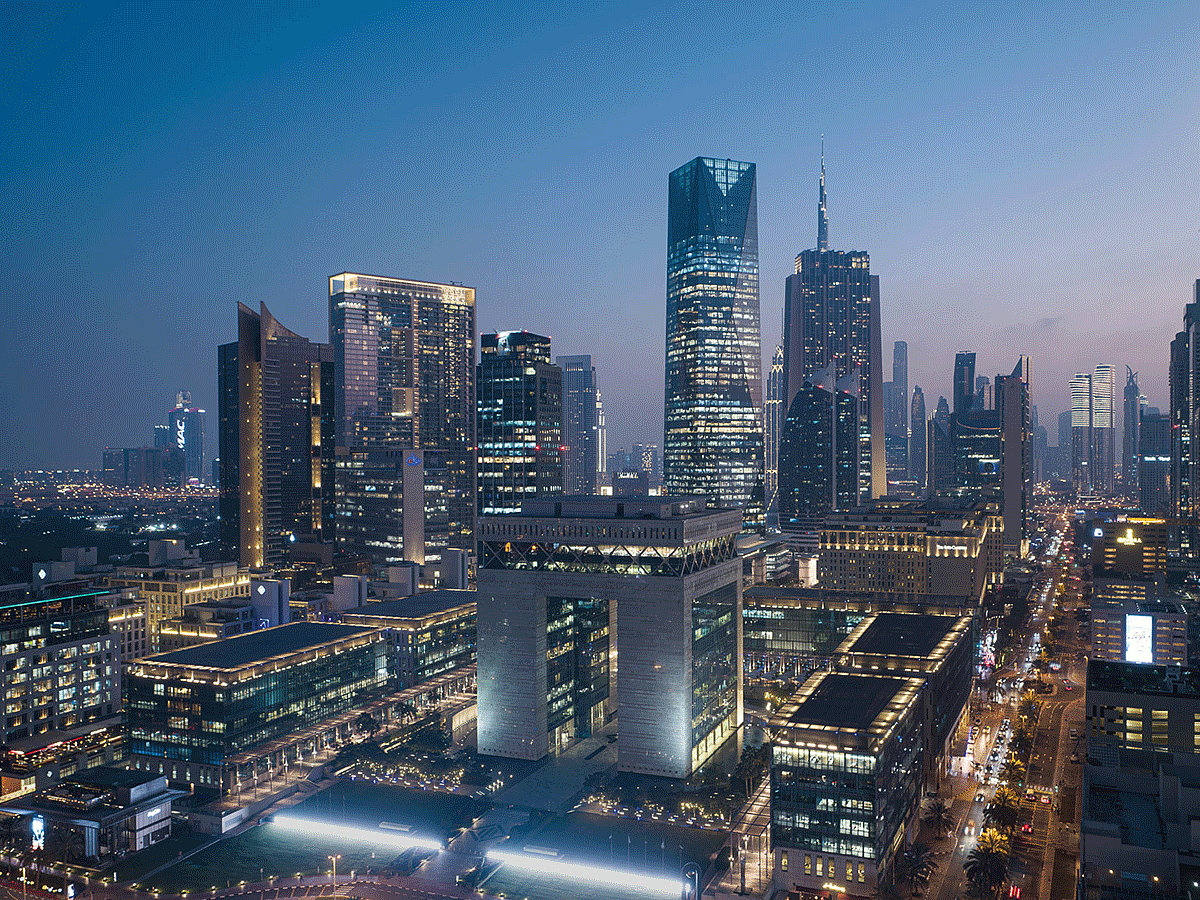
Dubai International Financial Centre said it will become the world’s first AI-native financial centre, embedding artificial intelligence across its legal frameworks, business environment, talent development systems and infrastructure.
Get updated faster and for FREE: Download the Gulf News app now - simply click here.
The Native AI programme is expected to generate $3.5 billion in economic benefits and create around 25,000 jobs, as the centre scales AI deployment across financial services and related sectors.
Arif Amiri, Chief Executive Officer of DIFC Authority, said: “Today we are announcing that DIFC will become the world’s first AI-Native Financial Centre. This is not about experimenting with AI at the edges; it is about embedding AI across our legal frameworks, regulatory systems, talent development and physical infrastructure.
"By doing so, DIFC will set a global benchmark for AI governance and responsible innovation, while delivering tangible impact, including $3.5 billion (Dh12.9 billion) in economic value and the creation of 25,000 new jobs.”
From pilot to core systems
The move marks a shift from pilot-based adoption to full integration, with AI set to underpin the centre’s regulatory architecture, enterprise operations and physical urban environment.
DIFC said the initiative builds on a five-year AI strategy launched in 2023, under which data governance policies were introduced and artificial intelligence was incorporated into its Data Protection Law as Regulation 10. The centre has already deployed AI tools to support client compliance and relationship management.
Regulation, global reach
DIFC said it would establish governance frameworks covering both human activity and AI agents, including robotics, as part of its regulatory model. It also plans to provide financial firms with access to advanced AI tools, while exporting AI governance software and trained talent to markets in the Global South.
The centre will integrate physical AI technologies such as robotics, autonomous mobility and digital twins into its ecosystem. By 2030, a substantial percentage of its buildings is expected to be equipped with intelligent systems supported by thousands of sensors, with some maintenance and security functions handled by robots and energy usage reduced through AI efficiencies.
Ecosystem, talent push
DIFC said it would launch a full-stack AI campus combining regulation, training, compute and physical AI, while expanding accelerators, venture platforms and partnerships. It also plans to roll out executive education, regulatory training and technical certification programmes to support human-AI collaboration at scale.
The centre aims to position itself as a leading destination for AI-in-finance companies, targeting higher startup density, venture capital funding and unicorn creation than other global financial hubs.
The initiative aligns with Dubai’s broader economic and technology agenda, with DIFC citing regulatory agility, digital infrastructure and global connectivity as factors supporting implementation at scale.

Sign up for the Daily Briefing
Get the latest news and updates straight to your inbox
Network Links
GN StoreDownload our app
© Al Nisr Publishing LLC 2026. All rights reserved.