We will bounce back very, very quickly, says Dubai Airports CEO
DXB currently operating at 40–45% of normal traffic levels, Paul Griffiths told CNN
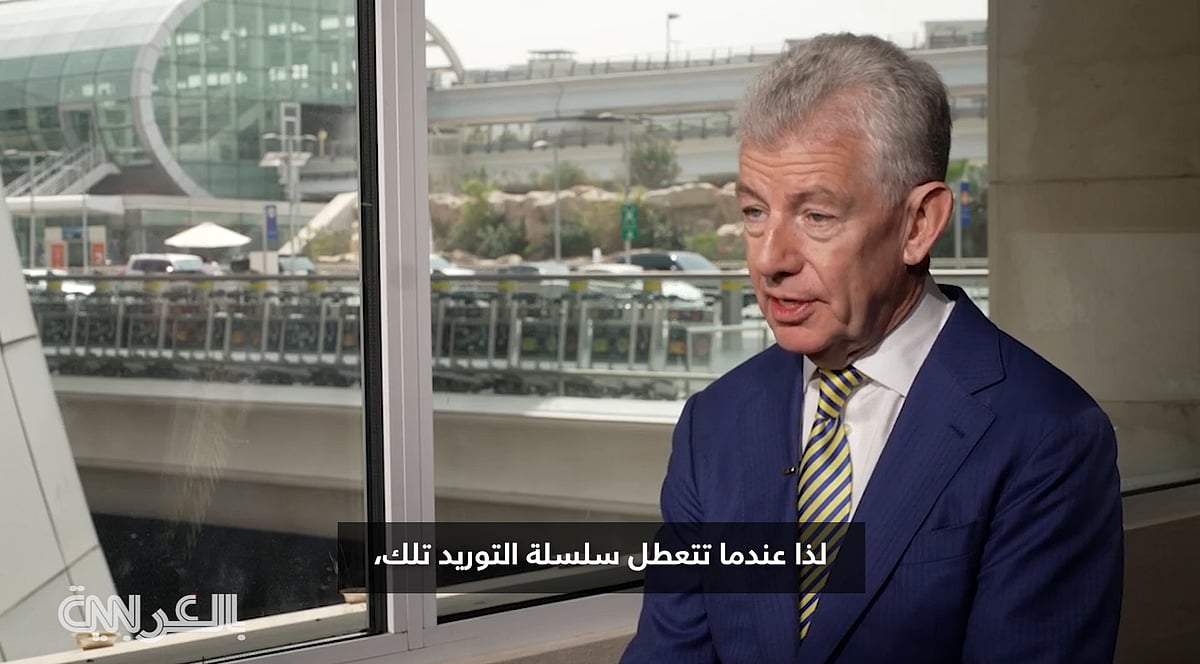
Dubai: Dubai Airports has facilitated the journeys of over one million passengers in the past 17 days, even as airspace closures and regional tensions disrupted operations, CEO Paul Griffiths told CNN’s Becky Anderson.
Griffiths said Dubai International Airport (DXB) has handled over one million passengers during this period, despite temporary airspace closures and operational challenges.
“We facilitated the journeys of over a million passengers over the last 17 days, and the recovery rate is significant. We’re back up to about 40, 45 per cent of normal traffic movements,” he said.
Since the conflict began, the UAE’s aviation sector authorities have temporarily closed airspace at intervals based on threat assessments.
The airspace was reopened when it was safe, and the UAE introduced designated flight corridors to ensure aircraft could continue operating safely.
Airlines based in the UAE, including Emirates, Etihad Airways and Air Arabia, adjusted schedules, suspended some routes, and gradually resumed services as conditions stabilised. Some international carriers also paused operations, largely due to insurance constraints.
Stay updated: Get the latest faster by downloading the Gulf News app - it's completely free. Click here for Apple or here for Android. You can also find it on the Huawei AppGallery.
How is it being done?
The UAE’s airspace was opened and closed depending on threat levels, with flights routed through designated corridors approved by the General Civil Aviation Authority (GCAA).
“We've closed airspace, we've opened it as the threat level has changed, and we've been able to keep aircraft in the air and obviously, to route through corridors that are properly designated by the GCAA,” Griffiths said.
At the airport, managing passenger flow and clear communication were key during disruptions. DXB usually handles around 320,000 passengers a day.
“When that supply chain gets interrupted, it’s incredibly important that we keep people informed,” he said. Passengers were advised to come to the airport only when needed, helping to maintain order.
“The airport has remained calm and composed,” Griffiths added, noting that customer feedback suggests operations have been handled “reasonably” well.
Coordination with other hubs
Dubai Airports also worked closely with other regional hubs to make the best use of limited airspace capacity.
“We've worked closely with all of the other airports in the region to make sure that the number of flights is carefully scheduled and predicted in advance,” he said.
Griffiths said recovery depends on strong coordination across the aviation system, including airlines, air traffic control, and government authorities.
“The liaison we've had with air traffic controllers… government organisations… airlines… has been incredible,” he said.
Not without challenges
Griffiths told CNN that the aviation system depends on a complex and highly coordinated supply chain, from departure overseas to arrival in Dubai.
He said “the amount of steps in that journey and the number of people and different organisations involved is quite incredible,” adding that there is a duty of care to keep the system running “as effectively and efficiently as possible.”
On airline disruptions, Griffiths said insurance remains a key issue, with some international carriers suspending services.
“I think most of the problem has been insurance,” he said, adding that if foreign governments support airlines by underwriting operations to the UAE, “we’ll do everything we can to facilitate those.”
He said some airlines are already receiving such support. He also clarified that no airline is being prioritised.
“We’re not turning anyone away that wants to mount an operation,” he said, while noting that limited airspace means close coordination is needed to reduce delays.
Safety incidents
On safety incidents near airport infrastructure, Griffiths said quick response systems have worked well.
“The first thing, obviously, is safety and security,” he said. He added that clear communication helped move people to safety quickly, while civil defence teams responded “within minutes” to contain situations.
He said normal operations resumed shortly after such incidents.
100% recovery
Griffiths highlighted the global importance of the Middle East’s aviation hubs, noting that “one third of the world’s population is within four hours flying time of Dubai, and two-thirds within eight hours.”
He expressed confidence in a quick recovery, saying, “We will bounce back from the current situation very, very quickly,” and added that the focus is on restoring full operations.
“We are doing everything we can to preserve both the capability and the confidence to bring our operations up to 100% capacity as quickly as we possibly can.”

Sign up for the Daily Briefing
Get the latest news and updates straight to your inbox
Network Links
GN StoreDownload our app
© Al Nisr Publishing LLC 2026. All rights reserved.