Emirates, Etihad, flydubai, Air Arabia powerbank rules passengers must know before flying
UAE airlines ban the use of power banks during flights
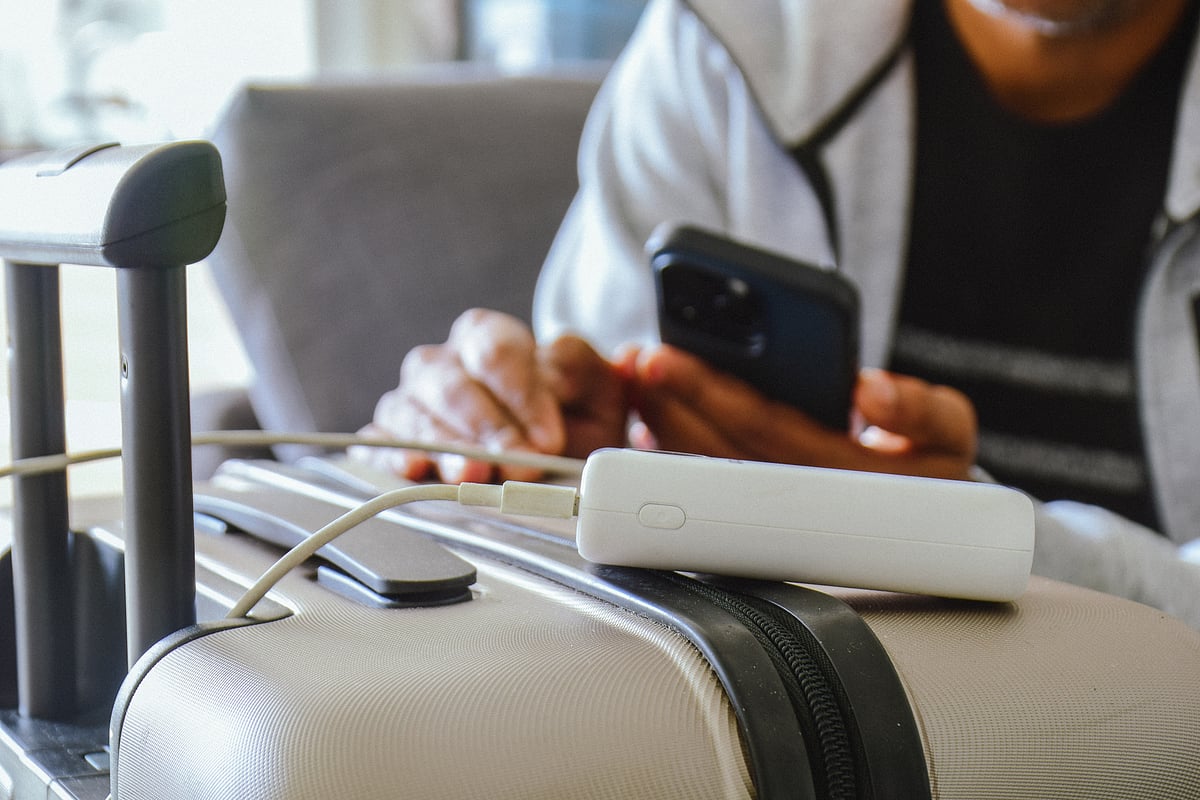
Dubai: A power bank that caught fire on board a commercial flight in China has once again highlighted why airlines are tightening rules on carrying and using portable chargers.
The latest incident occurred aboard China Eastern Airlines Flight MU2421 on July 24 after the aircraft landed at Guiyang Longdongbao International Airport. According to the South China Morning Post, the power bank inside a passenger’s carry-on bag caught fire while the Airbus A320 was taxiing to the terminal.
Cabin crew quickly extinguished the flames before anyone was injured, although the aircraft sustained minor smoke damage.
Videos shared online showed smoke and flames coming from an overhead baggage compartment as crew members responded.
The incident serves as a timely reminder for travellers flying from the UAE, where major airlines have introduced strict rules governing how power banks must be carried and stored onboard.
Why are airlines concerned?
Power banks contain lithium-ion or lithium-polymer batteries. If these batteries become damaged, overheat or develop an internal fault, they can enter a process known as thermal runaway, where temperatures rise rapidly and may lead to fire.
Because of this risk, airlines require power banks to remain inside the aircraft cabin, where cabin crew can respond immediately if something goes wrong.
Several UAE carriers also prohibit passengers from using power banks during flights.
| Airline | Can you carry a power bank? | Maximum capacity | Maximum number allowed | Can you use it onboard? | Where must it be stored? | Checked baggage? |
|---|---|---|---|---|---|---|
| Emirates | Yes | 100Wh | 1 | No | Seat pocket or under-seat bag; not overhead locker | No |
| Etihad Airways | Yes | 100Wh | 1 | No | Seat pocket, under-seat bag or seat storage | No |
| flydubai | Yes | 100Wh | 1 | No | Seat pocket or hand baggage under seat | No |
| Air Arabia | Yes | 100Wh | Not specified | No | Seat pocket or under-seat bag; not overhead locker | No |
Emirates: One power bank only
Emirates introduced new power bank restrictions that came into effect on October 1, 2025, following what it described as a comprehensive safety review.
Passengers may carry one power bank with a maximum capacity of 100 watt-hours (Wh).
However, the airline prohibits:
Using a power bank to charge phones, tablets or laptops during the flight.
Charging the power bank using the aircraft's USB ports or power sockets.
Storing the power bank inside an overhead baggage compartment.
Packing power banks inside checked baggage.
Instead, passengers must keep the device in the seat pocket or inside a bag stored beneath the seat in front of them, allowing cabin crew quick access if an emergency occurs.
Emirates also requires the battery's capacity rating to be clearly visible on the device.
Etihad: Keep it within reach
Etihad Airways has similar requirements.
Passengers may carry one power bank of up to 100Wh, provided the watt-hour rating is clearly marked.
The Abu Dhabi carrier says passengers must not:
Use the power bank onboard.
Charge the power bank.
Use it to charge other electronic devices.
The airline also recommends storing the device somewhere easily accessible.
Economy passengers should place it in a bag under the seat or in the seat pocket, while First and Business Class passengers should use the seat's storage compartment. Etihad advises travellers not to place power banks in overhead lockers because they may not be immediately accessible during an emergency.
Power banks exceeding 100Wh are not permitted.
flydubai: Lithium battery limits apply
According to flydubai's dangerous goods guidance, lithium batteries exceeding 160Wh or containing more than 8g of lithium are prohibited.
According to the flydubai passenger guide, travellers may carry one power bank with a maximum capacity of 100Wh in their hand baggage only. The airline prohibits passengers from using a power bank to charge devices or recharging the power bank during the flight.
The device must remain switched off throughout the journey and be stored either in the seat pocket or inside hand baggage placed under the seat in front, rather than in the overhead locker.
Power banks are not permitted in checked baggage, and batteries with a capacity exceeding 160Wh are not allowed on board.
Air Arabia: Strict cabin-only policy
Air Arabia treats power banks as spare lithium batteries.
The airline requires passengers to:
Carry power banks in cabin baggage only.
Never place them in checked baggage.
Store them in the seat pocket or under the seat rather than in overhead lockers.
Keep them switched off throughout the flight.
Not use them to charge electronic devices onboard.
Not charge them using the aircraft's power supply.
Like Emirates and Etihad, Air Arabia permits lithium-ion power banks only if they do not exceed 100Wh.
| Rule | Emirates | Etihad | flydubai | Air Arabia |
|---|---|---|---|---|
| Maximum power bank capacity | 100Wh | 100Wh | 100Wh | 100Wh |
| Maximum number allowed | 1 | 1 | 1 | Not specified |
| Carry in cabin | Yes | Yes | Yes | Yes |
| Carry in checked baggage | No | No | No | No |
| Use power bank onboard | No | No | No | No |
| Recharge power bank onboard | No | No | No | No |
| Overhead locker | No | Avoid | No | No |
| Seat pocket/under seat | Yes | Yes | Yes | Yes |
| Must be switched off | Not specified | Protected | Yes | Yes |
| Capacity marked | Yes | Yes | Not specified | Not specified |
What international airlines are saying
The tighter airline policies reflect a broader push by the aviation industry to improve lithium battery safety.
In its updated 2026 guidance, the International Air Transport Association (IATA) said airlines are moving ahead with stricter measures on power banks following recent safety incidents, even before the proposed rules are formally adopted.
The guidance recommends limiting passengers to two power banks of up to 100Wh each, prohibits charging them using the aircraft's power supply, advises against storing them in overhead lockers, and says they should not be used during taxi, take-off or landing.
Airlines may also impose stricter requirements.
| Airline / Group | Quantity Limit | Capacity Limit (Per Device) | Advance Approval Needed? | In-Flight Usage Policy |
|---|---|---|---|---|
| Lufthansa | Max 2 per passenger | Up to 100 Wh (approx. 27,000 mAh) | Required for 101 Wh to 160 Wh | Total Ban (No charging/powering) |
| SWISS | Max 2 per passenger | Up to 100 Wh (approx. 27,000 mAh) | Required for 101 Wh to 160 Wh | Total Ban (No charging/powering) |
| Air France | Max 2 per passenger | Up to 100 Wh (approx. 27,000 mAh) | Required for 101 Wh to 160 Wh | Total Ban (No charging/powering) |
| KLM | Max 2 per passenger | Up to 100 Wh (approx. 27,000 mAh) | Required for 101 Wh to 160 Wh | Total Ban (No charging/powering) |
| British Airways | Max 2 per passenger | Up to 100 Wh (approx. 27,000 mAh) | Required for 101 Wh to 160 Wh | Total Ban (No charging/powering) |
What US's FAA says
The Federal Aviation Administration (FAA) bans portable power banks from checked luggage due to fire risks, requiring them to be carried in the cabin, even if bags are gate-checked.
Power banks up to 100 Watt-hours (Wh) are permitted, while those between 101 Wh and 160 Wh require airline approval, and those exceeding 160 Wh are prohibited.
Furthermore, all portable power sources must have their terminals protected to prevent short-circuits, with some carriers requiring they remain under the seat for monitoring.
Bottom line for travellers
While each airline has its own detailed dangerous goods policy, the message from UAE carriers is largely consistent: carry power banks in your cabin baggage, keep them within easy reach, never pack them in checked luggage, and do not use them during the flight where prohibited.
The latest onboard fire involving a portable charger is another reminder that even everyday electronic accessories are subject to strict aviation safety rules designed to reduce the risk of lithium battery fires.
Get updated faster and for FREE: Download the Gulf News app now - simply click here.

Sign up for the Daily Briefing
Get the latest news and updates straight to your inbox
Network Links
GN StoreDownload our app
© Al Nisr Publishing LLC 2026. All rights reserved.