Why skipping can burn more calories than running
Short on workout time? Skipping makes every minute work harder
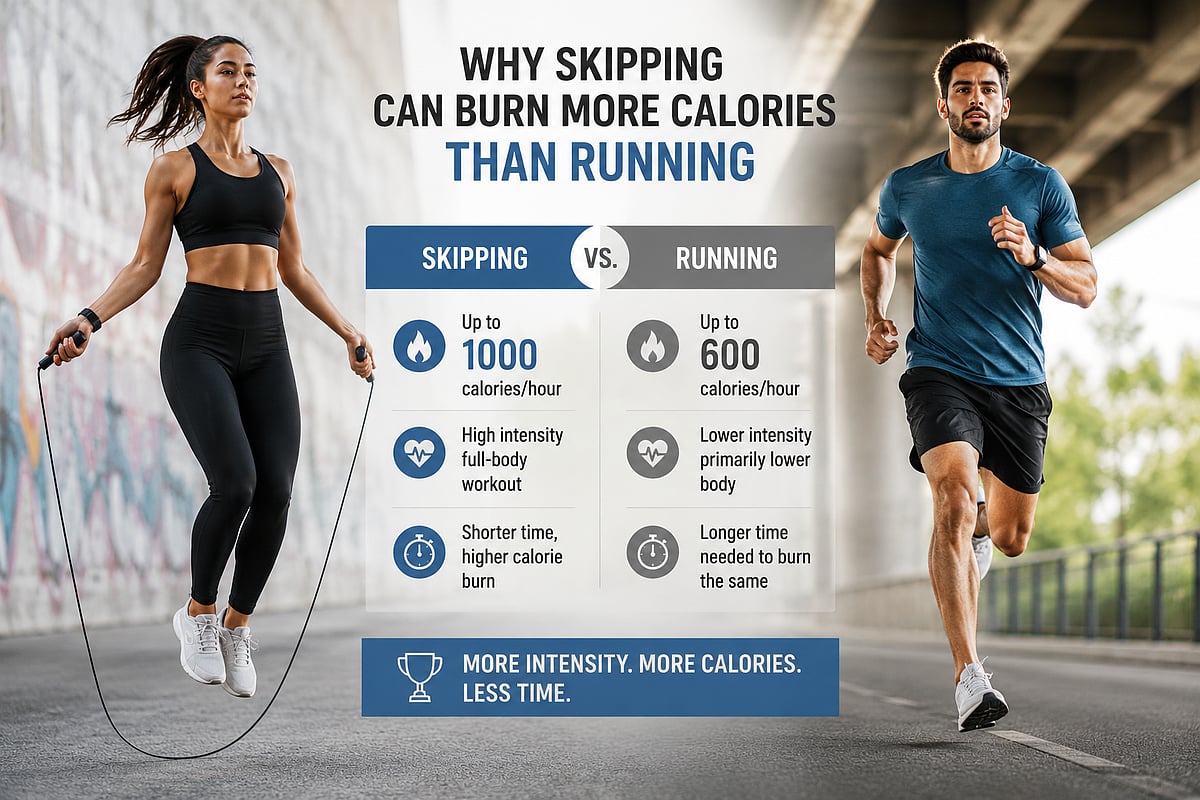
Skipping can demand more energy per minute than a fairly brisk run, but the interesting part is where the crossover happens. The 2024 Adult Compendium of Physical Activities assigns fast rope jumping at 120 to 160 skips per minute an intensity of 12.3 METs, a standard measure of exercise energy expenditure. Running at 6 to 6.3mph is rated at 9.3 METs. Push the run to 8mph and it reaches 12 METs, while faster running eventually overtakes the rope. So skipping is not a metabolic shortcut. It is simply an unusually concentrated form of conditioning for something that fits in a drawer.
A MET describes the energy cost of an activity relative to rest. The Compendium puts general rope skipping at 11 METs, moderate jumping at 11.8 and fast jumping at 12.3. Actual calories burned vary with body mass, technique, pace and how much of the session is spent resting.
Part of skipping's efficiency comes from repetition. Each turn asks you to leave the ground, land and immediately prepare for the next jump, while your wrists keep the rope moving. The coordination requirement also discourages the long, relaxed stride possible during easy running.
For UAE residents who prefer indoor training during hotter months, the appeal is practical. A rope needs little storage space and intervals can fit into a short home or gym session. Beginners should still treat jumping as impact exercise. The American Council on Exercise recommends starting gradually, landing softly and keeping jumps low. Anyone with a persistent condition or concerns about high impact exercise should consult a doctor.
Rope length and rotation matter more than elaborate features. ACE recommends an adjustable rope and notes that bearing equipped handles can provide smoother rotation. Beginners should prioritise controllable rhythm over outright speed. A mat is useful mainly for providing a dedicated jumping surface and reducing wear on the cable and floor. A timer should make work and recovery intervals easy to repeat without reaching for a phone.
The Sphinx is the straightforward speed option for someone who already has the basic bounce under control. PICSIL specifies a 2.5m steel cable with PVC coating, 14cm handles and double bearing rotation, with total weight listed at 0.28kg. That combination favours quick, consistent rope turnover rather than adding resistance for its own sake. Its adjustable length is important because an excessively long rope makes each revolution less efficient. For conditioning intervals where maintaining cadence matters, this is the most focused of the two ropes here.
The Gaoykai takes a different approach, using aluminium handles and a thicker adjustable cable rather than chasing minimum weight. The specifications list a 9.8ft cable and total weight of approximately 0.47kg. The extra mass gives more feedback through each rotation, which some jumpers may find easier to feel than an ultralight speed cable. It is better viewed as an alternative training feel rather than a way to guarantee a higher calorie burn.
A dedicated mat becomes useful if most sessions happen on hard flooring. The dofopo listing supplied appears to correspond to the brand's 71 x 24 inch TPE version, which uses a textured, non slip surface and high density material. The rope repeatedly strikes the mat instead of tile or concrete, helping protect both the floor and cable. Its elongated shape also gives the rope room to contact the surface behind and in front of your feet.
Intervals make skipping much easier to pace, especially while technique is developing. Gymboss timers can programme one or two intervals between two seconds and 99 minutes and repeat them up to 99 times. The manufacturer also lists beep and vibration alerts, a stopwatch and removable clip. A beginner could use ACE's simple starting structure of 15 seconds of jumping followed by equal recovery, then lengthen the work period as coordination and conditioning improve.
Skipping earns its reputation for efficiency, with one important correction: it can burn more energy per minute than moderate running, but it does not automatically beat every running pace. Its real advantage is how much conditioning can be packed into a small space with simple equipment.
The PICSIL Sphinx is the top pick here because its adjustable 3m cable and bearing based rotation suit the quick, repeatable cadence that makes rope intervals effective.
Gulf News earns a commission on purchases made through links in this article, at no extra cost to you. Our editorial team selects products independently.
Sign up for the Daily Briefing
Get the latest news and updates straight to your inbox
Network Links
GN StoreDownload our app
© Al Nisr Publishing LLC 2026. All rights reserved.