Turkey outlook revised to negative at Fitch as reserves drop
Turkey's central bank has been running down forex reserves to contain the lira's slide
Also In This Package
Istanbul: Turkey's outlook was revised to negative from stable by Fitch Ratings, which said that factors including a depletion of foreign-exchange reserves and weak monetary policy credibility have "exacerbated external financing risks."
The ratings company affirmed Turkey's credit score at BB-, three levels below investment grade. That's on par with Brazil, Jordan and Armenia.
Also Read
How to break into the tech industry as a young womanPhotos: Domestic tourists flock to Saudi Arabia's Rijal AlmaaPhotos: Teddy bears help to maintian social distancing at a Mexican restaurantPhotos: Gazans get first taste of coffee-to-your-doorMeet the billionaires who dropped out of college (or Ph.D.)Photos: Passion for purple revives ancient dye in Tunisia"There have been large currency interventions to defend the lira," Fitch said in a statement. "FX interventions have weakened policy credibility."
Fitch also cited the drop in real interest rates for the change in outlook.
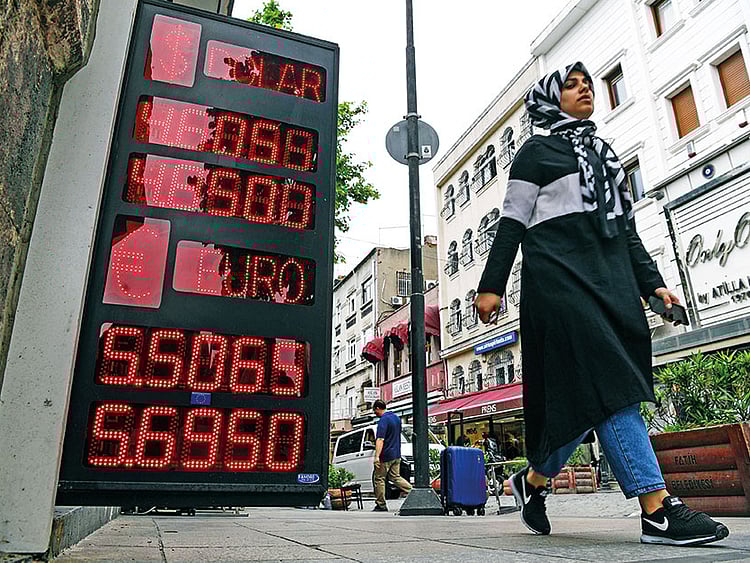
Turkey's central bank has been running down foreign-exchange reserves to contain the lira's slide, while unwinding measures that flooded the market with credit. It's also left interest rates at levels below inflation, opting instead to tighten liquidity by relying on less conventional methods to increase borrowing costs.
Turkey Tightens Policy by Stealth and Opts Against Raising Rates
The $750 billion economy is expected to shrink 4% this year, according to a survey of 23 economists by Bloomberg published last month. A lockdown to curb the spread of Covid-19 shuttered businesses across Turkey, while the pandemic has also disrupted global supply lines.
Also Read
Honda cyberattack halts plants in India, Brazil, Turkey How to fortify your IT security in times of uncertainty and beyondTurkey and Qatar in currency deal to aid the liraTurkey’s central bank is in a bind ahead of rates dayIn a report released in July, Fitch said the decline in foreign-exchange reserves added to weak monetary policy credibility, while negative real interest rates increased risks of further external pressures.
Foreign-currency reserves dropped to $45.4 billion as of Aug. 14 from $81.2 billion at the end of last year.
Sign up for the Daily Briefing
Get the latest news and updates straight to your inbox
Network Links
GN StoreDownload our app
© Al Nisr Publishing LLC 2026. All rights reserved.