Etihad Rail’s Dh39 ticket: How much will you save on your Dubai-Abu Dhabi trips?
Train fare looks enticing, but the cost of reaching each station could change the equation
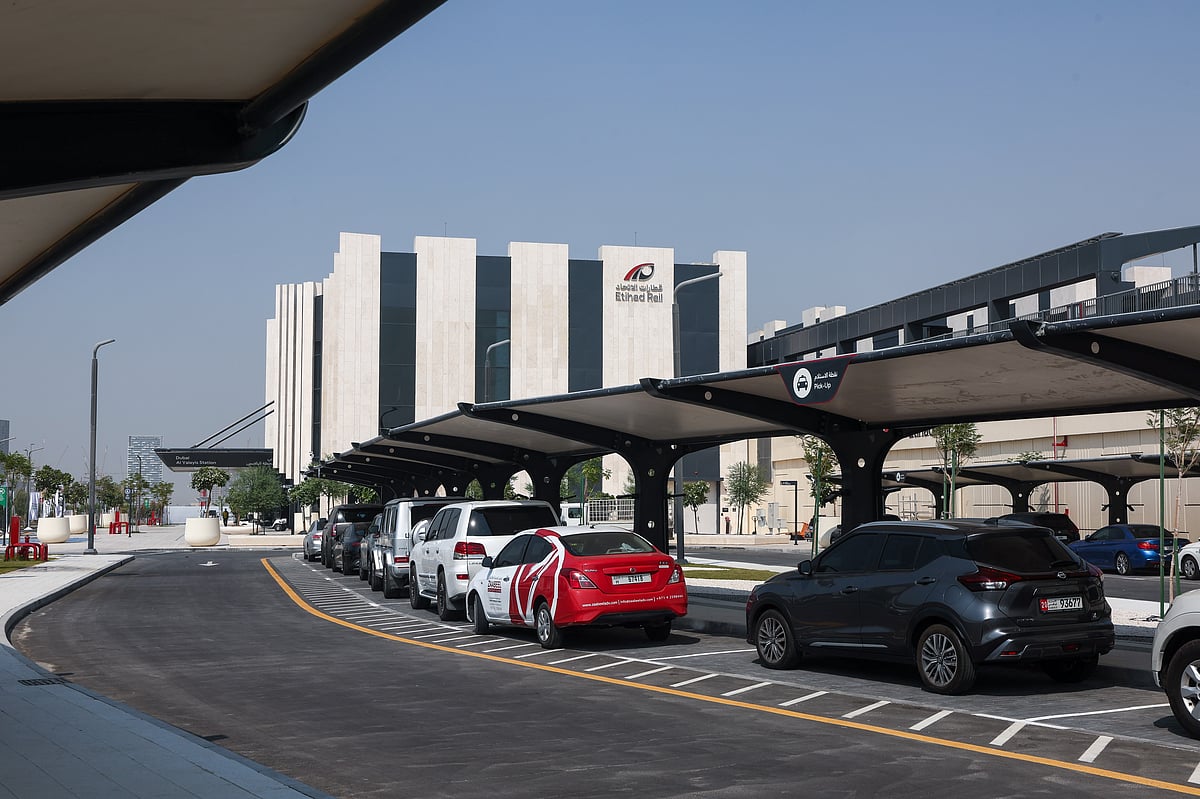
Dubai: A Dh39 ticket makes the Dubai-Abu Dhabi route cheaper for some residents if Etihad Rail service launches on September 30. For a daily commuter, two tickets at the introductory fare would total Dh78, but how much does it cost to get from your residence to the station and on to your place of work?
Booking for the route is already open, with Comfort Class starting at Dh39 per ticket and Premium Class at Dh109. At the entry-level fare:
Five round trips would see you spending Dh390 on train tickets alone.
Twenty round trips would set you back Dh1,560.
These figures are based on the assumption that you qualify for the Dh39 fare on each leg.
Compared to the Dh55 per ticket Comfort Class fare for the existing Etihad Rail service between Abu Dhabi and Fujairah, the Dh39 entry-level fare on the new route is informative, but not indicative as it does not include transport to and from the stations.
Get updated faster and for FREE: Download the Gulf News app now - simply click here.
Station determines if you save
The Dubai Al Yalayis Station is a short walk from the Jumeirah Golf Estates Metro Station, which connects to the Red Line. With an elevated 400-metre walkway linking the two, it makes for a relatively easy walk if you can access the Metro easily. The RTA lists fares for a single journey using the Silver nol card, including Dh3, Dh5 or Dh7.50, depending on the zones travelled between.
Meanwhile, the Abu Dhabi stop is at Mohamed Bin Zayed City, across the road from Dalma Mall and next to Mussafah Bus Station. Unless you work nearby, you will have to factor in additional transport costs to and from your workplace in both directions. The cost of a taxi to another person’s office cannot be used as a reliable guide to the fare for your own.
For example, the daily cost could look like this:
Train return: Dh78
Two Metro rides: Dh10
Total before onward travel in Abu Dhabi: Dh88
Hypothetical onward travel to work and back: Dh40
Total daily commute: Dh128
The extra Dh40 is a hypothetical figure, not based on any official taxi fare, but shows how easily costs can rise beyond the advertised fare for the Etihad Rail service.
What about bus or your own car?
The intercity bus option is still worth consideration if you want to reduce cash outflows. RTA’s journey planner lists a Dh30 fare for a single journey on the E100 bus service between Al Ghubaiba and Abu Dhabi Central Bus Station, which would make a round trip cost Dh60 at that fare.
Meanwhile, the E101 service between Ibn Battuta and Abu Dhabi Central Bus Station is also available. The cost of getting to the bus stop and from the bus station to your workplace still has to be factored in.
The same applies to motorists, whose costs will depend on the vehicle and the distance driven. As of September, Special 95 petrol costs Dh3.69 per litre. For every 100km driven:
A car that consumes eight litres would use about Dh29.50 in fuel.
A car that consumes six litres would use about Dh22.10 in fuel.
These figures exclude tolls and parking, but highlight why one person’s fuel costs will differ from another’s.
Parking can be a deciding factor
Abu Dhabi Mobility lists standard rates for public parking at Dh2 per hour or Dh15 for the day, while premium parking charges Dh3 per hour with a maximum stay of four hours.
Salik and Darb tolls will also vary depending on the route and when you travel. Someone who has free parking at their place of work has different costs from someone who has to pay to park and use toll roads.
That is why the Dh120 to Dh160 suggested cost for a day’s commuting between Abu Dhabi and Dubai by car cannot be applied universally. Your fuel consumption, the distance driven and parking costs will decide your costs.
Does train save time or money?
While commuting by train offers some respite, the 57-minute journey time between the two emirates does not include time spent getting to the station and to your place of work. The time it takes to make these journeys will dictate if the service is a viable alternative to driving or taking the bus.
As a solo driver, the time to read or relax on the train is an added bonus, although it should not automatically be considered additional working time. Etihad Rail’s Comfort Class cabins offer Wi-Fi and power outlets, according to Abu Dhabi’s tourism authority, so whether that time is valuable to you should be considered when determining the value of the service.
What to check before you travel
Check the return journey as closely as the outbound fare. Etihad Rail offers Saver, Value and Flex tickets, which have different terms and conditions for refunds and changes to bookings. If your meetings tend to overrun, the cheapest option may work out to be the most expensive if you regularly miss your return service.
For your own calculation, consider:
One train ticket in each direction
Travel to and from both stations
Any taxi or parking costs
The bus service that serves your workplace
Your car’s fuel, toll and parking costs
The cost of the Dh39 ticket is only the beginning, with your addresses being the deciding factor in the calculation.

Sign up for the Daily Briefing
Get the latest news and updates straight to your inbox
Network Links
GN StoreDownload our app
© Al Nisr Publishing LLC 2026. All rights reserved.