US Navy destroys 5 Iranian tankers in Gulf, crude oil prices spike
US hits Iranian oil tankers after IRGC missile attacks on US warship
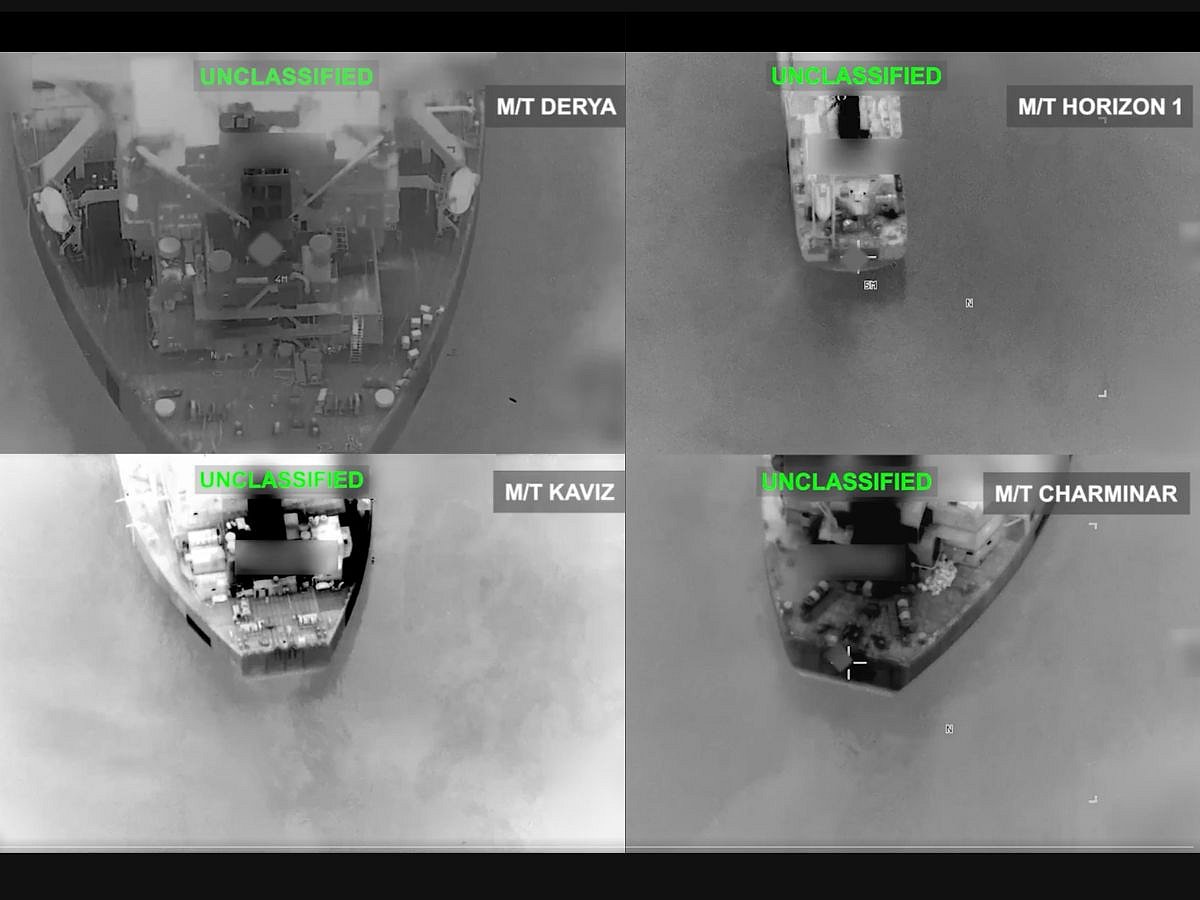
The US military has destroyed five Iranian crude oil carriers early on Wednesday (September 9) near the Strait of Hormuz.
The latest incident have further increased concerns that the waterway could become effectively inaccessible to portions of commercial shipping.
The Iran-linked crude oil carriers identified by CentCom were the M/T Kaviz, M/T Charminar, M/T Horizon 1 and M/T Riesco in the Gulf of Oman, and the M/T Derya near Kharg Island, according to reports citing the command.
The action targets Iran’s oil-export capacity.
Kharg Island is a major Iranian crude-export hub, while the Gulf of Oman provides access to the Strait of Hormuz and the wider global shipping network. US officials have described the strikes as retaliatory, but the operation also intensifies the economic pressure on Tehran by threatening the vessels and infrastructure that support its oil revenue.
Get it: Fast, verified news for FREE ... download the Gulf News app — simply click here
Crude oil rates spiked on Wednesday morning in early Asian trade, with Brent crude up to $97.92, WTI Crude at $94.33, up 1.40%, and Murban crude, a Gulf benchmark, at $110.8, up $4.00 or 3.75%.
Iran has earlier warned it could make enforcement of the US blockade increasingly dangerous and expensive, by targetting not just commercial tankers but also US warships as well as vessels suspected of supporting the blockade.
The attacks on Iranian tankers are in response to the IRGC targeting a US Navy warship with ballistic missiles twice over the past two days, according to the US Central Command.
"The US warship successfully evaded the attempted Iranian attacks and continued to patrol regional waters. No American personnel were harmed."
Separately, US Secretary of State Marco Rubio said Iran continues to try to hit US naval ships, and "every time they try to do that, they're going to lose crude oil tankers".
On September 5, US forces attacked and destroyed a trio of Iranian oil tankers.
US aircraft dropped numerous munitions on the tankers, causing catastrophic damage and fires.
Hormuz pressure point
The Strait of Hormuz is at the centre of the confrontation because it is the principal maritime gateway for Gulf oil exports.
Shipping traffic has already slowed dramatically as insurers, shipowners and crews reassess the risks.
The latest US-Iran clashes have further increased concerns that the waterway could become effectively inaccessible to portions of commercial shipping.
Reuters reported Monday that the conflict has disrupted oil flows and pushed Brent crude to its highest level since late July.
Network Links
GN StoreDownload our app
© Al Nisr Publishing LLC 2026. All rights reserved.