40 ships: CentCom escorts record 18 million barrels of oil through Hormuz as US-Iran strikes flare: report
Hormuz showdown: 40 tankers move under US military protection as Iran launches drones
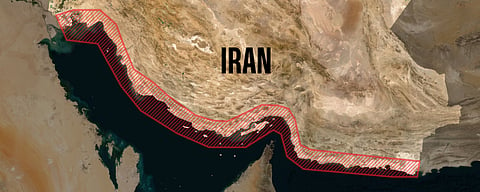
The US military escorted up to 40 commercial vessels carrying about 18 million barrels of oil through the Strait of Hormuz on Tuesday (September 1) — representing roughly 90% of a normal prewar day’s oil flow.
It also marked the highest one-day wartime peak of crude oil passage since the Iran-US war erupted more than six months ago, officials said.
Two US officials familiar with the mission told CNN that the escort was carried out as the US military and Iran exchanged a new round of strikes, highlighting the risks facing one of the world’s most important energy corridors.
Get it: Fast, verified news for FREE ... download the Gulf News app — simply click here
US forces used air, naval and space-based assets to protect the vessels while targeting Iran’s ability to attack commercial shipping.
The military also defended against "waves" of Iranian drones during the escort, the officials said.
Ships switched off transponders
Many of the 40 vessels reportedly switched off their transponders to reduce the risk of being tracked.
US officials also acknowledged that Iran could rebuild damaged military capabilities and continue threatening commercial traffic, meaning repeated escort missions may be required to maintain the flow of oil.
Drones, anti-ship cruise missile intercepted
One official said US forces intercepted an anti-ship cruise missile during the operation.
Before the conflict began, about 20 million barrels of crude oil and petroleum products moved through the strait each day.
The latest escorted shipment therefore represented roughly 90% of a normal prewar day’s oil flow, although it was a one-day wartime peak rather than a sustained rate.
The US operation was conducted alongside strikes on nearly 60 Iranian military installations near the waterway, including air-defense systems, radar networks, maritime assets, mine-laying capabilities and communications facilities, according to the officials cited by CNN.
The broader US strategy is aimed at keeping the shipping route open while restricting Iran’s ability to export oil from its ports.
Why Hormuz matters
The Strait of Hormuz connects the Persian Gulf with the Gulf of Oman and the Arabian Sea.
In 2024, an average of 20 million barrels per day passed through the waterway — equivalent to about 20% of global petroleum-liquids consumption and more than one-quarter of global seaborne oil trade, according to the Energy Information Administration (EIA).
Most of the oil and liquefied natural gas transiting Hormuz is bound for Asia.
China, India, Japan and South Korea were among the largest destinations for crude shipped through the strait, making Asian markets particularly vulnerable to prolonged disruptions.
The waterway currently has limited, but growing, alternatives: Saudi Arabia and the UAE can reroute some crude through pipelines, but the available spare capacity is far below the volume normally shipped through Hormuz.
Shipping risks remain high
The record escort did not eliminate the danger for commercial operators.
Shipping companies remain cautious about sending vessels through the strait, even under US protection, while war-risk insurance premiums and tanker charter rates have risen sharply.
Marine industry reports show that chartering an oil tanker for passage through the waterway could cost more than $500,000 per day.
The operation shows that the strait is not completely sealed to shipping — but it also underscores how military protection has become necessary to move energy cargo through a route that previously handled roughly 100 or more commercial vessels a day under normal conditions.


