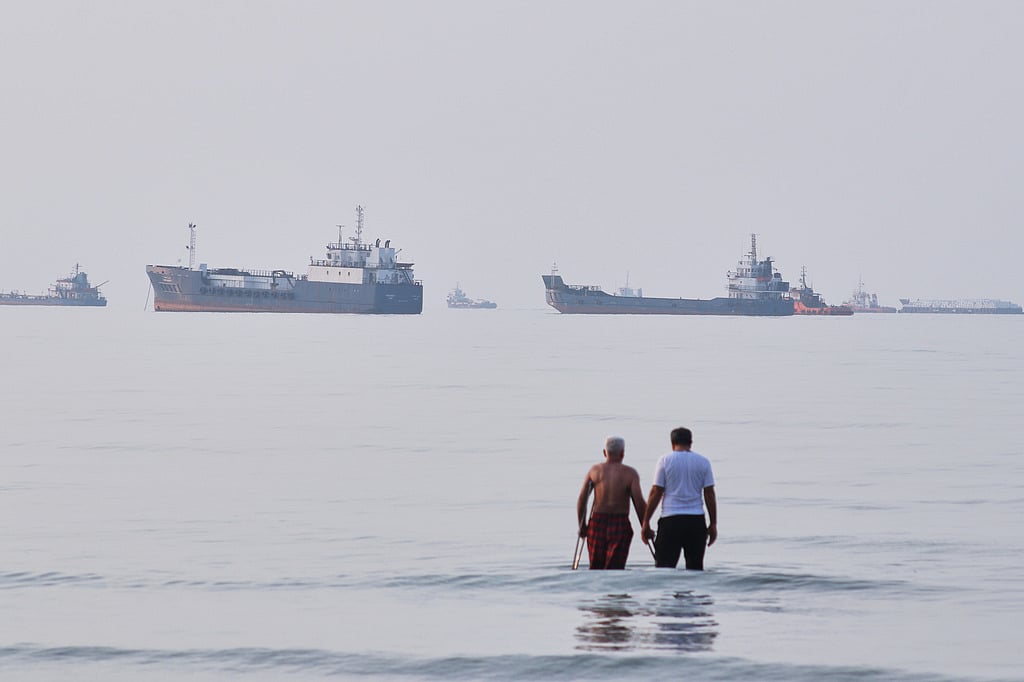
After nearly two weeks of nightly military action, Iran reported no new US strikes overnight into Saturday, while Qatar announced the full resumption of maritime navigation from Sunday. The developments offered a brief pause in a conflict that has disrupted Gulf shipping and heightened regional security concerns. However, fresh incidents in the Strait of Hormuz, the Gulf of Oman and the Red Sea underscored that tensions remain high.
Iran reports first quiet night as diplomacy continues
Iranian Health Ministry spokesperson Hossein Kermanpour said the country experienced "a peaceful night", with no new attacks reported overnight into Saturday.
US Central Command, which had announced operations on each of the previous 13 nights, did not immediately issue a new statement on fresh strikes.
Meanwhile, Israel had assessed that a major US military operation could take place overnight before later concluding that President Donald Trump had delayed any action to allow more time for negotiations, according to Israeli news outlet Ynet.
Ynet also reported that Qatar and Oman had urged Iran to soften its position in an effort to avert what had appeared to be an imminent large-scale US operation. Israeli officials quoted by the outlet viewed the delay as temporary and continued to express doubts about the prospects for a lasting US-Iran agreement.
Qatar resumes maritime navigation
Separately, Qatar's Ministry of Transport announced that maritime navigation activities for all ships and other vessels will fully resume from Sunday, July 26.
In a post on X, the ministry urged ship operators and seafarers to continue complying with maritime rules and safety instructions for ensuring safe navigation.
The restrictions had been introduced earlier this month amid heightened regional security concerns linked to renewed US-Iran hostilities.
Fresh incidents in Gulf waters
Maritime security remained a key concern across the region.
The United Kingdom Maritime Trade Operations (UKMTO) said it had received a report of an incident involving a tanker and military forces in the Gulf of Oman. The organisation said authorities were aware of the incident and investigations were ongoing, advising vessels operating nearby to stay alert.
Separately, Iran's Revolutionary Guards said they had stopped four vessels attempting to transit the Strait of Hormuz after warning shots were fired. According to Iranian state media, the ships altered course after what Tehran described as attempts to use an "illegal and unsafe" route.
The claims could not immediately be independently verified.
India's Embassy in Tehran also confirmed that all 28 Indian crew members aboard the Mozambique-flagged LPG tanker DISHA were safe after the vessel came under attack in Iranian territorial waters. The embassy said it remained in contact with relevant authorities but did not identify who was responsible for the attack.
Houthis and Saudi Arabia trade fresh attacks
Fighting involving Yemen's Iran-backed Houthi rebels continued on Saturday.
Yemen's state-run television reported airstrikes on Houthi missile launch sites and weapons depots in Marib and Al-Jawf provinces, saying several Houthi members, including missile specialists, were killed. The broadcaster did not identify who carried out the strikes, and there was no immediate comment from the Houthis.
Earlier, Houthi military spokesman Yahya Saree said the group had targeted Saudi Aramco facilities in Jizan and Yanbu using drones and missiles, warning that attacks would intensify in the coming days if Saudi Arabia expanded military operations.
Iranian Foreign Minister Abbas Araghchi said there was "no military solution" to the conflict in Yemen and called instead for dialogue to address tensions surrounding Yemen and the Bab al-Mandab Strait.
Saudi coalition spokesman Major General Turki Al-Malki condemned recent Houthi attacks on commercial vessels in the Red Sea, describing them as reckless acts that threaten one of the world's busiest maritime trade corridors.
Iran highlights oil revenues despite sanctions
Iranian Oil Minister Mohsen Paknejad said the country earned $11.5 billion from oil sales during the war and a further $6.5 billion during the ceasefire period, according to Reuters.
Paknejad said the combined revenue meant Iran had achieved more than 60% of its forecast annual oil revenue despite sanctions and the conflict. The figures could not immediately be independently verified.
Sign up for the Daily Briefing
Get the latest news and updates straight to your inbox
Network Links
GN StoreDownload our app
© Al Nisr Publishing LLC 2026. All rights reserved.