Oil crisis deepens: Hormuz traffic collapses to four vessels, Iran rejects talks
Iran rejects US talks as attacks intensify and Brent crude stays above $108
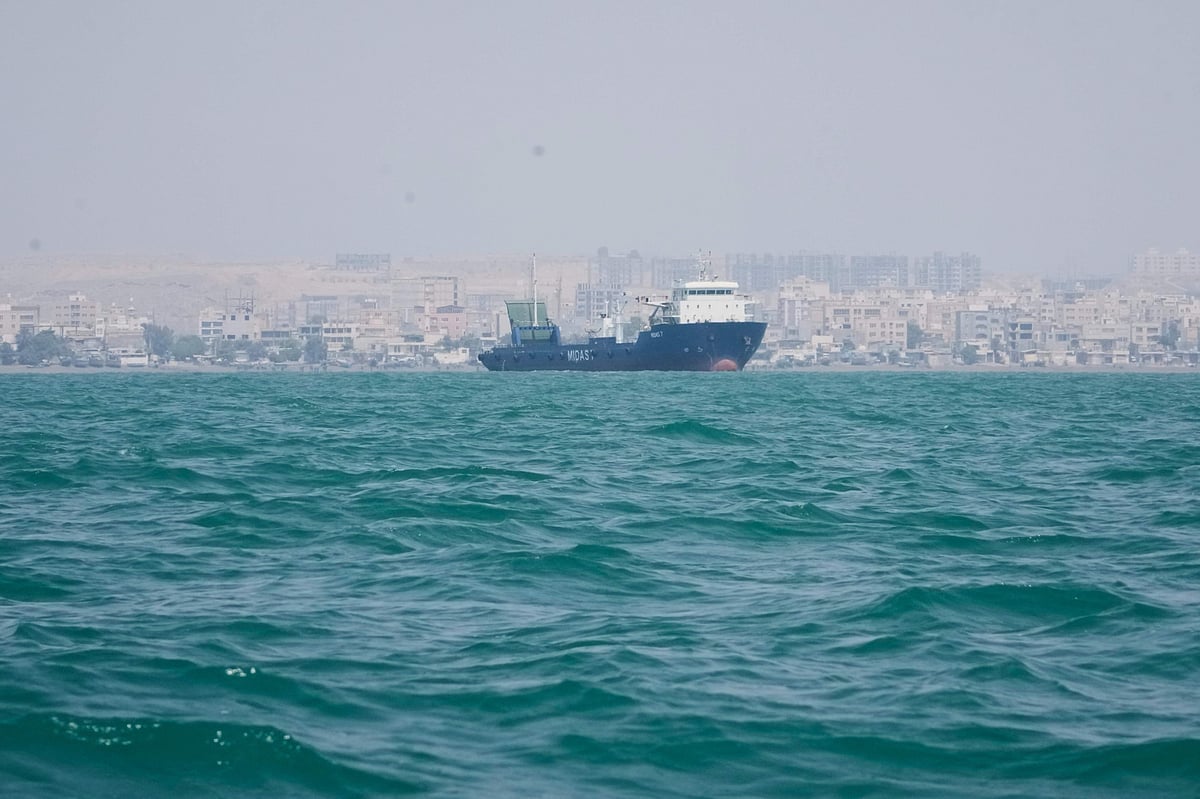
Dubai: Traffic through the Strait of Hormuz has fallen to just four commodity vessels a day as attacks intensify around the strategic waterway and Iran rules out negotiations with the United States, raising the stakes in a confrontation that is increasingly centred on control of global energy routes.
Preliminary Kpler data cited by Reuters showed only four commodity vessels transited Hormuz on Monday, down from 10 on Sunday and dramatically below the roughly 120 vessels a day that transited the strait before the war.
Two dry-bulk carriers exited the strait — one carrying cargo and another travelling in ballast — while two empty oil tankers entered. The figures exclude vessels that may have crossed with their tracking transponders switched off.
Oil prices climbed more than 2 per cent on Tuesday as the worsening disruption fuelled fears over global supplies. Brent crude rose to $108.18 a barrel, while US West Texas Intermediate (WTI) climbed to $103.85 a barrel.
The impact is also hitting US consumers. Average diesel prices reached a record $6.2694 a gallon on Tuesday, according to motorists’ association AAA, up sharply from $3.7577 at the start of the US-Iran war.
The sharp fall underscores how severely months of conflict have disrupted one of the world’s most important energy corridors, even as US President Donald Trump insists that oil continues to move through Hormuz.
“Oil is flowing through the Hormuz Strait,” Trump wrote on Truth Social, adding that countries benefiting from US efforts to keep the waterway open “should, and will, reimburse the United States of America” after the conflict.
But the latest shipping figures show how limited that flow remains.
Attacks intensify
The deterioration in maritime security was underlined by fresh attacks on Monday.
Two fishing boats were struck by drones in Arabian Gulf waters near Iran’s Larak Island, leaving several crew members missing, according to Ahmad Nafisi, deputy governor of Hormozgan province.
Nafisi said the vessels were attacked about 12 miles from Larak Island and 30 miles from Kargan port, with search-and-rescue operations underway.
Meanwhile, US Central Command accused Iran of striking the Panama-flagged tanker EL GAIA for a second time.
CENTCOM rejected an Iranian Revolutionary Guards claim that the tanker had hit a naval mine, saying the vessel was initially disabled by an Iranian missile last month and was struck again by a drone over the weekend while sitting off the coast of Oman.
The tanker was being towed by a regional partner, CENTCOM said.
Iran says no talks
Against that increasingly volatile backdrop, Iran on Tuesday rejected the prospect of renewed negotiations with Washington.
“Don’t get distracted by the US president’s mixed signals — from ‘no negotiations’ to ‘we’re ready to talk’,” Mohsen Rezaei, secretary of Iran’s Supreme National Security Council, wrote on X.
“The stakes around oil and the straits have changed. Damage control won’t stop what’s coming. No talks until Iran’s conditions are met. Period!”
His comments came after Trump said Monday that Washington was open to talks, reversing weeks in which he had suggested it was too early for a deal.
Iran has demanded conditions including war reparations and the lifting of sanctions before ending the conflict and its restrictions on the Strait of Hormuz.
The combination of collapsing shipping traffic and Tehran’s refusal to negotiate suggests Iran continues to view pressure on the strait as one of its strongest remaining sources of leverage.
Pressure spreads to Red Sea
The disruption is not confined to Hormuz.
Commodity-vessel traffic through the Bab Al Mandeb fell to 21 vessels on Monday from 28 on Sunday, according to the Kpler data cited by Reuters.
That simultaneous decline at two of the world’s most important maritime chokepoints adds another layer of pressure on energy and commodity supply routes between the Middle East, Asia and Europe.
Trump, however, predicted that the conflict would soon end and oil prices would then “drop like a rock”.
Brent crude climbed more than 3 per cent to above $108 a barrel after drone attacks forced Saudi Arabia to close its East-West oil pipeline.
For now, the shipping numbers tell a different story: vessels are still moving through Hormuz, but the flow remains a trickle — and control of that trickle is becoming increasingly central to the military and diplomatic battle between Washington and Tehran.

Sign up for the Daily Briefing
Get the latest news and updates straight to your inbox
Network Links
GN StoreDownload our app
© Al Nisr Publishing LLC 2026. All rights reserved.