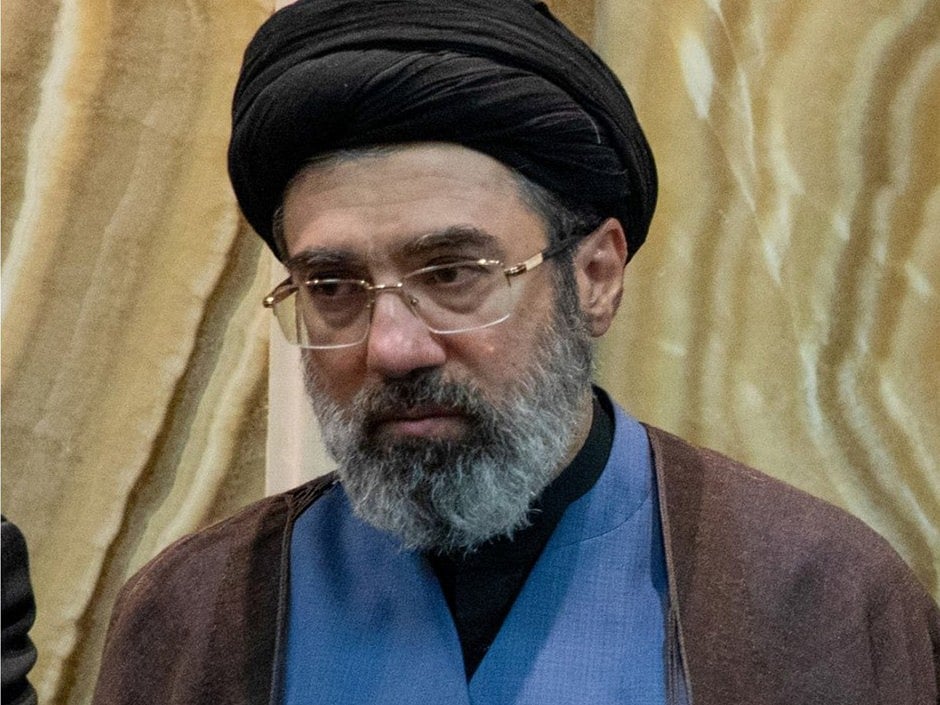
Washington: United States intelligence agencies assess that Iran's new Supreme Leader, Mojtaba Khamenei, is more open to building nuclear arms than his predecessor and father, according to a report by The New York Times.
The intelligence evaluation, compiled prior to the ongoing war from sources including wiretapped communications, indicates that Mojtaba displays fewer reservations regarding nuclear weaponisation than Ali Khamenei, who was generally regarded as more reserved on the issue.
Ali Khamenei was killed in joint US-Israeli airstrikes at the start of the war on February 28, with US officials clarifying that the assessment stems from an interpretation of earlier material rather than new intelligence gathered after Mojtaba took power.
While Western intelligence services have consistently dismissed Tehran's assertions that its atomic programme is purely peaceful, Israel has repeatedly stated that Iran has taken concrete steps towards weaponisation over recent years.
Washington now assesses that internal Iranian factions advocating for a nuclear deterrent have gained significant traction, arguing that nuclear capability is required to prevent future military aggression.
In a related development, The Wall Street Journal reported that Israeli intelligence believes Iran has relocated thousands of centrifuges into a deeply fortified underground complex near Natanz, referred to as Pickaxe Mountain. The subsurface construction of the facility renders it largely resilient to aerial bombardment.
The origin of the transferred centrifuges remains unknown. Tehran has denied inspectors from the International Atomic Energy Agency (IAEA) entry to the location while offering sparse information regarding its operations there.
However, Iranian officials have rejected these allegations. On July 22, Esmail Baghaei, spokesperson for Iran's Foreign Ministry, posted on social media platform X, "Iran's nuclear activities have been fully declared to the IAEA in accordance with its safeguards obligations... By the way, where is the Director General of the IAEA, who is also a candidate for UN Secretary-General?"
The statement appeared to signal Tehran's willingness to permit monitoring. Under the landmark civil nuclear accord signed during the administration of former US President Barack Obama, Iran had granted broad access to international monitors.
IAEA Director General Rafael Grossi previously noted that Tehran had signalled its intent to conduct nuclear operations at the subterranean site as early as 2021. Reports suggest Iranian commanders consider the installation immune to US airstrikes and have additionally fortified the perimeter against potential ground incursions by special forces.
Regional friction between Washington and Tehran has intensified following the breakdown of a short-lived truce and the failure of a June diplomatic memorandum intended to halt hostilities. The US has expanded its aerial campaign, while Iran has launched retaliatory missile and drone salvos targeting American bases across the region.
In 2025, American forces conducted strikes against critical Iranian nuclear infrastructure at Fordo, Isfahan and Natanz, all of which played key roles in uranium enrichment. Iran maintains that its nuclear ambitions remain peaceful.
However, IAEA data indicates that before the latest outbreak of fighting, Iran had accumulated more than 440 kilograms of uranium enriched up to 60 per cent purity, a threshold near weapons-grade that, with further processing, could yield sufficient material for multiple nuclear warheads.
Sign up for the Daily Briefing
Get the latest news and updates straight to your inbox
Network Links
GN StoreDownload our app
© Al Nisr Publishing LLC 2026. All rights reserved.