Cairo: Tensions in Egypt over the delay in the transfer of power from the ruling military council to a civilian administration and a general feeling of the interim government's weakness are set to foment more sectarian trouble, according to analysts.
"There is a common mood of uncertainty, if not pessimism, in Egypt over the future as the military rulers are perceived to be hesitant or unwilling to set a clear timetable for transferring power to the civilians," said Hassan Al Syed, a political expert.
"On the ground, eight months after the collapse of the police system during the revolution against [former president Hosni] Mubarak the public still feels a lack of security. Violence rates continue to rise despite the government's repeated talk about tough punishing of acts of thuggery," he told Gulf News. "Against this background, Sunday night's incidents should be viewed."
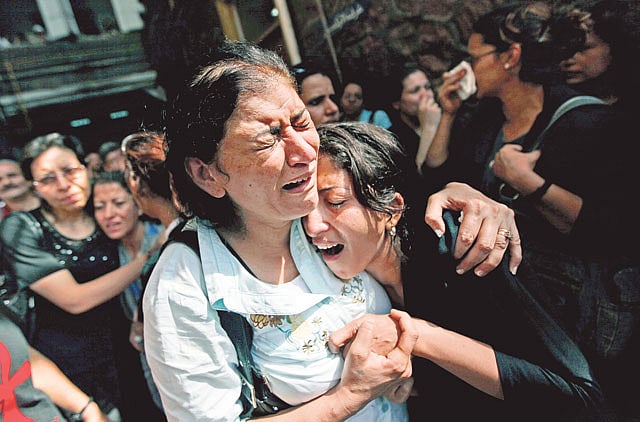
Twentysix people were killed and 327 injured on Sunday night in clashes between Coptic protesters and army forces outside the state radio and TV building in central Cairo, according to the Ministry of Health.
Angry demonstrators
The Coptic Christians were protesting the destruction of a church in the southern Egyptian city of Aswan a week earlier. According to state television, the angry demonstrators, coming from different provinces, threw petrol bombs and fired on soldiers guarding the building near the Nile. Coptic activists and clerics denied the allegations, accusing the security personnel of using excessive force against the protesters.
"There is a real problem in licensing the construction of churches in Egypt," said Coptic writer Jamal Assad. "Increasing demonstrations for removing restrictions on building churches reflect an overall Coptic demand. It is high time the long-talked-about draft law on places of worship was issued to outline clear rules for building churches," he added. "However, Sunday's protest was ill-timed, given the prevalent tensions gripping Egypt."
In recent weeks, Egypt has been hit by a wave of strikes by public bus drivers, medical professionals and teachers demanding better wages.
Meanwhile, the opposition has been increasingly critical of the military council that has been ruling Egypt since a revolution unseated Mubarak in February. The opposition accuses the military rulers of dragging their feet on purging state institutions of loyalists of Mubarak and barring them from running for parliament.
The head of the military council, Hussain Tantawi, said last week that a law to prevent leaders in Mubarak's now defunct National Democratic Party from practising politics for a certain period of time is being considered. Some members of Mubarak's party reacted angrily, threatening to cause trouble ahead of parliamentary elections due to begin on November 28.
"Are there foreign and local powers determined to manipulate protests, especially those by Copts, to serve their own interests?" asked Assad. "There is no clear answer. But one sure thing is that what happened yesterday [Sunday night] will have bad consequences on relations between the Copts and the Muslims and also between the Copts and the Egyptian army," he said.
Disputed sites
Egypt's Christians account for around 10 per cent of its largely Muslim population. Sectarian tensions often flare up in Egypt over disputed sites of worship and conversions.
Since Mubarak's toppling, Egypt has seen several eruptions of communal violence. In April, 14 people were killed in clashes between Muslims and Copts after a rumour that a Christian woman, who had converted to Islam, was detained in a church.
Sign up for the Daily Briefing
Get the latest news and updates straight to your inbox
Network Links
GN StoreDownload our app
© Al Nisr Publishing LLC 2026. All rights reserved.