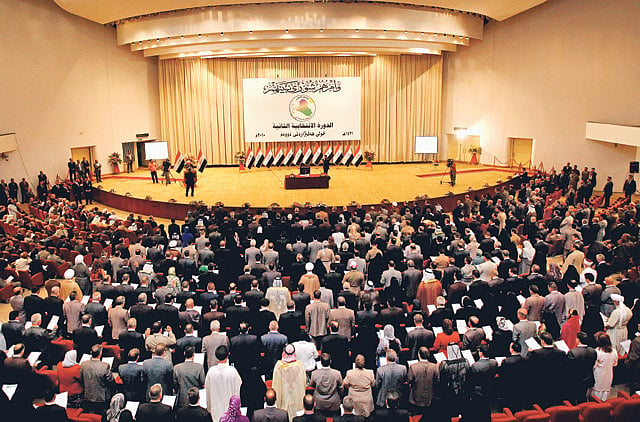
Baghdad: Iraq's new parliament convened yesterday in what was little more than a symbolic inaugural session because of unresolved differences over key positions including the parliament speaker, the president and the prime minister. _
The country is in a precarious political limbo just three months after inconclusive elections. The sides are sharply divided over the formation of a new government, and analysts and some lawmakers have warned that a decision on key posts could still be months away.
Prime Minister Nouri Al Maliki is battling to keep his job after the rival Sunni-backed Iraqiya list narrowly won the most seats in the March 7 balloting.
In parliament, Al Maliki watched as his chief rival, Eyad Allawi, who heads the Iraqiya bloc, and other lawmakers stood to take the oath of office in Arabic and Kurdish.
Under Iraq's constitution, the legislature should have chosen a parliament speaker and a president, but these appointments had to be put off because they're part of the negotiations between major political parties over the rest of the new leadership, including the roles of prime minister as well as top Cabinet officials.
Adjourned
Acting speaker, Fouad Massoum, on Monday adjourned the session after about 10 minutes, saying a president would be chosen later because the parties needed more time to discuss the issue.
"We found out that the blocs and the lawmakers need more time for discussions to choose the members of the presidential council," Massoum said.
He said the session would be left open, a technicality aimed at allowing negotiations to continue beyond the 30-day deadline set in the constitution. No date was yet been set for the next meeting. The session began amid heightened security, a day after insurgents stormed the country's central bank in a coordinated attack that left more than 20 people dead.
Persistent violence has raised fears that Al Qaida in Iraq and other insurgents are trying to exploit the political deadlock to foment unrest and derail security gains as the US military prepares to withdraw by the end of next year.
The UN envoy to Iraq declined to predict when parliament would meet again, saying it could be anywhere from two weeks to three months. But he said the fact that parliament was seated put pressure on the factions to reach agreement.
"This is an invitation by the newly elected parliament to make sure as soon as possible they can start to function effectively," he said.
Al Maliki's State of Law coalition, which won 89 seats to come in second place behind Allawi's Iraqiya list, has joined forces with a religiously devout Shiite alliance to form an Iranian-backed bloc called the National Alliance.
Iraqiya leaders have claimed they should have the first crack at forming the government because they won the most seats on election day. But a March court opinion opened the door to the possibility that the largest bloc could be one created after the election through negotiations, meaning that if the super-Shiite coalition holds together, it could have the right to form the government.
Massoum said it was up to the Federal Court to make a decision on the formation of the government.
Sign up for the Daily Briefing
Get the latest news and updates straight to your inbox
Network Links
GN StoreDownload our app
© Al Nisr Publishing LLC 2026. All rights reserved.