95% drop in Hormuz traffic as war disrupts oil route
Vessel attacks mount, costs surge and thousands remain stranded
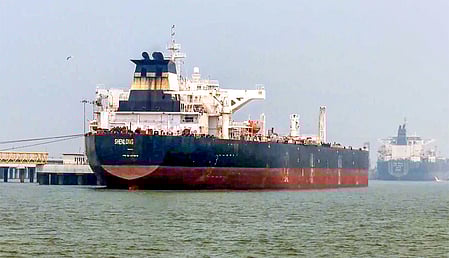
The Strait of Hormuz — a narrow but critical artery for global energy supplies — is facing near paralysis as the Middle East conflict intensifies, disrupting shipping, driving up costs and raising fears of prolonged supply shocks.
The crisis erupted after the United States and Israel launched strikes on Iran on February 28, prompting retaliatory attacks across the region and sharply restricting access to the strait. In normal times, around a fifth of the world’s crude oil and liquefied natural gas flows through the waterway, making any disruption a major global concern.
Here’s an update on the Strait of Hormuz after three weeks of war.
95 per cent drop in shipping traffic
The impact on maritime movement has been dramatic.
The strait, which typically sees about 120 vessel transits a day, has witnessed a near-total slowdown. Between March 1 and 19, commodities carriers made just 116 crossings in total — a drop of around 95 per cent, according to analytics firm Kpler.
Of those limited movements, 71 were oil and gas carriers, most of them travelling eastwards out of the strait, suggesting that inbound traffic has largely stalled.
Hormuz blockade — key numbers
Around 20% of global oil and LNG flows through the strait in peacetime
95% drop in shipping traffic between March 1–19
23 vessels attacked, including 11 tankers
8 killed, 4 missing, 10 injured
20,000 people affected across maritime operations
3,200 vessels currently in the region
250 oil tankers stuck in the Gulf (5% of global capacity)
Ship fuel prices up 87%
Crude shipping cost up to $10 per barrel
23 security incidents
The sharp decline in shipping activity comes amid a spike in security incidents across the region’s key waterways.
Since March 1, at least 23 commercial vessels — including 11 oil tankers — have been attacked or reported incidents in the Gulf, the Strait of Hormuz or the Gulf of Oman, according to the UK Maritime Trade Operations (UKMTO).
A further four attacks claimed by Iran’s Revolutionary Guards have not been independently verified, underscoring the uncertainty and risk facing shipping operators.
8 seafarers killed
Beyond the disruption to trade, the conflict is taking a growing human toll.
At least eight seafarers or dock workers have been killed in incidents linked to the crisis, according to the International Maritime Organization (IMO). Four others remain missing, while 10 have been injured.
Thousands more remain stranded in the region as vessels wait for safe passage.
20,000 seafarers stranded
The scale of the maritime backlog is significant.
Around 20,000 seafarers, along with passengers, port workers and offshore crews, are currently affected in the wider region, the IMO estimates. At least 3,200 vessels are present, up to two-thirds of them large commercial ships engaged in international trade.
Marine consultancy Clarksons said there were about 250 oil tankers in the Gulf as of March 18, accounting for roughly five per cent of global crude tanker capacity — a sign of how much supply is effectively stuck.
Ship fuel prices jump 87 per cent
The disruption is already feeding into higher costs across the energy supply chain.
Ship fuel prices have jumped 87 per cent since the start of the conflict, according to industry monitor Ship and Bunker. At the same time, the cost of shipping crude oil has doubled to about $10 per barrel this year, Clarksons said.
These rising costs are adding to volatility in global markets already shaken by fears of supply disruptions.
Why Hormuz matters
The Strait of Hormuz remains one of the world’s most strategically important chokepoints.
Any sustained disruption threatens not only oil and gas supplies but also broader economic stability, particularly for energy-importing nations heavily reliant on Gulf exports.
- with inputs from AFP
Sign up for the Daily Briefing
Get the latest news and updates straight to your inbox
Network Links
GN StoreDownload our app
© Al Nisr Publishing LLC 2026. All rights reserved.