Papal health news: A sensitive issue for Vatican
Communication about popes’ health has gradually opened up over the past half-century
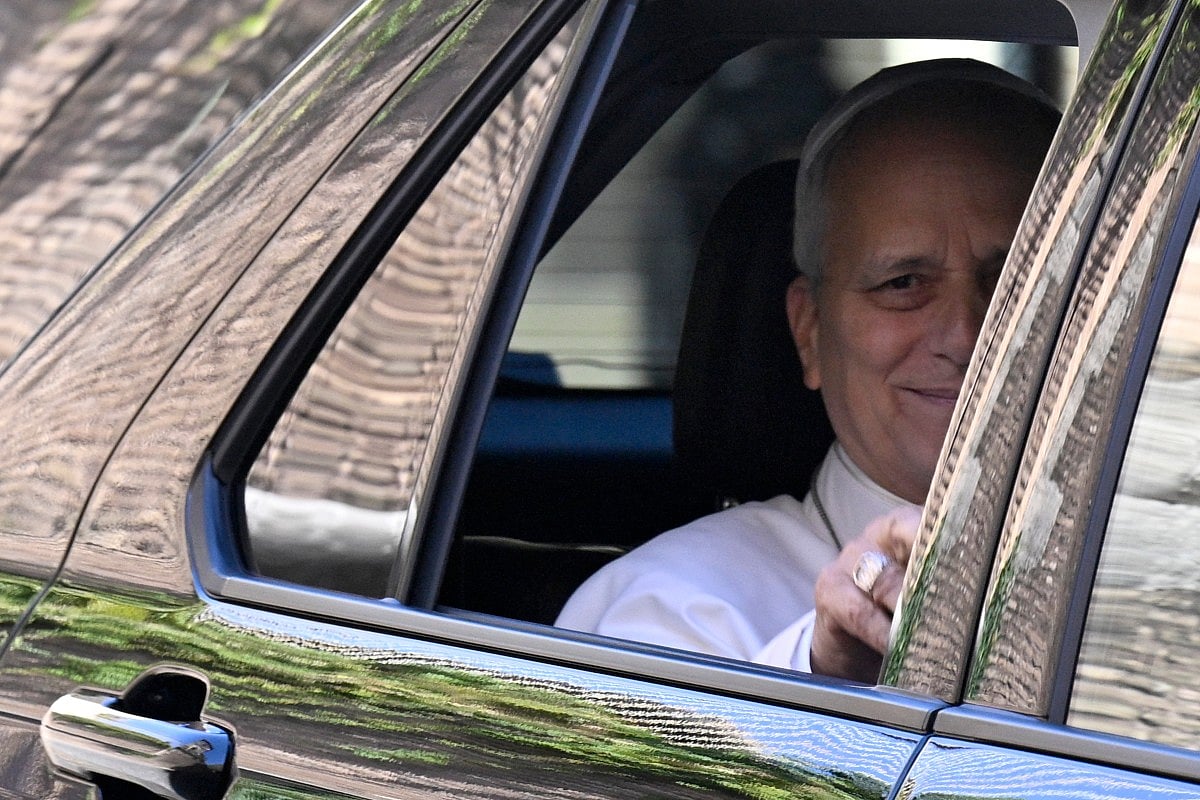
Vatican City: From the silence surrounding John XXIII’s cancer to the detailed medical bulletins issued during Francis’s hospitalisations, Vatican communication about popes’ health has gradually opened up over the past half-century.
Here are the most recent examples:
John XXIII (1958-1963)
Elected at 76, the Italian Angelo Giuseppe Roncalli suffered from stomach cancer, which was not diagnosed until several months before his death on June 3, 1963.
The seriousness of his condition was not made public.
During the Second Vatican Council, which John XXIII had convened, the Vatican remained vague on his diagnosis, not revealing his illness until after he had died.
Paul VI (1963-1978)
Giovanni Battista Montini suffered from arthritis and various age-related medical problems that gradually reduced his mobility over the course of the 1970s.
He died of a heart attack aged 80 on August 6, 1978, at the papal residence of Castel Gandolfo, near Rome.
During his pontificate, the Vatican released only infrequent and succinct information about his health.
John Paul I (Aug-Sept 1978)
Elected on August 26, 1978, John Paul I died just 33 days later at the age of 65, to worldwide surprise.
The Vatican said he had died of a heart attack and there was no autopsy.
Contradictory versions in the first official accounts of the circumstances of his death fuelled speculation and conspiracy theories.
John Paul II (1978-2005)
With the advent of John Paul II, papal health became a global issue.
After the assassination attempt against him in St Peter’s Square on May 13, 1981, the Vatican provided regular updates on his condition, followed hour by hour by the media.
Photographs of the Polish pope lying in his hospital bed, his hands and arms covered in bandages and hooked up to drips, circulated around the world.
He subsequently underwent several operations, including a procedure in 1992 for a benign colon tumour.
The Vatican was more open about his hospital stays than it had been about other popes’ medical treatment but the signs of Parkinson’s disease, visible from the 1990s onward, were only confirmed much later.
In the final months of John Paul II’s pontificate, communication about his health increased.
Frail, trembling, with his head bowed and often unable to speak, Karol Wojtyla nonetheless continued to appear in public until his death on April 2, 2005.
Benedict XVI (2005-2013)
Little health information was ever released about German pope Joseph Ratzinger, who was 78 when he was elected.
On February 11, 2013, he announced his resignation to general surprise, citing the decline of his physical and mental strength, the first such papal decision in seven centuries.
Though he did not reveal any specific illness, he brought into the public debate the question of a pope’s physical fitness to govern the Church and broke the taboo surrounding pontifical resignations.
Francis (2013-2025)
The Argentine Jorge Mario Bergoglio, elected at 76, had part of one lung removed in his youth.
His pontificate was marked by knee and hip pain, which led him to use a cane and then a wheelchair, as well as by several admissions to hospital.
In July 2021, he underwent colon surgery at Gemelli Hospital in Rome and in June 2023, had surgery for an abdominal hernia - incidents that fuelled speculation about a possible resignation.
In February 2025, admitted to Gemelli for bronchitis that developed into double pneumonia, he remained more than five weeks in hospital.
The Vatican subsequently issued regular medical bulletins, detailing in particular the pope’s respiratory treatments and the critical episodes when his life was in danger.
The lobby of Gemelli Hospital was transformed into a press conference hall, where the pope’s doctors answered questions live from journalists from around the world.
Francis died at the Vatican at the age of 88 on April 21, 2025, the day after his last public appearance on Easter Sunday.
Leo XIV (since 2025)
On Tuesday, doctors at Rome’s Gemelli hospital removed part of the right lung of Pope Leo XIV to extract a cancerous tumour, an operation that the Vatican said was “successful”.
Leo himself had announced to the public in St Peter’s Square on Sunday that a routine medical examination had revealed a nodule that doctors recommended should be removed.
The announcement was a first for a pope.
The Vatican confirmed a diagnosis of “pulmonary adenocarcinoma” after an operation that lasted 90 minutes.
On Wednesday, it said Leo, 71, had passed a “calm night” at the hospital.
Sign up for the Daily Briefing
Get the latest news and updates straight to your inbox
Network Links
GN StoreDownload our app
© Al Nisr Publishing LLC 2026. All rights reserved.