PIMS fire inquiry finds no functional fire alarm or sprinkler system after 14 newborn deaths
Fire broke out on August 26 at the PIMS nursery, which housed medically fragile newborns.
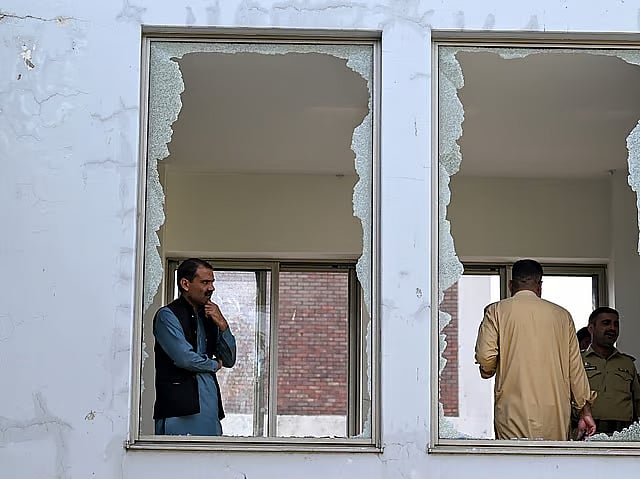
An inquiry into the fire that killed 14 newborns at the Pakistan Institute of Medical Sciences (PIMS) has identified an electrical fault as the most probable cause while pointing to wider failures in fire safety, emergency preparedness and hospital management.
The 43-page inquiry report, available with Dawn, found that the nursery lacked a functioning automatic smoke detection and alarm system as well as a sprinkler system. Firefighters also reported that some emergency escape routes were locked or obstructed.
Get updated faster and for FREE: Download the Gulf News app now - simply click here.
The fire broke out on August 26 in the PIMS nursery, which was caring for medically fragile newborns, several of whom were receiving oxygen or respiratory support.
Electrical fault identified as likely cause
The National Forensics Agency identified an electrical supply cable near AC Unit No. 1, connected to AC Unit No. 2, as the most probable point of ignition, Dawn reported.
The report said the fire could have resulted from excessive current, a high-resistance connection or another localised electrical defect. Failure of the cable’s insulation then ignited nearby combustible material.
Investigators found no evidence of arson, multiple points of ignition or an external electrical fault involving Islamabad Electric Supply Company (Iesco). They also found no evidence that an oxygen leak, incubator or warmer had started the fire.
The inquiry further found no evidence of deliberate locking-in of patients, conspiracy, sabotage, political protection or manipulation or concealment of casualty figures.
Earlier warnings had not been fully addressed
The committee found that concerns about fire safety at PIMS had been raised before the nursery blaze.
These included warnings from the Capital Development Authority and the Federal Ombudsman in 2015. PIMS had also acknowledged in 2025 that parts of its fire safety infrastructure were ageing.
A fire at the Nursing Hostel on July 6, 2026, provided another warning, but shortcomings involving fire detection and alarms, electrical inspection, evacuation procedures, firefighting equipment, drills and contingency planning had not been converted into a comprehensive corrective programme before the nursery fire.
Overcrowding increased the risks
The nursery was designed for 10 beds but had 15 medically fragile neonates at the time of the incident.
Only two doctors and two nurses were immediately available, according to the report. The committee also found that there was no adequately documented, approved, trained and rehearsed procedure specifically covering the evacuation of newborns from the nursery during a fire.
The report said CCTV showed Charge Nurse Nasreen Akhtar, Security Guard Maria Saleem and Staff Nurse Razia Noreen responding within moments of the emergency. Several staff members acted promptly as conditions deteriorated.
The inquiry did not find evidence of wholesale abandonment by frontline staff.
Emergency response and notification examined
The inquiry placed particular attention on the period before outside emergency services were notified rather than on the response after notification.
According to the timeline in the report, frontline action began at about 6.38am, external notification was made at 6.54am, and Capital Emergency Services arrived at 7.01am.
The committee found no evidence of a prolonged delay by Capital Emergency Services after receiving confirmed notification.
However, it said PIMS did not have a tested incident-command system covering fire alarms, external notification, evacuation, hazard isolation, access control and coordination of rescue efforts.
Security procedures and management decisions questioned
PIMS security procedures assigned responsibilities relating to fire safety, emergency exits, firefighting equipment, training, access control, keys and emergency reporting.
The committee said the security chain therefore had the clearest documentary basis for assessing responsibility. It also called for further examination of management and clinical responsibilities, depending on the duties that can be established for individual roles.
The report also questioned why the nursery remained in the old Mother and Child Hospital building despite the availability and progressive operationalisation of a new JICA-funded facility.
It found insufficient documented risk assessment, justification or a time-bound transition plan for the decision, describing it as a prima facie management issue.
No criminal guilt established against named individuals
The inquiry did not establish criminal guilt against any named individual at this stage.
It recommended focused investigation into the installation and maintenance of AC Unit No. 2, the obstruction of a mandatory emergency route, failures to act on earlier safety warnings and any proven culpable delay in obtaining external assistance.
The committee said responsibility should be assessed by examining each person’s duty, knowledge or foreseeability, authority, act or omission, negligence, failure to implement a safeguard and causal contribution to the deaths.
Committee calls for sweeping safety measures
The inquiry recommended immediate fire, life-safety and electrical audits at PIMS, along with functioning detection, alarm and suppression systems and unobstructed emergency exits.
It also called for a dedicated neonatal evacuation procedure supported by realistic drills, direct emergency notification and a tested incident-command system.
Other recommendations included preventive electrical safety and asset management, stronger professional governance and regulatory oversight, and a compliance system that assigns an owner, deadline, resources, interim safeguards, independent verification and formal closure to each corrective action.
The committee also proposed a Family Support and Liaison Cell to provide bereavement and psychological support, follow-up care for surviving neonates and assistance with lawful compensation or relief.
It recommended strengthening the senior fire, life-safety and facilities function and establishing a permanent multidisciplinary Hospital Safety and Vigilance Committee. The report also suggested considering an independent Safety and Governance Oversight Board.
For high-risk hospital services, the committee said operations should continue only where essential life-safety measures are functional and independently verified.
PM orders action within three months
Pakistani Prime Minister Shehbaz Sharif directed authorities to implement short-term measures within three months following a meeting in Islamabad that reviewed the inquiry as well as a performance audit by the Ministry of National Health Services.
The government said the measures were intended to improve fire safety at PIMS and bring standards in line with international requirements. Assistance and recommendations from the Pakistan Kidney and Liver Institute (PKLI) were also sought.
The performance audit found compliance of 39.7 per cent. Authorities said 37 proposed measures were being implemented, alongside short-, medium- and long-term plans.
The prime minister also directed officials to address fire safety at other public and private hospitals, offices and buildings in Islamabad.

Sign up for the Daily Briefing
Get the latest news and updates straight to your inbox
Network Links
GN StoreDownload our app
© Al Nisr Publishing LLC 2026. All rights reserved.