Nepal’s schools close as air pollution hits alarming levels
Eight million students affected by the closures
Also In This Package
Nepal protesters defy virus lockdown, clash with police
Nepal volunteers become heroes during pandemic
See: Female soldiers break taboos to tackle COVID-19
Nepal citizens protest citing poor COVID-19 care policy
Volunteers feed hungry animals at Nepal's empty shrine
Hindu devotees mark Cchat Puja festival in Nepal
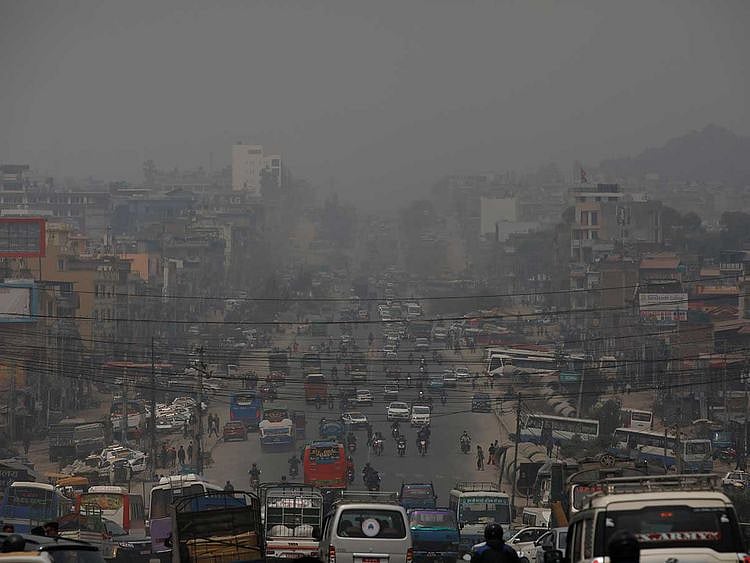
Kathmandu: Nepal has ordered schools to close for four days after air pollution climbed to hazardous levels, forcing millions of students to stay home across the country.
Nepal, with a population of 30 million people, is located in the Himalayas between China and India, two of the world’s biggest polluters.
Air pollution is a chronic problem in the rapidly growing capital city of Kathmandu and an additional headache for the government that is struggling to contain the coronavirus pandemic.
Over the weekend, pollution levels hit their highest in the capital since the government began keeping records in 2016, government official Shankar Paudel told Reuters.
Education ministry spokesman Deepak Sharma said about eight million students have been affected by the closures.
The 24-hour average level of PM2.5, fine particulate matter that can reach deep into the lungs, was 214 micrograms per cubic metre in the upscale area of Bhaisepati in Kathmandu on Sunday, Department of Environment data showed. That compares with the government’s standard level of 40 micrograms per cubic metre.
Air quality in the capital has deteriorated recently but average pollution readings were not available.
Dust from construction works, exhaust from old, poorly maintained vehicles and smoke from coal-burning brick kilns blend in a murky haze that hangs over the ancient city of four million people, raising the risk of cancer, stroke, asthma and high blood pressure, experts say.
“This also adds to the risk of COVID-19,” said Sher Bahadur Pun, a doctor at a tropical and infectious disease hospital in the capital.
Arjun Khadka, 65, who owns a grocery store in Kathmandu, said he experienced itching and burning sensations in the eyes and nose which could be due to pollution.
“I don’t remember this level of pollution in Kathmandu in the past,” Khadka told Reuters.
People must stay safe indoors and not come out except for emergencies, the health ministry said.
Officials at Nepal’s only international airport in Kathmandu said poor visibility, which was down to 1,000 metres on Monday, widely disrupted flights.
Sign up for the Daily Briefing
Get the latest news and updates straight to your inbox
Network Links
GN StoreDownload our app
© Al Nisr Publishing LLC 2026. All rights reserved.