Japan: 46 people killed, 549 others injured due to heavy snowfall
Most victims are elderly individuals who slipped or were struck while shoveling
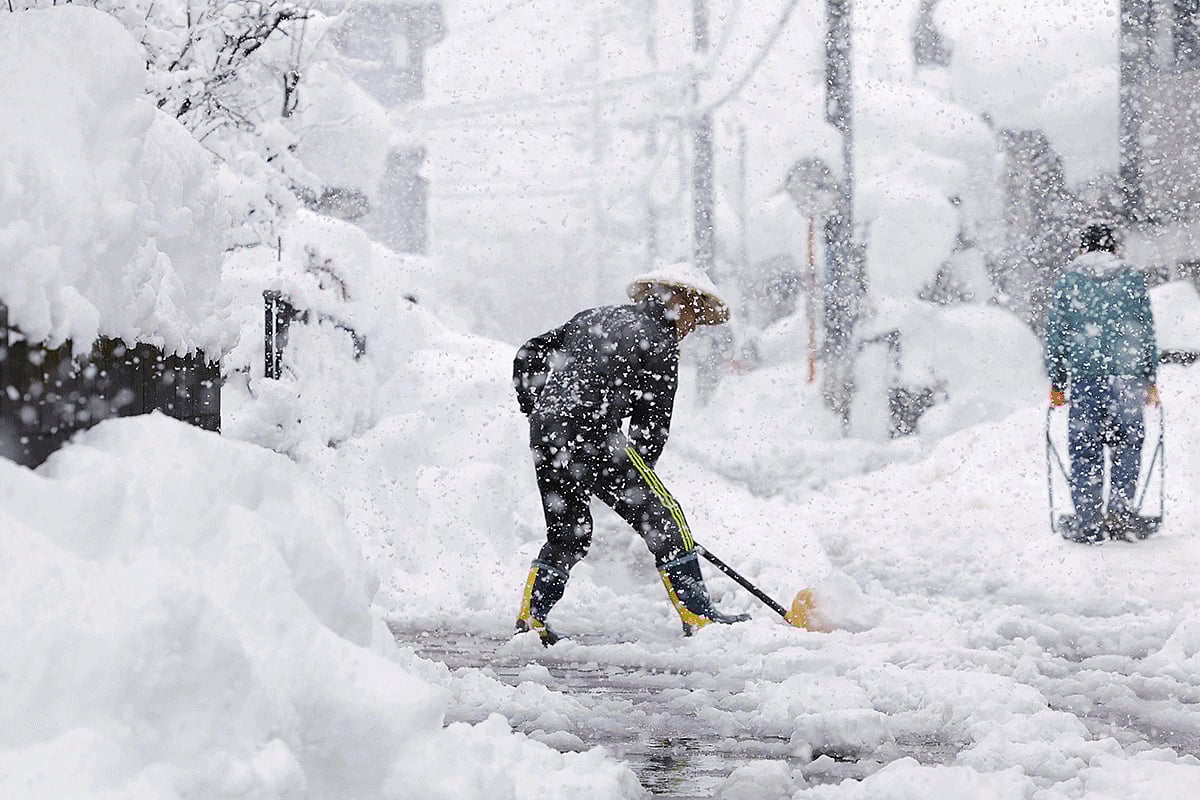
Almost three weeks of unusually heavy snowfall across Japan have killed at least 46 people and injured around 558 others, according to data from the Fire and Disaster Management Agency and Japanese media reports.
Many of the fatalities have occurred when residents — particularly older adults — were clearing snow from rooftops or walking around snow-burdened areas, a routine but dangerous task in communities buried under deep snow.
In regions such as Niigata, Aomori, and Hokkaido, relentless snowfall has covered roads and homes, disrupted transportation, and underscored the daily hazards faced by locals during this prolonged winter storm.
Many fatalities occurred while residents cleared snow from rooftops, a routine yet deadly chore in deeply buried communities.
In Sapporo in Hokkaido, the overwhelming white landscape highlights the dangers locals face daily.
Record snow
This season's storms have dumped record amounts of snow — over two meters in places — primarily along the Sea of Japan coast.
Niigata Prefecture recorded the highest death toll, followed by impacts in Aomori, Akita, and Hokkaido.
Orographic lift from cold Arctic air meeting moist winds creates these extreme accumulations, a phenomenon Japan knows well, but this year's intensity stands out as among the heaviest in decades, as per local media.
As milder weather arrives, the risk shifts to collapsing snow and ice slabs plunging from roofs, adding urgency to safety appeals.
Officials urge using safety harnesses, helmets, working in pairs, and securing ladders.
In hardest-hit areas, the government has deployed Self-Defense Force troops and hundreds of snow plows to clear roads and assist vulnerable residents.
Airports shut
Beyond the deaths, the snowfall has paralysed transportation.
Airports like New Chitose in Hokkaido faced closures, stranding passengers, while trains and highways suffered major disruptions. Homes and infrastructure strain under the weight, with some houses partially collapsing.
It is a stark reminder of nature's power in a country where over half the land is designated as heavy snowfall zones.
It highlights both the resilience of communities accustomed to harsh winters and the critical need for improved prevention — better equipment, community support programmes, and public education.
As cleanup continues, the human stories behind these statistics underscore a simple truth: even in modern societies, respect for extreme weather remains essential.
Sign up for the Daily Briefing
Get the latest news and updates straight to your inbox
Network Links
GN StoreDownload our app
© Al Nisr Publishing LLC 2026. All rights reserved.