Akal Takht declares Punjab CM Bhagwant Mann ‘anti-Guru’, asks Sikh community to shun him
Clergy escalates standoff with Punjab government over law and alleged objectionable video
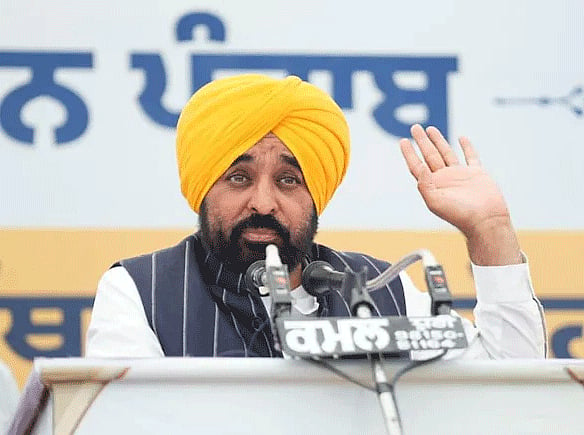
Dubai: The Akal Takht, the highest temporal authority of the Sikhs, on Monday declared Punjab Chief Minister Bhagwant Mann “anti-Guru” and “Panth Virodhi (anti-community)” and asked the Sikh community to sever all ties with him over an alleged objectionable video and a controversial law passed by the state government.
In a strong edict issued after a meeting of Sikh high priests, the Akal Takht directed the “Panth” to have no association with Mann, marking a sharp escalation in tensions between the Sikh clergy and the Punjab government, Indian media reports said.
The decision comes after Mann appeared before the Takht on January 15 over allegations related to a video in which a person resembling him was seen pouring alcohol over images of Sikh Gurus. Mann had denied the charges, claiming the video was AI-generated.
However, according to the Takht, forensic examinations conducted by two government-recognised laboratories concluded that the video was not AI-generated. The Sikh clergy said Mann failed to provide evidence supporting his claim, NDTV and The Hindustan Times reported.
Akal Takht acting Jathedar Giani Kuldeep Singh Gargaj said the chief minister had been given ample opportunity to respond but did not provide satisfactory proof. “We questioned the chief minister regarding the video and he claimed it was AI-generated. We asked him to give proof but received no response for months,” he said, according to reports.
What does the declaration mean?
The Akal Takht is the highest temporal authority of the Sikh faith, based in Amritsar
It issues religious and moral directives for the Sikh community (Panth)
Being declared “anti-Guru” means the person is accused of acting against Sikh Gurus or religious values
It is a severe religious censure, not a legal punishment
The declaration often carries a call for the Sikh community to socially and religiously distance themselves from the individual
Such edicts can have significant political and social impact in Punjab
What happens next?
Sikh MLAs and cabinet ministers who supported the anti-sacrilege law have been summoned to appear before the Akal Takht on June 29
The Akal Takht is expected to hear explanations and may issue further religious directives after the hearing
The Punjab government has maintained that the anti-sacrilege law will not be withdrawn or diluted
The standoff between the state government and the Sikh clergy is likely to continue unless a compromise emerges
Any further edicts from the Akal Takht could deepen the political and religious confrontation in Punjab
The Jathedar further stated that Mann had misled the Akal Takht and was found guilty of actions that hurt Sikh sentiments.
Controversy linked to Act
The edict also extends beyond the chief minister, summoning Sikh MLAs and cabinet ministers who supported the newly passed anti-sacrilege law to appear before the Akal Takht on June 29.
The controversy is also linked to the Punjab government’s Jaagat Jot Sri Guru Granth Sahib Satkar (Amendment) Act, 2026, which was passed in a special assembly session on April 13 and received gubernatorial assent on April 17.
The law proposes stringent punishment, including life imprisonment and heavy fines for sacrilege-related offences, but has triggered a theological and political dispute over provisions that Sikh institutions say amount to state interference in religious affairs.
According to the Akal Takht, certain clauses—particularly those involving the Shiromani Gurdwara Parbandhak Committee (SGPC) maintaining digital records of Guru Granth Sahib saroops and related religious personnel—amount to unacceptable government intrusion into Sikh religious matters.
The clergy had earlier issued a 15-day ultimatum to the state government to amend the provisions, warning of action if their concerns were not addressed.
The friction escalated further after the Akal Takht rejected the legislation and convened meetings with Sikh bodies ahead of Monday’s verdict.
Akal Takht Jathedar Gargaj said Sikh followers were directed to distance themselves from Mann, adding that he had been declared “anti-Guru” and “anti-community”.
The Punjab government, however, has strongly defended the law, with Chief Minister Bhagwant Mann maintaining that there will be no rollback or dilution of the legislation, according to reports.
Earlier, forensic claims, political rebuttals, and religious objections had already intensified the standoff between the state and Sikh religious authorities, which now appears to have reached a critical point.

Sign up for the Daily Briefing
Get the latest news and updates straight to your inbox
Network Links
GN StoreDownload our app
© Al Nisr Publishing LLC 2026. All rights reserved.