Trump administration's latest buyback of offshore wind leases brings total to nearly $4 billion
Critics call offshore wind buybacks a costly scam benefiting fossil fuel donors
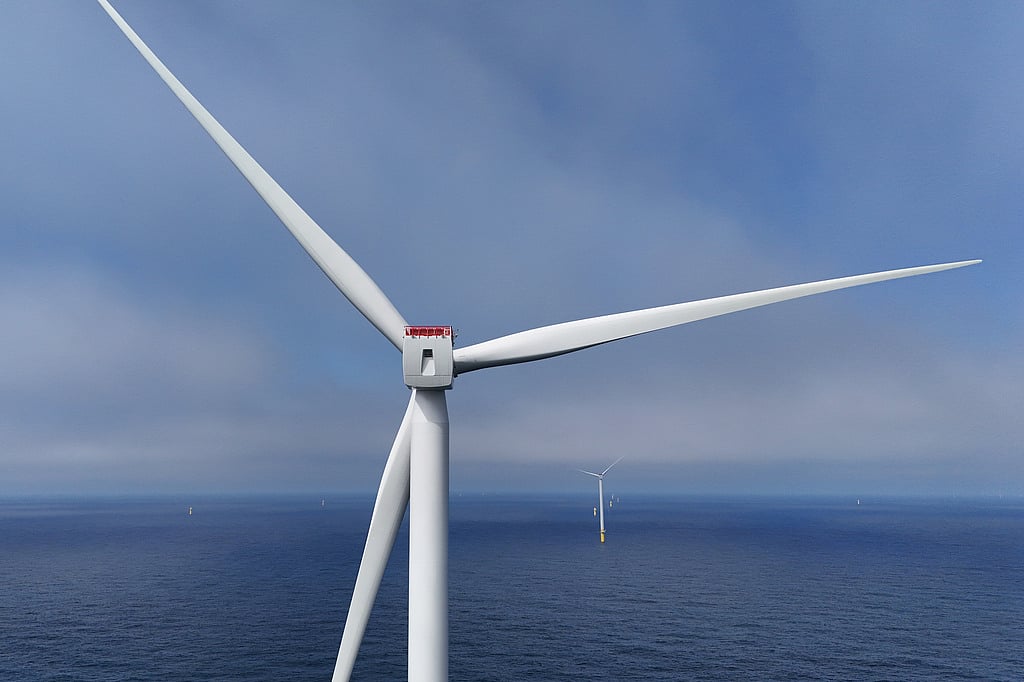
An offshore wind company said Thursday that it reached a $1.2 billion settlement with the Trump administration to walk away from projects under development off New York, California and Louisiana.
This latest agreement brings the total amount spent on such settlements to nearly $4 billion.
RWE U.S. Offshore said its leases represented years of planning, investment and partnership with federal agencies, but it determined there was no path forward to permit the projects for the foreseeable future.
In exchange for $1.22 billion, RWE is relinquishing the wind power leases that could have provided about seven gigawatts of power, enough for more than 5 million homes. It does not have any remaining U.S. offshore wind leases.
President Donald Trump, who often talks about his hatred of wind power, has said his goal is to not let any “windmills” be built. The Republican administration has been buying back offshore wind leases from energy companies as it seeks to discourage the expansion of wind energy in favor of fossil fuels. Offshore wind produces electricity cleanly. Oil, coal and natural gas emit carbon pollution when burned.
RWE announced it is investing $900 million in a liquefied natural gas project in Louisiana and spending $300 million on natural gas turbines. The company is developing 15 natural gas projects across the United States. RWE is headquartered in Germany.
The administration adopted this strategy after federal courts thwarted Trump’s efforts to stop offshore wind development through executive action. Roughly $3.9 billion has been spent. States that are losing offshore wind energy are suing. California intends to sue.
Separately, a coalition of renewable energy groups sued Pentagon officials over their failure to complete national security reviews for new onshore wind farms on private lands. A federal judge in Oregon ruled in favor of the plaintiffs on Thursday, ordering the Defense Department to resume its review process and provide status reports on the progress.
Commenting on the RWE agreement, Interior Secretary Doug Burgum said Thursday that Americans “deserve an energy system built on common sense, not one dependent on costly subsidies or technologies that can’t meet our country’s current demand.”
He said he welcomes RWE’s agreement and voluntary investment in projects that strengthen the nation’s energy security, provide dependable baseload power and help keep electricity affordable.
But Sen. Sheldon Whitehouse, D-R.I., said the lease buybacks are effectively bribing companies to step away from clean energy that can displace more expensive fossil fuel plants, which in turn will raise costs for consumers.
“They are creating this enormous money pump, pulling billions of dollars out of consumers’ pockets,” he said.
“That’s the real story of what is going on here. And that is both a cost story because of the billions in extra costs consumers pay, and it’s a corruption story because it’s Trump’s sneaky way of getting regular families to pay off his big fossil fuel donors. There’s method here, and it’s a real scam.”
Under the first agreement announced in March, French company TotalEnergies is getting nearly $1 billion — essentially a refund of its two offshore wind leases — if it invests the money in fossil fuels instead.
Golden State Wind and Bluepoint Wind agreed in April to end their leases in exchange for reimbursements totaling nearly $900 million, provided it invests equally in fossil fuels.
Chicago-based Invenergy agreed in June to end its four offshore wind leases that were very early in development in exchange for reimbursements of lease fees totaling $765 million.
What the deal means
The deal ends offshore wind leases in the New York Bight, off the coast of California, and the only offshore wind lease in the Gulf — a project that was projected to produce up to 2 gigawatts of renewable energy for Louisiana, the equivalent of powering over 350,000 US homes.
The buyback conditions include a total of $1.2 billion in financial investments into polluting fossil fuel projects in the US, including $900 million into the Louisiana LNG Project.
70% of Louisiana voters favour offshore wind construction off their state’s coast.
BOEM’s siting process for RWE’s lease and other potential leases in the Gulf avoided the entirety of Rice’s whale habitat, and included a 20 nautical mile buffer from shore for migratory birds.
Louisiana has 458 distinct companies that have the potential to supply services to the offshore wind industry.
Businesses in the Gulf have played a significant role in supporting successful offshore wind projects on the Atlantic Coast, with Louisiana and Texas companies involved in constructing the Eco Edison, Charybdis, and five offshore wind turbines for Block Island Wind.
Sign up for the Daily Briefing
Get the latest news and updates straight to your inbox
Network Links
GN StoreDownload our app
© Al Nisr Publishing LLC 2026. All rights reserved.