Portsmouth, New Hampshire: Stepping off a boat in a New Hampshire port in 1796, 22-year-old Ona Judge was on the run from the family of President George Washington.
Judge, who was born into slavery and served Martha Washington for most of her young life, had slipped away from the president’s official residence when the capital was in Philadelphia and boarded a ship as the Washingtons prepared to return to their plantation house in Mount Vernon, Virginia.
With a $10 ($174.05 or Dh639 adjusted for inflation) reward posted for her capture, Judge knew she had to keep a low profile. She turned to the network of free blacks in Portsmouth for help.
“She gets off the boat. She is in a strange place,” said JerriAnne Boggis, director of the Portsmouth Black Heritage Trail. “She comes to Portsmouth and there is a dearth of people of colour. So, she has got to be scared. She has been scared the whole time not knowing where she is going.”
The story of Judge’s escape and life on the run in New Hampshire is the subject of Erica Armstrong Dunbar’s book Never Caught: The Washingtons’ Relentless Pursuit of Their Runaway Slave, Ona Judge. Dunbar was named Wednesday as a finalist for this year’s National Book Awards.
The book has sparked renewed interest in Judge’s life. The Portsmouth Black Heritage Trail is offering a tour of sites in the seacoast city associated with Judge and is looking to fund a trolley that would bring visitors to the site of Judge’s last home nearby in Greenland, New Hampshire.
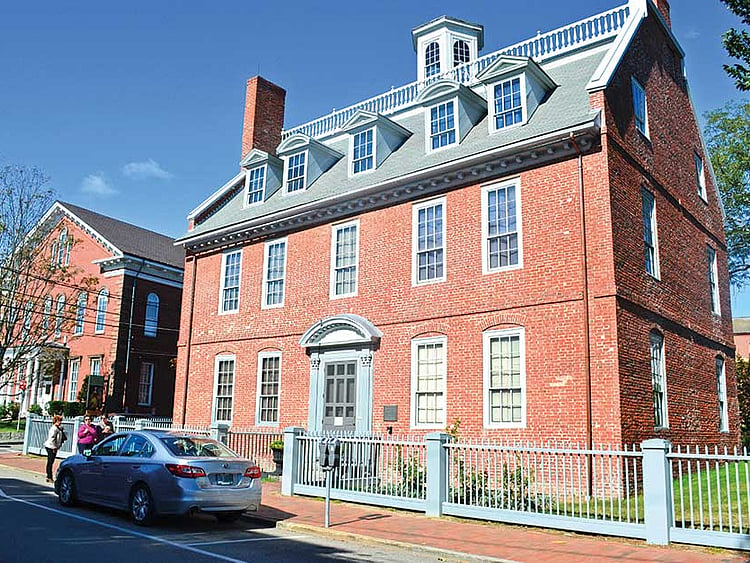
The tour in Portsmouth starts with the wharf near Prescott Park, the focal point of the slave trade for much of the 1700s in Portsmouth. Judge arrived on a ship called Nancy as the slave trade was in decline in New Hampshire. From there, visitors walk past several historic homes that played a critical role in the near-decade Judge spent in the city, the church where she was married and the market where she was spotted by a family friend of the Washingtons — an event that almost led to her being captured.
“Her story, her life reflects this underdog story in the most underdoggish of ways,” said Dunbar, a Rutgers University history professor who’s scheduled to give a lecture and do a book signing at Keexne State College on October 12.
“She was technically human property and was owned by the most important family in the new nation,” Dunbar said. “Even with that being the case, she was able to carve out a life for herself. ... Ona’s story represents what many enslaved (individuals) wished, longed for and that was a chance to be an independent person.”
Dunbar and others also said Judge’s story offers an opportunity to present a more complicated portrait of Washington — moving “beyond cherry trees and false teeth and to look at the George Washington who was sitting at the centre of the biggest debate of what would become the new nation. That was the debate around slavery.”
Washington’s persona
“Every reader who talks to me after they read the book says the same thing. They say, ‘I will never think about George and Martha Washington in the same way,’” she said. “Washington was someone who had changing ideas about slavery but at the end of the day he was a slave holder.”
Susan P. Schoelwer, the Robert H. Smith senior curator at George Washington’s Mount Vernon, agreed. “Did George Washington own slaves? Yes, he was human and he had flaws,” she said. “He changed his attitude during the course of his life. By freeing his slaves in his will, he definitely intended for that to be an example of what he saw as the future.”
The Ona Judge tour ends in Portsmouth, but Judge’s story continued onto the neighbouring town of Greenland. Fearing that Washington’s men were closing in on her, Judge would flee in 1799 to the home of a free black family, Phillis and John Jacks, where she remained until she died in 1848. Washington would die months later in 1799.
— AP
Sign up for the Daily Briefing
Get the latest news and updates straight to your inbox
Network Links
GN StoreDownload our app
© Al Nisr Publishing LLC 2026. All rights reserved.