Saeed Belhoul
EXCLUSIVE
Watch: How Dubai monitors drones and other aerial activities 24/7 to keep its skies safe
DCAA’s award-winning system flags real-time violations threatening civil aviation
Last updated:
4 MIN READ
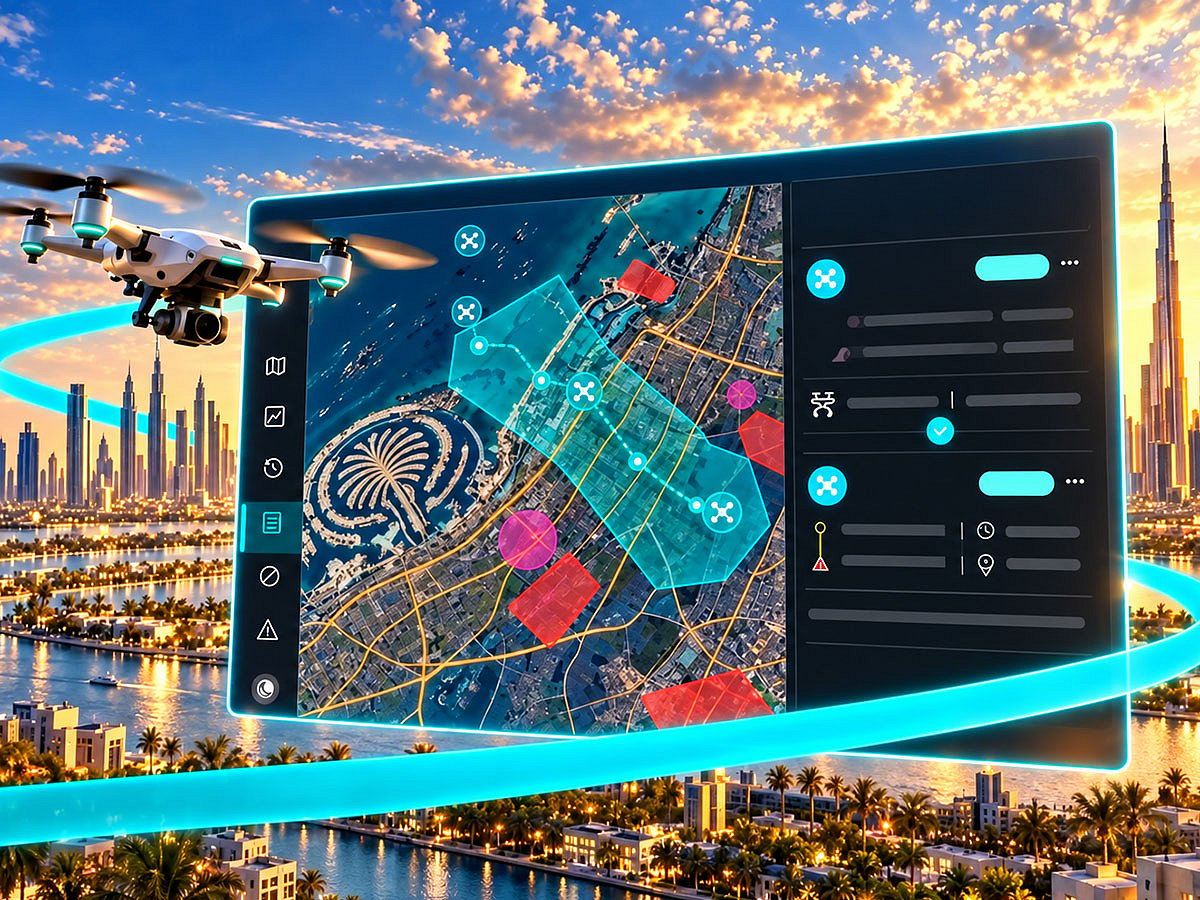
DCAA Monitoring System (DMS) keeps an eye on advanced air mobility operations and other low-altitude activities
Dubai: Long before a drone strays into the path of a passenger jet, a round-the-clock, AI-powered digital system in Dubai is already monitoring the skies and ready to raise the alarm.
Real-time monitoring and alerts are now possible thanks to the Dubai Civil Aviation Monitoring System (DMS), a smart, integrated platform that helps identify potential violations that could threaten Dubai’s civil aviation sector.
The system monitors advanced air mobility operations and other low-altitude activities, including drones, hot-air balloons, sky trackers, laser activities, fireworks, aircraft warning lights and skydiving, as well as planned air-taxi operations, within a single digital ecosystem. It also monitors construction activities, cranes, high-voltage power-line towers and telecommunications towers.
Award-winning project
The project, developed by the Dubai Civil Aviation Authority (DCAA), recently won first place in the category of Best AI Innovation in Transport Award at the 14th Dubai Award for Sustainable Transport (DAST), organised by the Roads and Transport Authority (RTA).
Officials said the system helps ensure that airlines, including Dubai’s Emirates and flydubai among others operating in the emirate, can depart and arrive safely, without pilots having to share the sky with unregulated drones and other players.
“It’s a big risk for the aviation industry,” Saeed Belhoul, Director of the DCAA’s Information Technology Department, told Gulf News.
Sector taking off
Belhoul said the drone industry has grown rapidly over the past five years, and not around a single use. Government bodies, public entities and private companies all fly drones for different purposes, as do individuals who enjoy photography and videography.
Dubai Municipality uses drones for surveys and GIS mapping, while Dubai Electricity and Water Authority uses them to inspect power lines and solar panels. Over the past two years, drone food delivery has expanded. Authorities are now working on using drones to carry medication and blood for transfusion, either between emirates or from one hospital to another, Belhoul revealed.
The RTA’s upcoming air taxi initiative adds another layer. “That also needs to be regulated and monitored in a consistent way to maintain the safety of our airspace,” Belhoul said. The rising demand pushed the DCAA to look at how the industry could be properly regulated and operated, and DMS was the answer.
Watching the low skies
DMS monitors Dubai’s low-altitude airspace, from ground level up to where commercial operations begin. That upper limit varies from location to location. The aim is to keep drone activity and commercial flights safely separated at all times.
In effect, the system digitalises Dubai’s airspace and automates the process from end to end.
It works from the very start of an operation. Drone operators and air taxi pilots apply for a no-objection certificate (NOC) in advance. Say an operator needs to fly for a full week from next Monday: the approved schedule and plan are embedded in the system, which then expects that operation between those dates.
“If an operator breaches the approved terms, DMS automatically generates an alert. It goes to the operator and to the regulator, and everyone concerned is notified on the spot,” Belhoul explained.
Everything is recorded with high accuracy, he said, with data that is of high quality and logged continuously.
Human checks, smart alerts
The system runs 24/7, but Belhoul explained that it was never meant to copy or replace air traffic control, which relies on people being present around the clock and controls movement of aeroplanes. Instead, the DCAA wants the system to handle the monitoring of low-altitude activity, minimise human error and maintain quality. People step in only for quality assurance and interventions when required.
That distinction matters when it comes to penalties. DMS does not issue violations itself; it only flags them. DCAA then reviews each alert. If an operator has genuinely breached the rules, a violation is issued. If the alert was caused by a malfunction, such as a fault linked to weather or altitude pressure, no violation is issued.
Belhoul said the authority must be certain that any violation it issues is correct. An operator’s permit to fly can be suspended until the issue is corrected.
The DCAA inaugurated a control room for DMS last month. It is there to maintain quality rather than to run the system, which can be operated and maintained from anywhere. A team of employees currently looks after it. If a violation occurs, the duty officer is notified on his phone, and if he is in the control room, staff brief him on what is happening in the airspace.
Working with Dubai Police
Dubai Police is the DCAA’s main stakeholder in this project. If an operator is found flying without approval, the system notifies Dubai Police, which sends a patrol team to check the pilot, the flying location and whether the operator is following proper conduct.
Officers also verify the equipment. They check whether the drone itself is certified and fitted with a proper RFID, along with everything else required from the operator and the device.
The Dubai Police Drone Team also monitors the system directly. DCAA duty officers work alongside their police counterparts to flag any violation that needs immediate action.
How about military threats?
Belhoul also clarified where the system’s remit ends. It helps up to a certain level against drones coming from outside the country, but military threats are handled by the country’s defence systems, which are already tackling them as seen in the recent regional conflicts. DMS’s main focus is commercial and private activity, he explained.
The development of DMS began in 2023, and the first trial was launched in mid-2025. The team has kept upgrading and enhancing it since, taking it to a mature level.
The system is fully operational today. However, Belhoul said the DCAA will keep improving it.
Network Links
GN StoreAbout Gulf NewsTerms & ConditionsReach by GNSitemapContact usPrivacy PolicyGN FocusHave your sayWork with usAdvertise with usGulf News epaperPrinting Services
Download our app
© Al Nisr Publishing LLC 2026. All rights reserved.