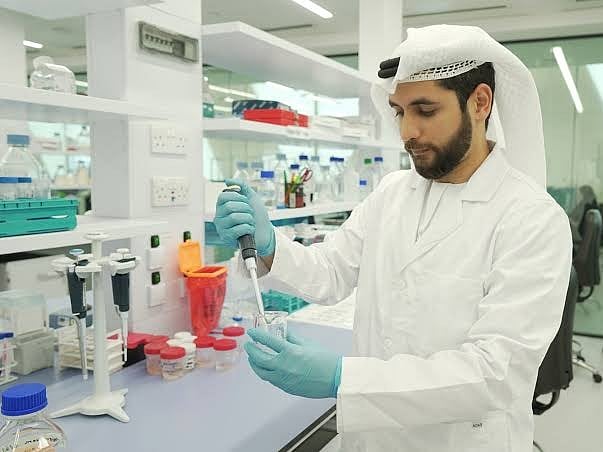
The results of Abu Dhabi’s Pre-Marital Genetic Testing Programme have revealed that 11,748 couples underwent genetic testing from the launch of the programme across the emirate in 2022 through July this year. Of these, 565 cases of genetic incompatibility were identified, representing around 5 per cent of those tested.
Since its launch, the test has analysed 570 genes associated with more than 840 autosomal recessive genetic disorders. The most common genetic conditions identified among incompatible cases included congenital adrenal hyperplasia, inherited retinal disorders that cause progressive vision loss, primary ciliary dyskinesia, thalassaemia, sickle cell disease and glaucoma.
Get updated faster and for FREE: Download the Gulf News app now - simply click here.
A report issued by the Department of Health – Abu Dhabi (DoH) emphasises that pre-marital genetic testing is an important health and family planning tool that helps couples understand potential genetic risks before having children. It also highlights the importance of genetic testing before marriage as a step towards making more informed health decisions.
The findings provide couples with an opportunity to access genetic counselling and appropriate healthcare services, supporting informed decisions and helping reduce the transmission of genetic disorders to future generations.
As part of its vision to build a more proactive healthcare system based on prevention and precision medicine, the Department of Health – Abu Dhabi has incorporated genetic testing into the pre-marital screening programme. The programme combines advances in genomics with scientific and clinical research, supported by flexible and integrated health policies aimed at reducing the transmission of genetic disorders and empowering families to make evidence-based health decisions.
The fruit of the UAE Genome Programme’s success
The testing programme has been made possible by capabilities developed through the Emirati Genome Programme, which serves as a cornerstone of the UAE’s journey towards precision and preventive medicine.
The programme was launched with the support of the Department of Health – Abu Dhabi and in collaboration with partners across the healthcare ecosystem. It reflects Abu Dhabi’s efforts to translate scientific innovation into practical outcomes that can improve community health and quality of life.
The Department of Health – Abu Dhabi began implementing the programme through a pilot phase launched in 2022 in collaboration with the Abu Dhabi Public Health Centre. The initiative aimed to establish an integrated scientific and operational model for pre-marital genetic testing, including the development of clinical pathways, training and qualification of medical professionals, enhancement of genetic counselling services, and integration of laboratories and healthcare facilities into a unified system.
The system enables the rapid and accurate exchange of data and results through Malaffi, the unified health information exchange platform, which is a key component of the emirate’s digital transformation of healthcare.
Since its launch, the test has analysed 570 genes associated with more than 840 autosomal recessive genetic disorders, with a focus on cases where both partners carry the same genetic mutations. This approach ensures that couples receive results with direct clinical relevance, in line with international best practices and ethical standards.
Sustainable health
Commenting on the results, Dr Noura Khamis Al Ghaithi, Undersecretary of the Department of Health – Abu Dhabi, said:
“Pre-marital genetic testing embodies Abu Dhabi’s vision of translating scientific progress into sustainable health outcomes that benefit the community. By integrating genomics into the healthcare system, we are not only empowering individuals and families to make more informed decisions, but also building a knowledge base that supports their future health and enables more precise and personalised care for them and their families.
“This programme reflects the strength of the partnership among the various components of the emirate’s healthcare ecosystem and the role of flexible health policies in supporting the health journey in all its dimensions, thereby enhancing quality of life in the emirate and beyond.”
An integrated system to assess genetic risks
The genetic test is based on the principle of providing couples preparing for marriage with accurate health information, helping them understand the likelihood of passing genetic disorders on to their future children and supporting them in making informed decisions, while ensuring the privacy and confidentiality of their results and data.
The role of genetic testing extends beyond issuing results. It forms part of an integrated system of genetic counselling services provided by trained physicians, who explain the findings, answer couples’ questions and outline available health and reproductive options in cases that require further intervention. These include genetic testing of embryos and assisted reproductive technologies for eligible cases.
This approach represents a shift in preventive healthcare by making genomics part of routine healthcare and using it to support individuals and families in planning for a healthier future.
It also reflects an integrated model involving various components of Abu Dhabi’s healthcare ecosystem. The Emirati Genome Programme, implemented under the supervision of the UAE Genome Council, has helped establish the national genomic infrastructure supporting the development of genetic tests and improving their accuracy.
The Department of Health – Abu Dhabi has established the regulatory framework and overseen the design and development of the programme, alongside contributions from healthcare providers, specialised laboratories, genetics experts and researchers.
Proactive and preventive healthcare in Abu Dhabi
Dr Rashed Al Suwaidi, Director-General of the Abu Dhabi Public Health Centre, said:
“This testing programme demonstrates the potential to integrate genomic screening into the public healthcare system on a population-wide scale, strengthening proactive and preventive healthcare in our communities.
“With the programme now being adopted at the national level, we continue to build a sustainable model that contributes to reducing the burden of genetic disorders and supports the development of healthier communities through an advanced approach grounded in scientific evidence.”
More than 100 Emirati doctors trained in genomics
Academic institutions have played a pivotal role in building national capabilities. Khalifa University, in collaboration with international academic institutions, has supported the training of more than 100 Emirati doctors in genomics.
The United Arab Emirates University has further strengthened these efforts by providing specialised training programmes for family physicians in pre-marital genetic testing. The programmes covered informed consent procedures and genetic counselling. The university has also continued to collaborate in reviewing and updating the list of genes included in the test to reflect the latest scientific evidence and developments.
This integration demonstrates that the programme’s progress has not resulted solely from the deployment of advanced technologies, but also from institutional collaboration bringing together regulation, scientific research, healthcare and innovation under a shared vision aimed at strengthening preventive health and quality of life.
The achievement reflects the confidence of health-sector leaders in Abu Dhabi in the role of smart health technologies and data as foundations for building a healthier future. In collaboration with the Department of Health – Abu Dhabi, efforts are under way to integrate genomic data into the community-wide healthcare system, accelerating the transition from treating disease to preserving health.
This supports a model based on prediction, prevention and precision medicine, while contributing to broader global health goals.

Sign up for the Daily Briefing
Get the latest news and updates straight to your inbox
Network Links
GN StoreDownload our app
© Al Nisr Publishing LLC 2026. All rights reserved.