UAE highlights advanced labour model at UN migration forum in New York
MoHRE outlines balanced approach and integrated labour system protecting workers’ rights
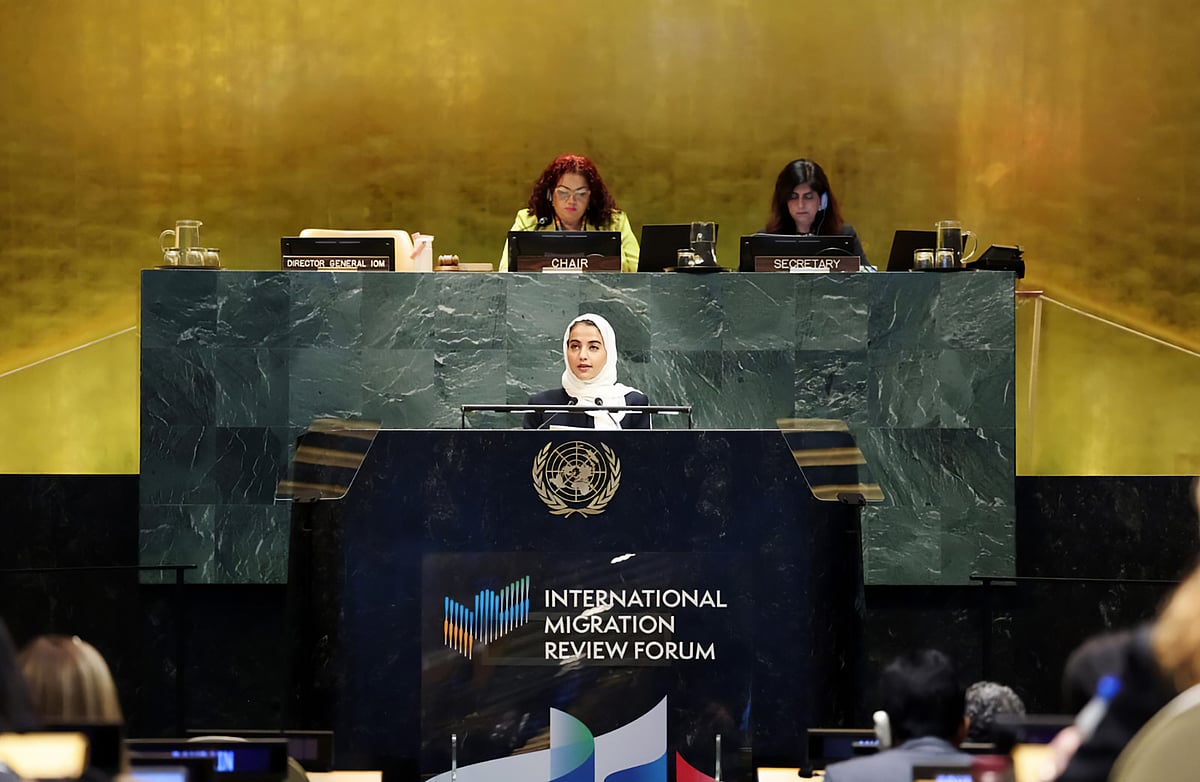
New York: The UAE, represented by the Ministry of Human Resources and Emiratisation (MoHRE), is participating in the second International Migration Review Forum (IMRF), currently taking place at the United Nations Headquarters in New York and bringing together representatives from member states, civil society organisations, the private sector, and academia.
This participation reflects the UAE’s commitment to supporting international efforts to advance migration governance and address migration-related issues through a balanced developmental and humanitarian approach.
Get updated faster and for FREE: Download the Gulf News app now - simply click here.
The UAE showcased its leading labour market governance framework, alongside the policies and legislation that have helped establish an advanced system that protects the rights of both parties in the employment relationship, preserves human dignity, and enhances quality of life and well-being. This ecosystem has made the Emirates an ideal global destination for living, working, and investing with more than 200 nationalities living in the country, enjoying full rights, equality, and justice.
Furthermore, the UAE renewed its commitment to working with international partners to develop a more integrated, balanced, and partnership-based contractual labour migration system, which serves to ensure the interests of nations are met, while protecting human rights, preserving human dignity, and shaping a more prosperous and sustainable future for all.
Shayma Alawadhi, MoHRE’s Acting Undersecretary of Labour Market Development and Regulation, and Assistant Undersecretary for Communications and International Relations, delivered a speech during the main plenary session of the Forum, which is scheduled to continue until 8th May 2026.
She stated that the Forum provides an international platform to enhance dialogue, coordinate visions, and discuss the progress made in implementing the Global Compact for Safe, Orderly and Regular Migration, in addition to exchanging information and expertise in that regard and exploring its connection to the 2030 Agenda for Sustainable Development.
The UAE has extensive experience in managing safe and regular migration for the purposes of contractual employment, she explained, noting that the UAE is one of the top receiving countries for temporary labour under a regulated system that maximises the benefits of mutual sustainable development between the UAE and labour-sending countries.
Alawadhi went on to confirm that the UAE has succeeded in building an integrated labour market model rooted in a robust legislative framework and strategic partnerships with the private sector. The numerous notable achievements made over the past five years reflect the success of this model, she added, revealing that workforce growth exceeded 101 percent, while skilled labour, in particular, grew by over 49 percent. Meanwhile, the number of companies increased by more than 45 percent during these five years, and women’s participation in the labour market more than doubled, growing by over 101 percent.
Alawadhi highlighted the ongoing development of the UAE’s comprehensive social security system – one of the most advanced of its kind in the region – which covers 99 percent of workers in the Wage Protection System and the Workers Protection Programme. Furthermore, 90 percent of the targeted workforce is covered by the Unemployment Insurance Scheme, and all categories of workers, including domestic workers, are covered by a comprehensive health insurance system.
The list also includes the Savings Scheme, enabling private sector employees to invest their end-of-service benefits in leading, government-approved investment funds, in order to grow their savings and benefit from investment returns.
Alawadhi continued with an overview of the Occupational Heat Stress Prevention Policy, which has seen compliance rates among companies exceed 99 percent, noting that the Policy is unprecedented in the region and has been implemented for over two decades. She also shed light on the wide range of models used for lifelong training and skills development, notably through the ‘UAE Skills’ digital platform, which marks a significant leap forward in the efforts to develop the link between education and the labour market.
The platform forecasts the future of skills across economic sectors, especially those most affected by artificial intelligence (AI) technologies, and monitors the rapid transformations in the labour market.
On another note, Alawadhi discussed the Abu Dhabi Dialogue process, a UAE initiative launched in 2008 as a platform bringing together labour-sending and receiving countries in the GCC-Asia corridor to exchange knowledge, coordinate policies, and develop innovative solutions for managing labour mobility. This reflects the UAE’s commitment to enhancing regional and international cooperation with regards to the governance of labour migration, especially as the UAE hosts the Permanent Secretariat of the Dialogue.
Since its launch, the Abu Dhabi Dialogue process has generated key takeaways that have enabled it to play a pivotal role in advancing bilateral and multilateral cooperation, as well as to highlight successful models in managing and regulating migrant worker mobility, she noted, underlining the Dialogue’s priority topics in the upcoming phase, which focus on leveraging AI and digitisation to develop workers’ skills, ensure smarter governance for labour mobility in the GCC-Asia corridor, develop smart inspection systems to enhance compliance with labour legislation, and utilise labour remittances as a strategic tool for development and reshaping workers’ skills.
Alawadhi highlighted the UAE’s leadership, evidenced by its top scores across numerous indicators related to labour markets in the IMD World Competitiveness Ranking 2025, notably the low occurrence of labour disputes, workforce and employment growth, ability to attract talent, absence of bureaucracy, expat population, and other related areas.“To succeed, labour migration policies require adopting an approach that is based on accurate data, enhancing transparency, and fostering an objective, evidence-based discourse that helps correct misconceptions and enhance social cohesion”, she explained. “This was clearly evident during the exceptional circumstances that swept our region,” she affirmed. “We saw it in the solidarity, continuity, and integration among all segments of society, which reveals that migrant workers in the UAE enjoy an advanced level of assimilation, and feel appreciated and respected in the community.”
The International Migration Review Forum hosts round table discussions covering important and comprehensive themes, including minimising adverse drivers, expanding regular pathways, promoting fair recruitment practices and decent work, developing screening and referral processes, and investing in skills development and recognition. It also explores tactics to counter smuggling and eradicate trafficking, in addition to topics of inclusion and social cohesion, migrant and diaspora contributions, remittances, financial inclusion, and social protection, among others.
Sign up for the Daily Briefing
Get the latest news and updates straight to your inbox
Network Links
GN StoreDownload our app
© Al Nisr Publishing LLC 2026. All rights reserved.